Get Full Government Meeting Transcripts, Videos, & Alerts Forever!
Get email alerts on the Liquor Ballot Access topic
No spam. Unsubscribe anytime.
Bill would lower threshold, clarify ballot language to let Hillsdale County voters decide Sunday spirit sales
Summary
Representative Wirtz and three Hillsdale County restaurateurs testified on House Bill 4398, which would ease local ballot access rules so counties such as Hillsdale could place Sunday on-premise spirit sales before voters.
Representative Wirtz introduced House Bill 4398 and brought three Hillsdale County business owners to testify in favor of easing local barriers to on-premise spirit sales on Sundays in Hillsdale County.
Wirtz told the committee Hillsdale County remains the only county in Michigan with a so-called blue law preventing on-premise spirit sales on Sundays. “The ballot language required by law is also confusing and makes the repeal process more complicated,” Wirtz said, explaining that the bill would add clearer ballot options, lower the signature threshold and allow county commissioners to vote to place the issue on the ballot.
Brett Boyd, owner of Underdog Sliders and Spirits (a business inside a Hillsdale grocery), said Sunday NFL business is important and the county’s restriction places local businesses at a competitive disadvantage with neighboring Indiana and Ohio. “We have large screen TVs, great food, and, Sundays have been successful for us. But we had an ongoing customer complaint that they couldn't purchase spirits on Sunday,” he said.
Adam Day, owner of the Oaks Tavern in Moscow, and Kevin Cohen of Here's To You Pub and Grub described lost Sunday revenue as customers travel across borders to buy spirits. Day noted that party stores can sell sealed bottles on Sunday but bars cannot serve spirits by the drink.
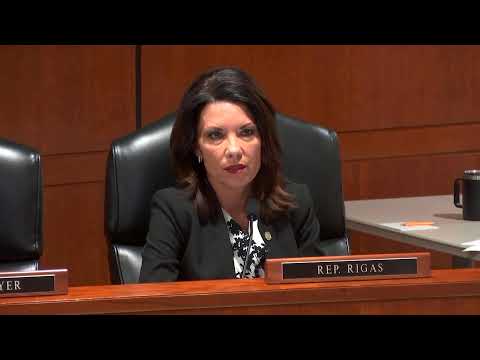
Representative Regas asked whether the bill reduces the petition signature threshold; Wirtz and questioners discussed lowering the resident-initiated petition threshold from 8% to 5% of votes cast for secretary of state in the county (as noted in committee questioning). Wirtz said collecting signatures to meet the current threshold has been difficult in rural areas and the bill would allow county commissioners to place the question on the ballot without meeting the high petition threshold.
Committee members asked about the historical basis for the restriction and about how other counties changed their laws. Wirtz and witnesses described the law's origins and the practical difficulties of ballot petition drives in rural counties; committee members asked the Liquor Control authority to follow up on legal details.
No committee vote on HB4398 was recorded in this session; the committee proceeded to other agenda items.