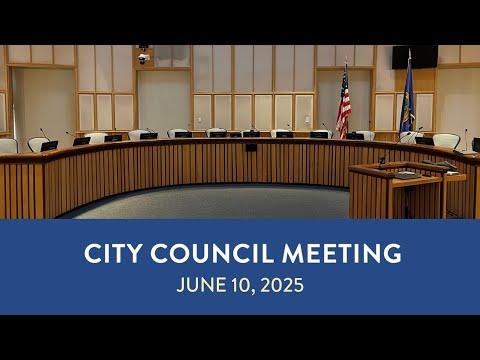
Mountain View adopts balanced FY 2025–26 budget; council directs follow-ups on development services and reserves
Loading...
Summary
City council adopted a structurally balanced fiscal year 2025–26 budget with limited ongoing additions, continued emphasis on development services cost recovery, and targeted reserve contributions; council requested midyear reviews and staff follow-ups on fee recovery and development review improvements.
The Mountain View City Council on June 10 approved the city’s recommended budget for fiscal year 2025–26, adopting a structurally balanced plan that staff said holds ongoing revenues and ongoing expenditures in parity while using limited one‑time resources for near‑term priorities.
City Manager Dan McCarthy and Finance Director Derek Rampone presented the recommended budget package to the council in a public hearing and study session. Rampone reported total recommended revenues across all funds of roughly $663 million and total recommended expenditures of about $649 million. The general operating fund — which pays for public safety, parks, libraries and core city administration — is budgeted for roughly $196 million in revenues and nearly $205 million in expenditures before application of a $9.3 million vacancy factor; with that vacancy factor the general fund aligns with revenues, staff said.
Staff characterized the budget as structurally balanced for FY 2025–26 while noting modest projected deficits in outer years of the five‑year forecast unless revenue growth outpaces expense growth. Key budget highlights: - Structural balance: Ongoing revenues match ongoing expenditures for FY 2025–26; staff expects modest shortfalls beginning in 2026–27 absent new revenue or reductions. - Staffing: The recommended budget adds four ongoing positions; over the previous several years the city added roughly 50 positions to restore service capacity lost during the Great Recession and subsequent years. - Development Services Fund (DSF): Staff reported continuing deficits in the DSF driven by development activity; staff recommended fee updates and further analysis to reduce general fund subsidies and improve cost recovery. - Federal funds: The city has approximately $35 million in federal awards related to capital projects, much of it yet to be spent; staff identified roughly $3.1 million in federal funds that could be at risk if federal grant streams are curtailed. - Measure G property transfer tax: The city created a conveyance tax fund and estimated $8–9.5 million in potential revenue from transfers over $6 million, while cautioning the revenue will be volatile and tied to large property transactions. - Capital and reserves: The budget includes capital project funding and proposed one‑time reserve contributions, including a $5 million contribution for a public safety building reserve and a $1 million recurrent allocation to replenish the parental‑leave reserve. Staff said these allocations are drawn from available one‑time funds.
Council discussion and direction Council members praised the staff work, the new budget presentation format and the emphasis on continuing improvements to the development review process. Council asked for additional follow‑ups and refinements: - Development review: Council directed staff to continue a multi‑departmental review of development review and permitting processes (building on a prior organizational study) to improve consistency and timelines; staff will return with findings and recommendations and pursue software/streamlining options. - Fee and revenue monitoring: Council asked staff to bring a midyear update that will include a review of overhead allocations to other funds and progress on development services fee recovery; staff said a midyear report will include any recommended adjustments. - Reserves and funding priorities: Council supported the proposed reserve contributions but asked that staff return with midyear updates tying reserve health to forecast changes.
Vote and next steps Council approved the budget on a unanimous vote. Staff will return June 24 for any final adjustments and to adopt the appropriations limit; staff also flagged return items at midyear that could include public art staffing, library hours and potential additional staffing if revenues improve.
Why this matters: The adopted budget funds core services, advances capital projects, continues the city’s focus on improving permitting and development services and strikes a conservative posture on ongoing spending given economic uncertainty at state and federal levels.