Get Full Government Meeting Transcripts, Videos, & Alerts Forever!
Get email alerts on the Promenade On Forest topic
No spam. Unsubscribe anytime.
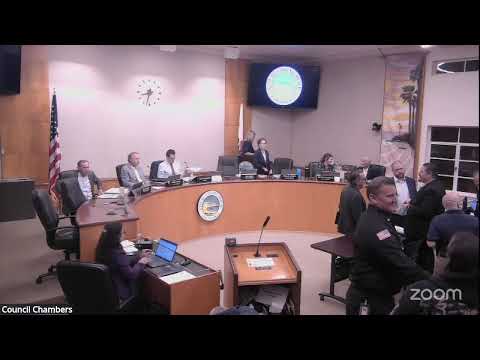
Laguna Beach Council sustains design approvals, designates Lower Forest Avenue a slow street with conditions
Summary
The Laguna Beach City Council voted unanimously to uphold planning and design approvals for the Promenade on Forest Avenue, designate the lower portion of Forest Avenue a slow street and find the project exempt from CEQA under the state’s pedestrian‑facility exemption.
The Laguna Beach City Council voted unanimously to sustain previous approvals for the Promenade on Forest Avenue, designate the lower portion of Forest Avenue as a slow street and find the project exempt from the California Environmental Quality Act under Public Resources Code section 21080.25(b)(1).
The council’s actions on the Promenade came after several hours of staff presentations, technical explanation and public testimony that included hundreds of written comments and more than 150 people speaking in person. Staff described the item as a combined review of (1) a slow-streets resolution, (2) design review and coastal development entitlements for pedestrian plaza improvements and (3) a coastal development permit to close a segment of Lower Forest Avenue to vehicular traffic. City staff recommended sustaining approvals previously issued by the Planning Commission and the community development director.
The Promenade project began as a COVID-era pedestrian plaza in 2020 and was advanced by council direction and consultant work in subsequent years. Staff told the council the project consists of permanent walking surfaces, new paving and planters, trench drains, new trees and lighting, enlarged sidewalks for dining and performance space, and drainage improvements designed to convey stormwater to the Laguna Canyon Channel. Consultants’ parking analysis and hydrology work were summarized in the staff presentation; traffic and drainage studies were cited as not showing new or greater impacts than existing conditions. Planning staff also described extensive outreach that included focus groups, public workshops, a council/commission joint session, mailed notices and two council meetings on the project.
Why it matters: The decision will allow the city to move the Promenade project forward into final design and later potential construction, while striking a balance that council members said was intended to preserve downtown pedestrian character and address neighborhood concerns. The council also attached procedural limits so that the street would not be physically closed as a slow street until the city has a construction contract in hand.
What the council decided - The council adopted a resolution designating the lower portion of Forest Avenue a slow street. The council amended the staff-proposed language so that the street would not be closed to vehicular traffic as a slow street until after a construction contract for the project is awarded. (Motion: Council member Jones; vote: 5–0) - The council denied the appeals of the Planning Commission’s approvals and sustained the Planning Commission’s design review and coastal development determinations for the Promenade improvements. (Motion to deny appeals/move staff recommendation; vote: 5–0) - The council found that the actions before it fall within the statutory CEQA exemption for pedestrian and bicycle facilities (Public Resources Code §21080.25(b)(1)) and directed staff to carry the project forward consistent with that determination. (Vote: 5–0)
What staff told the council: Kate Kasama, project planner, summarized entitlements and the municipal-code requirement that the automatic appeal exist when a Design Review Board member has an ownership interest in a subject property. "Tonight, staff's recommendation is to sustain the design review board's approval," Kasama told the council. City Manager Louie LaCasse lauded the high level of public interest and said the council waived appeal fees "in the public interest" to bring all related appeals together and reduce confusion.
What opponents said: Residents and a coalition calling itself Friends of Forest Avenue / Village Laguna urged the council to reject a permanent full closure. Speakers and letters cited loss of convenience parking (staff reports and previous studies show 48 on‑street spaces had previously been removed during the temporary closure), business impacts, uncertainty over final costs, and concerns about drainage. Merrill Anderson, president of Village Laguna, asked council to "not go forward with the project as proposed" and urged additional study of lower-impact alternatives or hybrid approaches that keep some vehicular access.
What supporters said: Business groups, event organizers and many residents urged permanence for the plaza. Erin Slattery, chief executive officer of the Laguna Beach Chamber of Commerce, said in public testimony, "The Laguna Beach Chamber of Commerce supports the Promenade on Forest project" and called the space a potential year‑round community hub. Several speakers representing families, school groups and festivals described the promenade as successful for local programming, cited increased pedestrian activity, and said well‑designed plazas help small businesses by creating an experience shoppers want.
Key technical points and clarifications - Parking: Staff cited a 2022 DKS Associates parking analysis that reported a 76 percent utilization rate during weekday peak periods and an 86 percent utilization rate during weekend peaks in a 1,000‑foot study area. Staff noted subsequent measures — additional after‑hours spaces at the library, increased transit and micro‑transit service — that reduced peak usage. - Drainage: Staff contracted a hydrology and hydraulics analysis in May 2025. The consultant reported that flow patterns would not change dramatically under the proposed design and that the project’s combination of trench drains and permeable surfaces would provide improved low‑flow water quality treatment. Staff told the council the consultant analyzed a 25‑year design storm consistent with local design manuals and concluded existing conduits and inlets would continue to provide conveyance off site. - CEQA: City staff and the city attorney’s office advised the council that the pedestrian‑facility statutory exemption in Public Resources Code §21080.25(b)(1) applies. That exemption covers pedestrian facilities within the public right of way that improve safety, access or mobility; staff recommended the council find the project within that exemption.
Next steps and conditions: Council approval preserves the Planning Commission’s design findings and allows staff to proceed to final design. The council added a timing condition for the slow‑street closure (effective only after a construction contract award). Staff said final design, budget appropriation and contract award will be brought back to the council at a later date if the project proceeds. The council also asked staff to continue community briefings and committed to a materials and landscape review process that will involve the Planning Commission in consultation prior to final city manager approval.
Public response and political context: Council members noted the highly engaged public—staff said more than 500 written comments had been received—and repeatedly urged civil discourse. Opponents indicated they may pursue ballot remedies or future initiatives; supporters said the promenade would help the local economy and community life.
Ending: Council members said they would press staff to return with complete construction documents, a schedule and cost estimates before any contract award. The council’s vote keeps the project on track while adding a procedural safeguard—delaying formal closure of the street until the city has an awarded construction contract.