TCEQ approves New TPDES permit after ALJ, Executive Director and OPIC support
Summary
The Texas Commission on Environmental Quality approved issuance of a New Texas Pollutant Discharge Elimination System permit (WQ0016124001) after the Administrative Law Judge—s proposal for decision and additional modeling were endorsed by the Executive Director and the Public Interest Council (OPIC).
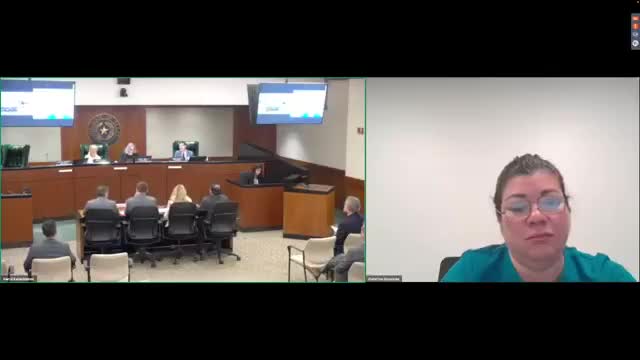
The Texas Commission on Environmental Quality on June 6 adopted the Administrative Law Judge—s proposed order and issued the New Texas Pollutant Discharge Elimination System permit WQ0016124001 for applicants Gildan Blair Blackburn and Timothy Edward Carter.
The decision followed oral presentations from applicant counsel and staff, and endorsements from the Executive Director and the Office of Public Interest Counsel (OPIC). The applicants and the Executive Director had both testified that the approved modeling and revised effluent limits demonstrate the draft permit will be protective of water quality.
The Administrative Law Judge (ALJ) had reviewed five issues referred by the Commission and found the draft permit complies with the Texas Surface Water Quality Standards and other applicable rules. Applicant counsel Peter Gregg told commissioners, "We believe that the Administrative Law Judge got this exactly right," and said the applicants supported the ALJ—s findings and the permit as revised.
The Executive Director—s representative, Aubrey Pualka, and water quality staff explained the agency performed two rounds of modeling: an initial Qualtex analysis and a supplemental run that used both Qualtex and a CSTR approach in response to Protestants— concerns. Pualka described how the additional modeling led to more stringent effluent limits in critical areas.
OPIC—s Sheldon Wayne said OPIC reviewed the record and agreed the applicants met their burden on the referred issues, adding that the Executive Director—s additional modeling and permit revisions adequately addressed Protestants— technical objections about model inputs and segmentation.
Commissioners voted to adopt the ALJ—s proposed findings and to issue the final draft permit with the Executive Director—s corrections and limited clarifying revisions agreed in the ALJ—s reply to exceptions. The chair also directed a minor clarifying change that the permit be issued to the entity named in ordering provision 1 and that the Executive Director—s response to comments be adopted to the extent consistent with the order and final draft permit.
The Commission—s action follows a contested review process in which Protestants argued site-specific data or different modeling choices should have been used. The record shows the ED used shorter element lengths in critical backwater areas and modeled a backwater portion of Price Lake found to contain the lowest dissolved-oxygen levels; the Commission adopted the ED/ALJ conclusion that, with revised effluent limits, dissolved oxygen and other water-quality metrics will be protected.
No fines, penalties, or changes to the applicants— proposed discharge location were announced during the vote. The permit, as adopted, incorporates the ALJ—s findings of fact and conclusions of law except as the Executive Director noted in exceptions that were accepted in the ALJ reply.
The Commission made the final vote on the permit at its June 6 meeting after oral argument and staff presentations. Questions about when the permit becomes effective should be directed to the Executive Director—s office; the meeting record does not specify an effective date.