Get Full Government Meeting Transcripts, Videos, & Alerts Forever!
Get email alerts on the Personnel Transfers topic
No spam. Unsubscribe anytime.
Parents, staff and students urge Pleasantville board to reverse planned counselor reassignments
Summary
Dozens of staff, students and union representatives urged the Pleasantville Board of Education to keep longtime counselors at their current schools and raised contract and morale concerns during public comment on June 10.
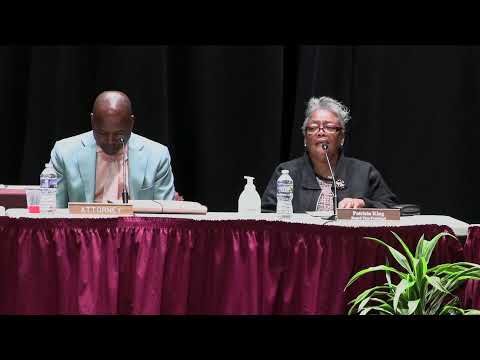
Dozens of teachers, students and union representatives told the Pleasantville Board of Education on June 10 they oppose planned staff reassignments that would move veteran school counselors from their current buildings.
Speakers at the board’s public-comment period said the proposed transfers would remove long-serving counselors who they said provide continuity, community knowledge and essential student supports.
The matters drew extended public comment because speakers tied the moves to contract language and employee morale. Several petitioners and student speakers asked the board to leave counselors in place at North Main Street School and Pleasantville High School.
Brian Kavanaugh, a teacher at North Main Street School, said he and other staff were “truly perplexed” to see Mark Santanello listed for transfer on the agenda and argued that Santanello’s 30 years at North Main make him integral to the school’s work. “North Main needs Mark Santanello,” Kavanaugh said, warning that “students and community will suffer from his absence.”
Mark Santanello, the counselor named on the agenda, told the board he has worked at North Main for 30 years, 23 of them as a school counselor, and said involuntary transfers under the district’s collective bargaining agreement should prioritize seniority. “With 23 years of service as a school counselor, I would hope that this experience, loyalty, and proven dedication … would carry the merit and weight it deserves,” Santanello said.
Multiple high school students and teachers also urged the board to retain Michelle Cooper at Pleasantville High School and to keep another counselor, identified by students as “Miss Miller,” in place. George Murray, a teacher, presented a petition signed by “44 PEA members” asking the board to keep Cooper at the high school, saying Cooper “is a vital resource” who manages scholarships, scheduling and programs such as the early-college pathway.
Paraprofessionals and other staff reinforced the plea for Santanello. Stephanie Davenport, a 23‑year paraprofessional, said Santanello does informal maintenance, provides care work and is “a safe place for the kids.” Davenport said Santanello missed his son’s sports banquet to attend the meeting.
Cathy Watson, president of the Pleasantville Education Association, used public comment to raise broader workplace concerns, noting “4 open grievances that have been moved to level 3.” Watson described a grievance alleging pre‑K teachers have not been compensated for lost prep time since November and cited other grievances over job‑classification and time‑keeping practices.
Speakers tied the personnel moves and grievances to morale. A student representative said losing a counselor who also coaches would be disruptive to athletes and to the peer supports students rely on.
The board’s human-resources agenda (items 6.1–6.9) that evening included personnel actions and transfers. During the roll call on that motion, several members voted in favor while at least one member explicitly abstained from the human-resources block; one member stated specific “no” votes on two listed items. The board did not discuss individual transfer details further in public comment; the public record of the board vote is reflected in the board’s minutes and in the human-resources consent motion as approved with recorded abstentions and limited recorded “no” votes.
Why it matters: Counselors and other student-support staff often provide long-term relationships and knowledge that schools and families rely on; transfers can change student access to counseling, college advising and in-school supports. The union’s grievances and the multiple public petitions indicate staff and community concern beyond a single reassignment.
What’s next: The board approved the bundled human-resources motion at the June 10 meeting with recorded abstentions and some member objections to specific items; the transcript indicates the union will continue to seek meetings with the superintendent and that staff plan to pursue contractual grievance procedures.
Ending note: Public commenters repeatedly asked the board for more direct engagement with the union and staff before finalizing reassignments. The collective-bargaining agreement was cited repeatedly as governing involuntary transfers.