Get Full Government Meeting Transcripts, Videos, & Alerts Forever!
Get email alerts on the Public Safety Fire Budget topic
No spam. Unsubscribe anytime.
Caldwell Fire Department asks council to fund staffing, training and new facilities to keep pace with growth
Summary
At a city budget workshop, Caldwell Fire leaders told council members the department is under‑stationed and under‑staffed amid rising call volumes and requested funding for personnel, a training site, logistics building and equipment, while noting reliance on impact fees, a rural district contract and competitive grants.
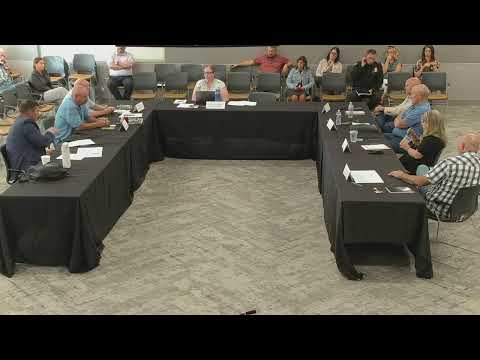
Caldwell Fire Chief Danos told the City Council at a budget workshop that the department needs more people, training and facilities to keep up with fast population and building growth.
"We're a little understaffed and we're a little under stationed," Chief Danos said, and described current daily staffing as "16 personnel is our minimum daily staffing and 22 is our maximum daily staffing." He said Caldwell firefighters handle about 8,200 emergency incident numbers a year — roughly 65% medical calls and 35% fire — and that multiple‑unit responses raise the department's unit responses to about 10,100 annually.
The fire chief outlined personnel and capital requests for fiscal year 2026 and beyond, including adding an EMS training captain and three suppression captains to prepare leadership for a future Station 4, and a phased hiring plan that could require nine additional personnel in a future year to complete Station 4 staffing. Danos said Station 4 should be operational "by '27 or '28," but that opening will be phased so the station is fully operational on day one.
Why it matters: Caldwell is among the fastest‑growing cities in the state, the chief said, and growth increases call volumes, travel times and the need for local fire coverage. Danos noted the city's current Idaho State Rating Bureau (ISRB) public protection classification is a 3 on the 1‑to‑10 scale used to set homeowner insurance rates and said investments could move the rating to a 2, which can reduce residents' property insurance costs.
Funding sources and grant dependence
Danos told council members the department's funding mix includes property tax revenue, developer impact fees and a rural fire services agreement that generates roughly $3,000,000 in revenue for the department; about $1,000,000 of that is expected to cover staffing costs in the next fiscal year. He said impact fees have been used to fund Station 4 and to purchase Engine 14.
The department is also a participant in the federal SAFER (Staffing for Adequate Fire and Emergency Response) grant program; Danos said Caldwell was a SAFER recipient whose award ends in February 2026 and the department is applying again. He and staff stressed that some planned hires and the department's ability to phase staffing will depend on SAFER funding decisions.
Training, equipment and capital requests
Chief Danos described a suite of capital and operating requests: - $700,000 for a public safety training site (including $150,000 for perimeter fencing, $150,000 to extend a water main and install a hydrant, $400,000 in materials/containers to build training structures, $50,000 for classroom furnishings, and $75,000 for a telehandler). Danos said using department personnel to build parts of the site reduces overall cost compared with contracting the work. - $550,000 for a logistics facility — a heated metal building to store reserve apparatus, bulk supplies and training apparatus to reduce wear on station space and lessen backing accidents. - Equipment and PPE replacements, including dual‑compliant wildland/extrication coats, turnout gear replacement with shelf‑life concerns, and a turnout gear extractor for Station 2. - An equipment standardization request of $65,000 to complete apparatus equipment standardization and finish technical rescue equipment on Truck 11. - A technology transition from legacy in‑vehicle tablets (quoted at about $4,500 per unit) to iPads (roughly $500–$800 each) to reduce replacement costs and improve GPS accuracy.
Danos also proposed an enhanced learning management system and expanded live‑fire, officer and EMS training to build in‑house capabilities and reduce reliance on neighboring agencies for some certifications.
Staffing and cost projections
Danos said the department is recruiting for a vacant deputy chief of administration position and has increased retention through compensation and in‑house training. He estimated that fully staffing a new fire station could cost about $2.2 million (his characterization: "a safe figure" for staffing a station), and that the SAFER grant's lapse would create a significant budget effect — the department assumed SAFER funding in its planning.
Dispatch and interoperability
The department proposes a $100,000 contract line item for Canyon County dispatch to cover increased costs and to formalize deliverables including run‑card adjustments, station learning system management and adherence to an NFPA dispatch standard referenced in the presentation. Department staff said a dedicated fire/EMS dispatcher would reduce multi‑discipline dispatch delays and shorten out‑the‑door times for emergency units.
What council asked and next steps
Council members asked about the mix of funding, whether impact fees and the rural contract cover the proposed costs, and how long capital funds would take to accumulate. Danos said the department has some special revenues — fee revenue from standby events, nuisance alarms and state hazmat call agreements — and reiterated reliance on SAFER and impact fees for personnel and station costs.
Council members also discussed timing and alternatives for capital investments. The department will provide additional detail as staff and finance refine contract numbers and grant outcomes before the council's public hearings and final budget adoption.
Ending
Chief Danos closed by asking council members to consider the department's phased approach to growth, which he said aims to open stations operationally ready and reduce overtime and equipment strain. "As our community grows and relies more on the fire department, we want to make sure they're compensated well, they have the best tools and equipment, the in‑house training," he said. The department's presentation concluded and staff stood for questions.