Get Full Government Meeting Transcripts, Videos, & Alerts Forever!
Get email alerts on the Federal Advocacy topic
No spam. Unsubscribe anytime.
Federal advocates brief TJPA board on funding signals, safety focus and grant timelines
Summary
Federal lobbyists updated the Transbay Joint Powers Authority board on federal funding prospects, administration priorities (notably safety), and grant programs affecting the portal, including the CIG program and the FRA CRISI grant process.
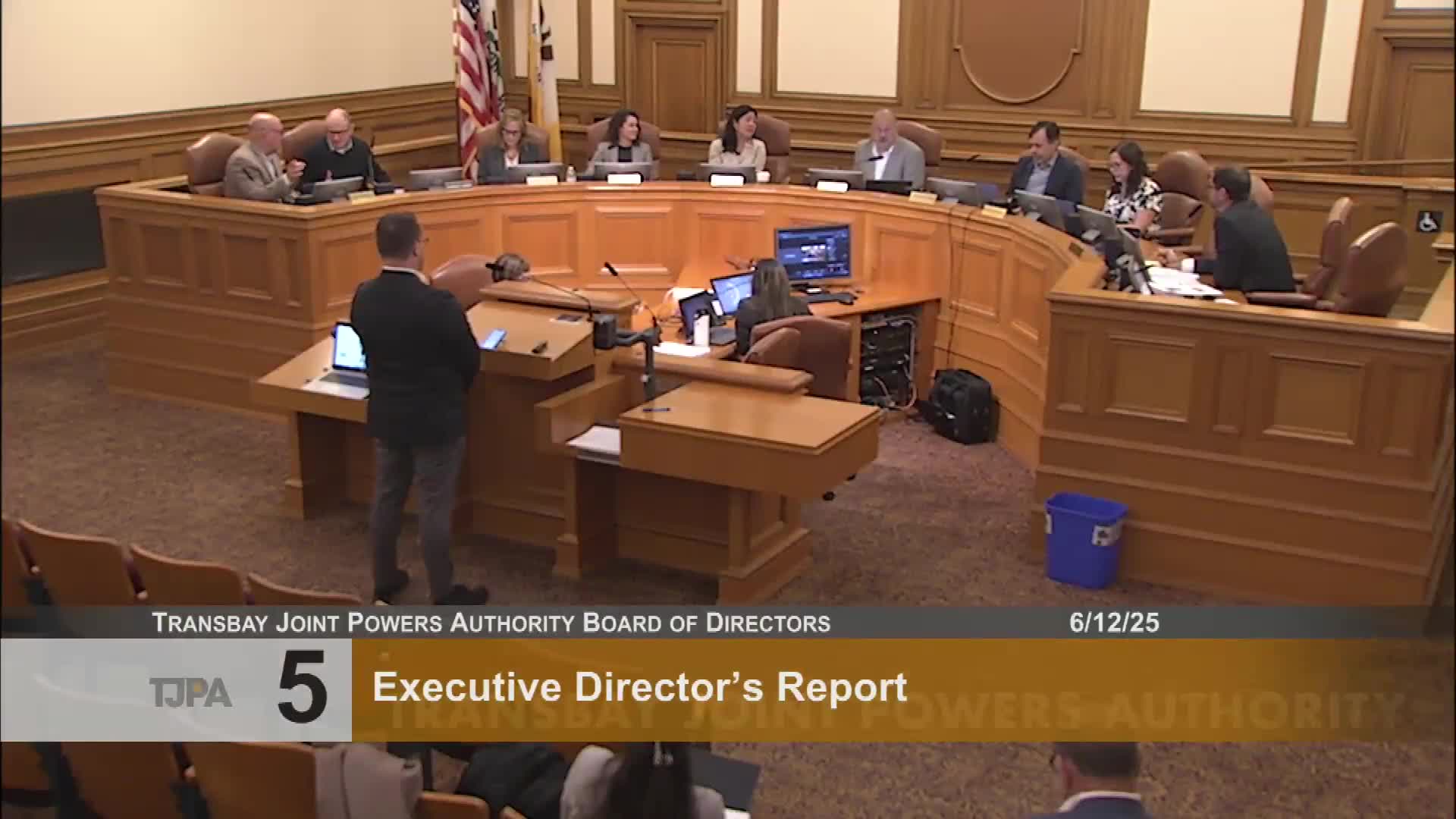
Federal lobbyists at the June 12 Transbay Joint Powers Authority meeting told the board that Washington's current priorities and narrow congressional margins are reshaping how agencies should make the case for projects and grants.
Julie Minerva of Carpe and Clay and Keith Hartwell, long-time TJPA federal advocate, briefed directors on the administration's emphasis on "safety" and on the FY26 federal budget outlook for transportation programs. Minerva advised that Department of Transportation staff now foregrounds safety, ridership and system cleanliness in early conversations with the administration, and that forthcoming updated guidance for the FTA Capital Investment Grants (CIG) program should be closely reviewed because even small changes can affect project readiness.
Hartwell discussed the TJPA's CRISI grant award of $24.6 million and the ongoing grant-agreement negotiations with the Federal Railroad Administration (FRA). He said TJPA submitted final documentation and, as of the board meeting, the FRA lawyers were expected to finish a final letter agreement by mid-July and forward it for USDOT review and signature. "DOT sign off is not guaranteed," Hartwell cautioned, "but as of today, we have no indication that this grant will be withdrawn."
Why it matters: The briefings are intended to help TJPA align messaging and evidence for federal funders as the agency seeks advanced appropriations, grant agreements and future discretionary awards. Federal aides urged emphasizing tangible, everyday benefits (fewer transfers, lower commute cost, employer and commuter testimonials) in outreach to the current administration.
Key points - Safety as framing: Minerva said Secretary Duffy and DOT staff are prioritizing station and ridership safety; messaging that opens meetings with safety points helps when presenting project funding requests. - CIG guidance: Updated FTA CIG guidance was expected soon; advocates warned small guidance changes can materially affect projects across the industry. - FY26 funding: Advocates reported proposed funds roughly consistent with prior years'CIG levels (approximately $3.8 billion when including IIJA advanced appropriations) and continued CRISI program funding. - CRISI grant status: Hartwell said the FRA assigned a grant manager to TJPA and that the final grant-letter agreement was expected to be prepared by FRA lawyers by mid-July and sent for USDOT signoff; the board was advised that DOT signoff could still be withheld. - Messaging strategy: Hartwell recommended recruiting commuters and private employers to provide testimonials about how the project reduces travel time and parking costs and supports return-to-office trends.
Board reaction: Directors thanked the advocates and asked for continued coordination. Several directors encouraged the advocates to emphasize that the portal is an existing, built environment (Salesforce Transit Center) and electrified corridor benefits when seeking federal support.
Provenance evidence: Presentation by Julie Minerva (Carpe and Clay) and Keith Hartwell (federal advocate) was recorded in the transcript beginning at the federal update presentation and ending with the board's questions (transcript timestamps 01:05:58—:19:19).