Get Full Government Meeting Transcripts, Videos, & Alerts Forever!
Get email alerts on the Ethics Travel Liability topic
No spam. Unsubscribe anytime.
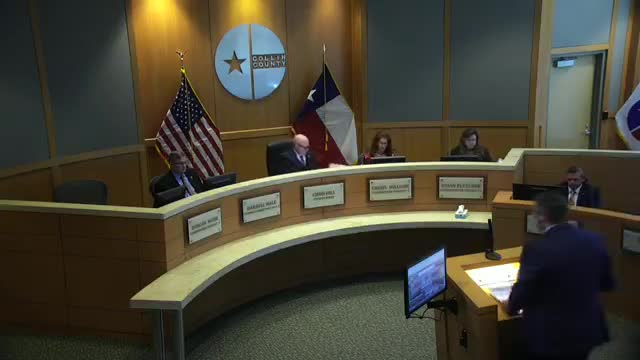
Court discusses donated Israel trip for sheriff’s office staff; no county action taken
Summary
Commissioners reviewed a donated trip to Israel for sheriff’s office personnel, raised liability and benefit concerns and heard staff describe the trip as voluntary and on vacation time; the court took no action.
Commissioners discussed a donor-funded trip to Israel offered to Collin County sheriff’s office personnel and received legal and administrative clarifications but took no official action.
Deputy attorney Russell Schauffner told the court the trip was donated through a third-party organization and that staff participating intend to take vacation time; staff’s position was that the trip “is outside of the scope and duties of the sheriff’s office personnel that will be going to Israel,” he said. Schauffner added staff were coordinating with the National Sheriffs’ Association to provide a sponsorship structure that could help attendees’ survivors pursue federal death-benefit programs if a tragedy occurred.
Sheriff Jim Skinner said the trip is not a county-sponsored travel event and that participating personnel will use PTO. “This is not a vacation,” he said in public remarks emphasizing training value; later he confirmed participants will take PTO to attend. The court probed whether the trip would create county liability or entitlement to county line-of-duty benefits and whether the county’s travel and gift-acceptance policies applied. Cynthia Jacobson from HR outlined standard county benefits and workers’ compensation rules for line-of-duty deaths and explained distinctions between county-provided survivor benefits and a separate federal death benefit for law enforcement killed in the line of duty.
Some commissioners expressed concern about perception and the risk to taxpayers if a participant were to be injured or killed while traveling. Commissioners also raised administrative concerns: tax consequences, acceptance of gifts, concentration of senior leadership traveling together and whether the trip should have been routed through a formal county acceptance process rather than privately arranged. The sheriff said he had discussed program funding and insurance options with the National Sheriffs’ Association to provide greater access to federal benefits for survivors.
No motion was made to accept a gift or otherwise alter county policy; one proposed motion to acknowledge the privately donated trip was withdrawn so the court could take more time to consider the implications. Commissioners asked staff to continue coordinating and to bring any necessary policy changes back to court for formal consideration.