Get Full Government Meeting Transcripts, Videos, & Alerts Forever!
Get email alerts on the Downtown Parking Design topic
No spam. Unsubscribe anytime.
Toledo committee pauses downtown parking-lot design rules pending funding, outreach
Summary
A proposed text amendment that would require design upgrades for non‑accessory downtown parking lots drew concern from lot owners and operators about cost, enforcement and safety. The zoning committee held the item in committee pending answers about financing and communication plans.
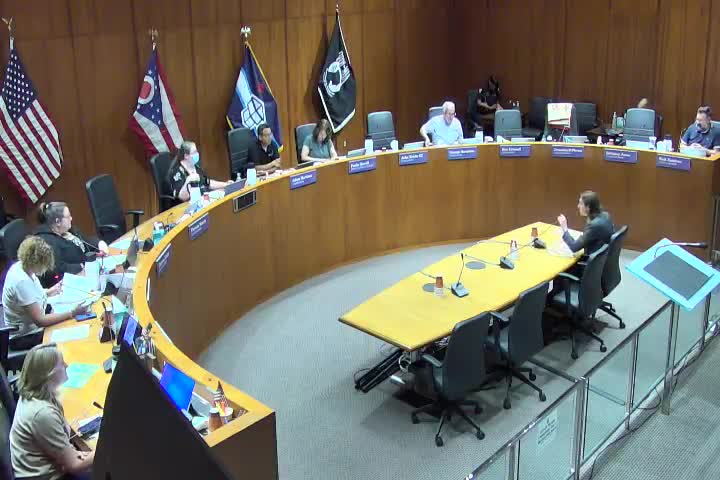
The Toledo Zoning and Planning Committee on June 11 heard extended testimony and public comment on a proposed text amendment to Toledo Municipal Code (TMC) that would require design standards for surface parking lots in the Downtown Overlay and Warehouse Districts. Staff author Alex Schultz said the amendment would transfer design‑review authority to the Downtown Parking Lot Review and Improvement Advisory Committee (DePolriac) and set staged compliance deadlines tied to business license renewals.
The planning staff presentation said non‑accessory parking lots — defined in the amendment as lots where users pay monthly, hourly or event fees — would be required to meet design criteria by zone: Zone 1 by April 1, 2027; Zone 2 by April 1, 2028; and Zone 3 by April 1, 2029. “If you haven't gotten your design criteria in by your license renewal date, you won't get your new license,” Schultz said, describing enforcement through the licensing process.
Why it matters: the change would affect commercial parking operators who charge for spaces and could require brick pillars, decorative fencing and other improvements that owners say reduce available stalls and impose significant private costs. Speakers representing lot owners and operators urged safeguards, funding and grandfathering for existing improvements.
Several downtown parking owners said the measure would impose heavy, uncompensated costs. Jonathan Cherry, managing partner of BCA Parking LLC, asked the committee why the requirement “is not taking our property without compensation,” and urged that an exemption for properties in the industrial northern overlay not be retained in the final code language for his parcel.
Michael Miller, president and CEO of Quick Parking and chair of DePolriac, supported beautification but said a funding promise from 2019 has not materialized. “In 2019 when this passed, there was a promise of funding for the parking lot owners. That funding has not been set up,” Miller said, urging the committee to confirm whether Port Authority financing remains available. City staff acknowledged an earlier Port Authority mechanism had been discussed; the current status was not specified.
Owners and operators raised safety and functional concerns as well. Ted Vidoras, a long‑time small operator, warned that “caging in the parking lots is a horrible idea,” arguing enclosed or heavily fenced lots could reduce visibility and create safety risks for customers and attendants.
Staff and advocates described flexibility baked into the proposal: the DePolriac would be empowered to consider waivers or modifications “if it meets the spirit and intent of the criteria” and to grant timeline extensions where needed, Schultz said. Properties already accessory to a use and providing free parking would be grandfathered, staff said.
Council members pressed staff for a communication plan and for a clearer funding commitment. Councilwoman Gattis asked whether council members representing affected districts would be kept informed; staff said renewal notices could carry compliance reminders and agreed to provide district council members copies of outreach materials. Council members also requested a written update from the Port Authority on the previously discussed financing mechanism and its availability.
Because committee members said they had remaining questions about funding, enforcement and the details of zone mapping, the committee kept the item in committee rather than forwarding it to full council. The planning commission had previously recommended approval; the zoning committee will revisit the amendment after staff provides the requested financial and outreach information.
Next steps: staff will follow up with the Port Authority and provide a written communication plan and the zone map to council members; the committee will return the item to the agenda once those items are supplied.