Lifetime Citizen Portal Access — AI Briefings, Alerts & Unlimited Follows
Sibley and Iona press for Club Memory, dementia navigation expansion as D.C. population ages
Loading...
Summary
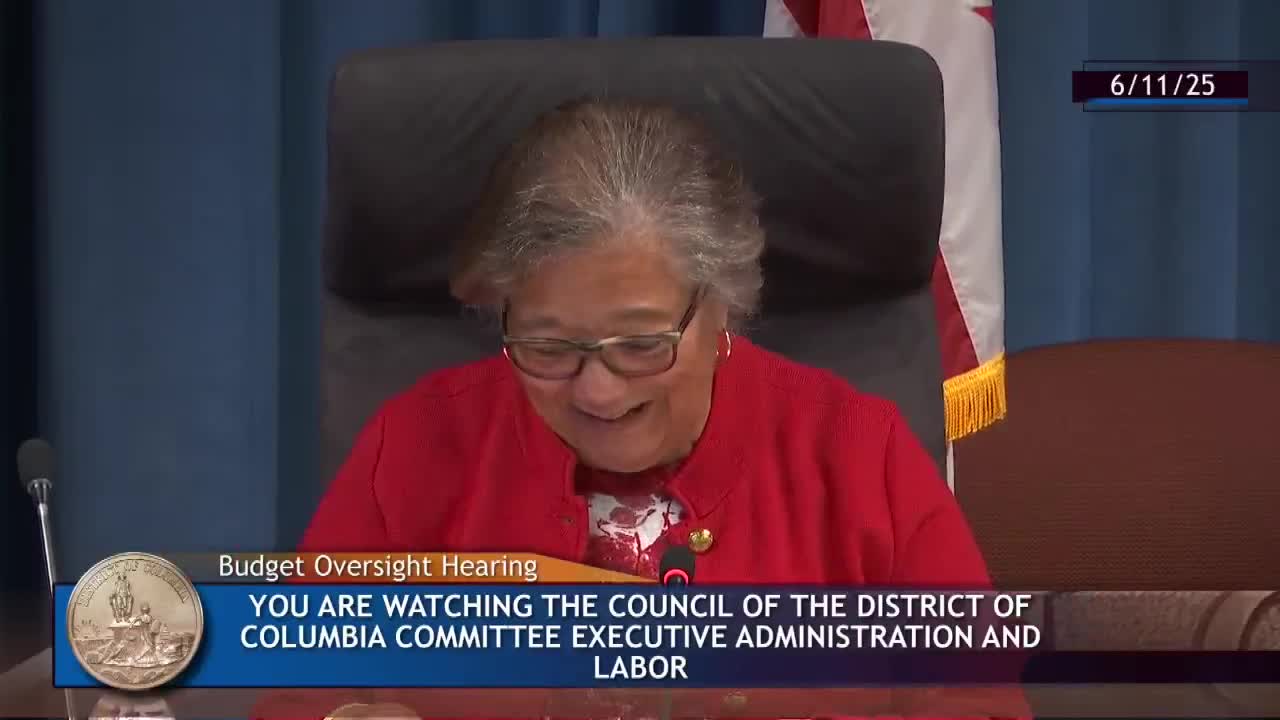
Sibley Memorial Hospital, Iona Senior Services and caregivers told the Committee on Executive Administration and Labor on June 11 that Club Memory and dementia navigation services must expand to meet rising local need; Sibley asked for $250,000 to add support groups and faith-based sites.
Sibley Memorial Hospital and other dementia-service providers urged the Committee on Executive Administration and Labor on June 11, 2025, to increase funding for Club Memory and related dementia navigation programs that serve older residents and their care partners.
Why it matters: Testimony described a high local prevalence of dementia—Sibley cited a 13% prevalence among adults 65 and older in D.C., which the hospital said equates to over 10,000 residents living with dementia—and stressed that oversight, navigation and peer-support programs reduce emergency room use, repeated hospitalizations and homelessness for people living with cognitive impairment.
Sibley’s director of government affairs, Rayna Jordan, said Club Memory currently serves roughly 900 seniors and 160 care partners across six senior wellness centers and five churches; she said 42% of Club Memory participants live in Wards 7 and 8. Jordan asked the committee to approve an additional $250,000 that, according to Sibley’s testimony, “could start 10 Alzheimer's support groups … extend our club memory program to 5 additional faith-based partners reaching at least 150 more seniors … [and] increase the number of weekly reassuring phone calls.”
Iona Senior Services described its dementia navigator model with a case example. CEO June Bang recounted an older resident, described in testimony as “Mrs. Woods,” whose care team used dementia navigation and advocacy to secure appropriate medical care and a skilled nursing placement; Iona said that without the program the person likely would have experienced repeated emergency department visits, shelter stays or homelessness. Bang said Iona received a $250,000 enhancement in FY25 to expand dementia navigation but warned the organization’s capacity would be reduced in FY26 if that enhancement is not continued.
Care partners and program participants offered personal accounts. Joyce A. Thompson, a care partner and dementia support associate, described Club Memory as a “hand holder” through the disease: staff made reminder calls, encouraged families to attend support groups and the program provided community connections when family networks were limited. Harold Valentine, a longtime participant, said Club Memory “feels like family” and urged expansion into Shaw and other neighborhoods where seniors currently must travel out of ward to reach services.
Sibley outlined concrete program outcomes and deliverables for additional funding: more Alzheimer’s support groups (including Spanish-speaking care partners), expanded faith-based partners, more memory screenings, volunteer training and targeted outreach to seniors living alone. Iona and other witnesses emphasized the role of dementia navigation in preventing costly downstream outcomes and urged the committee to preserve enhancements that maintain current service levels.
Ending: Committee members asked providers to submit written program details and budgets; Chairperson Bonds kept the hearing record open through June 25 and scheduled follow-up engagements with DACL and other agencies.