Get Full Government Meeting Transcripts, Videos, & Alerts Forever!
Get email alerts on the Financing Technology Inclusion topic
No spam. Unsubscribe anytime.
UN deputy secretary-general urges new financing, warns aid for disability inclusion has halved and calls for accessible AI and focus on indigenous persons
Summary
Deputy Secretary-General Amina Mohammed told the conference that global financing for disability inclusion has fallen sharply and called for innovative financing, debt relief and accessible AI, while urging special attention to indigenous persons with disabilities ahead of the World Summit for Social Development.
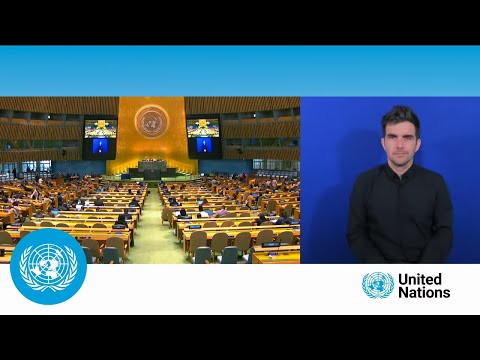
Amina Mohammed, Deputy Secretary-General of the United Nations, told delegates at the 18th session of the Conference of State Parties that global support for disability inclusion is declining and urged states and multilateral institutions to mobilize new financing and address technology gaps.
"Progress requires investment, yet today global support for disability inclusion has been cut in half, falling ... from $500,000,000 to around $250,000,000 in just 2 years," Mohammed said, warning that cuts were translating into lost services, fewer assistive devices and reduced access to education and health for persons with disabilities. She called for targeted investments and "tailored solutions such as microfinance, social impact bonds, and public private alliances" and urged action to "recapitalize multilateral development banks, provide debt relief, and reform the international financial architecture" so developing countries can invest in inclusive systems.
Mohammed also highlighted the potential and the risks of artificial intelligence for inclusion: "AI can be the difference between isolation and full participation," she said, noting that biases are being hardwired into algorithms and that "about 70% of AI-powered assistive technologies are concentrated in developed countries." She urged developed states to support technology transfer and regulation to ensure accessibility.
For the first time in the conference's history, the session is spotlighting the rights of indigenous persons with disabilities. "Realizing the rights of indigenous persons with disabilities requires culturally appropriate approaches and meaningful inclusion in decision making," Mohammed said, and repeated the conference's call to "leave no one behind." She invited member states, UN entities and civil society to contribute to the session's deliberations and to the forthcoming second World Summit for Social Development.
Mohammed framed the conference as an opportunity to strengthen public awareness and practical cooperation to advance the rights of more than 1.3 billion persons with disabilities worldwide.
Her remarks set priorities for the COSP roundtables and signaled an emphasis on finance, technology and intersectional inclusion for the coming discussions.