Council opens public hearing on Amazon Prime Air drone hub proposal; neighbors voice noise and quality‑of‑life concerns
Loading...
Summary
Amazon proposed a 10,000‑square‑foot "paddock" drone hub at its Richardson fulfillment site and briefed the council on aircraft, operations and FAA approvals; neighbors urged denial, citing noise and quality‑of‑life concerns.
Amazon representatives presented a proposal to amend the STX‑8 Planned Development to allow a commercial drone delivery hub as an accessory use at 3030‑51 Research Drive, a fulfillment center in Richardson's industrial area. The application would add definitions for "commercial delivery hub," cap the paddock at 10,000 square feet and limit launch pads to four on the concept plan; Amazon asked the council to approve operational hours consistent with FAA civil twilight (30 minutes before sunrise to 30 minutes after sunset).
Amazon senior manager Sam Bailey described the Mark 30 aircraft the company plans to operate under an FAA Part 135 air‑carrier authorization and said the company would base about 10–15 drones and 10–15 on‑site monitors at the paddock, with a potential capacity up to 300 flights per day under high demand. "This is a permanent infrastructure investment into the site that would operate from the City of Richardson," Bailey said, describing battery storage, launch pads and a fenced paddock adjacent to the existing building.
Noise, safety and process questions: Several council members pressed Amazon on hours and community impacts. Council Member Justice proposed tying allowable launch hours to the city's noise ordinance rather than the FAA civil twilight standard; Council Member Corcoran asked whether the city could require a future special use permit if problems arise. City staff said changing or revoking a zoning approval later would be legally difficult and that converting the approval into a special‑use requirement now would add steps and delay the project; staff also said a PD amendment is the typical mechanism when an applicant proposes site infrastructure changes for a single property.
Public comments: A Creek Hollow neighborhood resident, Dante Lopez, and other attendees told the council they have experienced increased industrial traffic and noise in recent years and said drone overflights would add to quality‑of‑life impacts. "There's been a lot of changes in this area over the last 4 years, and collectively, they've not been conducive to the residents," Lopez said, asking council to deny the request. Another resident, Eric Scott, said he had heard drone flights in nearby neighborhoods and urged caution.
FAA and environmental review: Amazon told council the PD amendment is only the land‑use step; airspace approvals, including an FAA environmental assessment and a certificate of authorization, would be required before the company could begin flights. Amazon said it had modeled noise at a comparable site in Tolleson, Ariz., and provided decibel readings for the paddock, the nearest yards and other points; the company said the Mark 30 has a lower measured noise profile than an earlier model used in College Station.
What council asked for: Council members asked staff to return with clarifying language that could include a required reportback on complaints, and several members suggested the council could require a review or status update after a defined period (for example, six months) so elected officials could evaluate recorded complaints and operational impacts. Staff cautioned such reviews do not guarantee that an approved zoning condition can be reversed absent a substantial legal basis; Amazon said it would continue community outreach and pursue FAA clearances after any local land‑use approval.
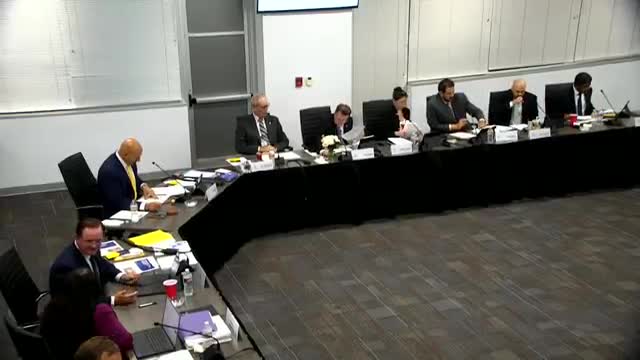
The hearing: The public hearing was opened and several members of the public spoke. No final zoning action was taken at this meeting; the item remained under council consideration.