Get Full Government Meeting Transcripts, Videos, & Alerts Forever!
Get email alerts on the Woodland Wildlife Conservation topic
No spam. Unsubscribe anytime.
Committee amends and advances woodland and wildlife conservation changes after extensive debate on equity, reforestation funding and developer relief
Summary
CB 46, which would alter parts of the county’s Woodland and Wildlife Habitat Conservation Ordinance, was advanced as amended after a lengthy hearing with planning, environment and outside stakeholders expressing concerns about canopy loss, state compliance and fee use; the committee adopted sponsor amendments and moved the bill out 4‑0.
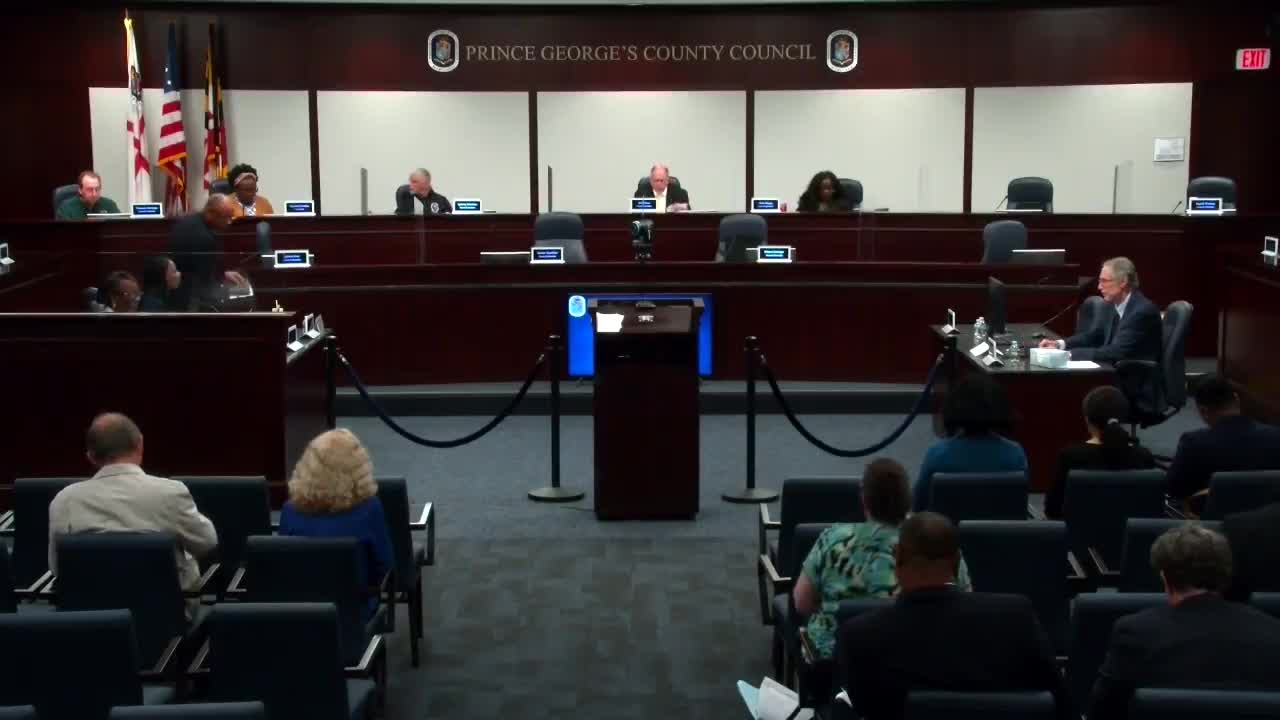
The Transportation, Infrastructure, Energy and Environment Committee advanced CB 46 (as amended) on June 9, 2025 after an extended hearing that drew planning staff, the Department of the Environment, conservation groups, and developers to testify on tradeoffs between tree canopy preservation and redevelopment in transit‑oriented areas.
What the bill would change: The measure proposes revisions to Subtitle 25 (Trees and Vegetation) and would, among other changes discussed in committee, (1) adjust the ordinance’s treatment of certain transit‑oriented centers and a definition referenced as a “qualified project,” (2) reintroduce an exemption threshold for small residential construction activity, and (3) change allowable uses for Woodland Conservation Fund monies and the fee‑in‑lieu language. Sponsor and staff outlined a list of specific edits; during the hearing the sponsor proposed amendments that the committee adopted and which the sponsor committed to include in an updated Draft 2 prior to introduction.
Key context and conflict: Planning staff and the Department of the Environment warned that the proposed changes could increase canopy loss, exacerbate tree inequity in areas with low existing canopy, and potentially put the county out of step with state requirements under the Maryland Forest Conservation Act (the state’s woodland conservation framework). Planning presented maps and analysis showing lower canopy in several council districts and cautioned that the state’s 2023 revisions and a required “no net loss” approach could trigger substantial rewrite costs and restoration obligations if local regulations fall short.
Agency and stakeholder testimony: Planning Director Lakeisha Hall and planning staff recommended a set of ten technical amendments and urged retention of provisions that limit fee‑in‑lieu and keep variance procedures for on‑site thresholds. Dawn Hawkins Nixon of the Department of the Environment said fee‑in‑lieu revenues fund urban tree planting and urban canopy work and warned that narrowing allowable uses would materially reduce funding for street trees, community plantings and urban reforestation. The Sierra Club’s Janet Gingold urged the council to oppose CB 46, saying it would “exacerbate inequity and the distribution of trees” and would weaken climate resilience in lower‑canopy communities.
Developer and industry perspective: Developers and counsel argued the 2024 ordinance produced unintended consequences that make redevelopment difficult and reduce available bank credits; they urged restoration of fee‑in‑lieu flexibility so large redevelopment projects can proceed. Several industry witnesses said an inflexible on‑site threshold plus a shortage of available afforestation bank credits could render many redevelopment projects infeasible and remove development opportunities needed to grow the tax base.
Committee action and amendments: The sponsor presented a package of amendments that, among other changes, would delete the new “qualified project” definition, restore a smaller exemption threshold (10,000 square feet rather than 20,000), restore provisions allowing use of Woodland Conservation Fund monies for urban tree planting, and reinstate an inflation adjustment for fee‑in‑lieu. The committee voted to adopt the sponsor’s amendments (recorded vote on the amendments: 5‑0) and then voted to advance the bill as amended. The clerk recorded votes in committee resulting in a 4‑0 recorded favorable motion on the main bill as amended.
Why it matters: Planning staff and the Department of the Environment said the final mix of technical language will determine whether the county can meet state compliance obligations, protect urban canopy where it is most needed, and still allow redevelopment in transit‑oriented areas. The committee directed additional refinements and the sponsor agreed to finalize the updated draft and to meet with planning and environment staff before introduction.
Quotes from the hearing (selected): • "This legislation most likely will lead to more tree canopy loss within the county. It may exacerbate tree inequity within the county," Alex Hertel, policy analyst. • "We do work very hard to mitigate some of those impacts to the natural environment…these funds fund many of our community tree planting projects," Dawn Hawkins Nixon, Department of the Environment. • "There are projects that are fully developed that do not have any woodlands or any trees on them at all, which are now going to be required to plant a certain threshold of woodlands," Thomas Haller (developer counsel).
Taper: The committee advanced CB 46 as amended and asked the sponsor and staff to reconcile outstanding technical questions with planning and environment staff prior to full council introduction.