Get Full Government Meeting Transcripts, Videos, & Alerts Forever!
Get email alerts on the Public Health Opioid Treatment topic
No spam. Unsubscribe anytime.
Committee holds opioid-treatment zoning change to seek planning-board review and clearer definitions
Summary
The PHED Committee voted to hold CB-27-2025 and transmit the amended draft to the planning board for comment after discussion about definitions, existing facilities operating under different codes, and the 500-foot distance provision.
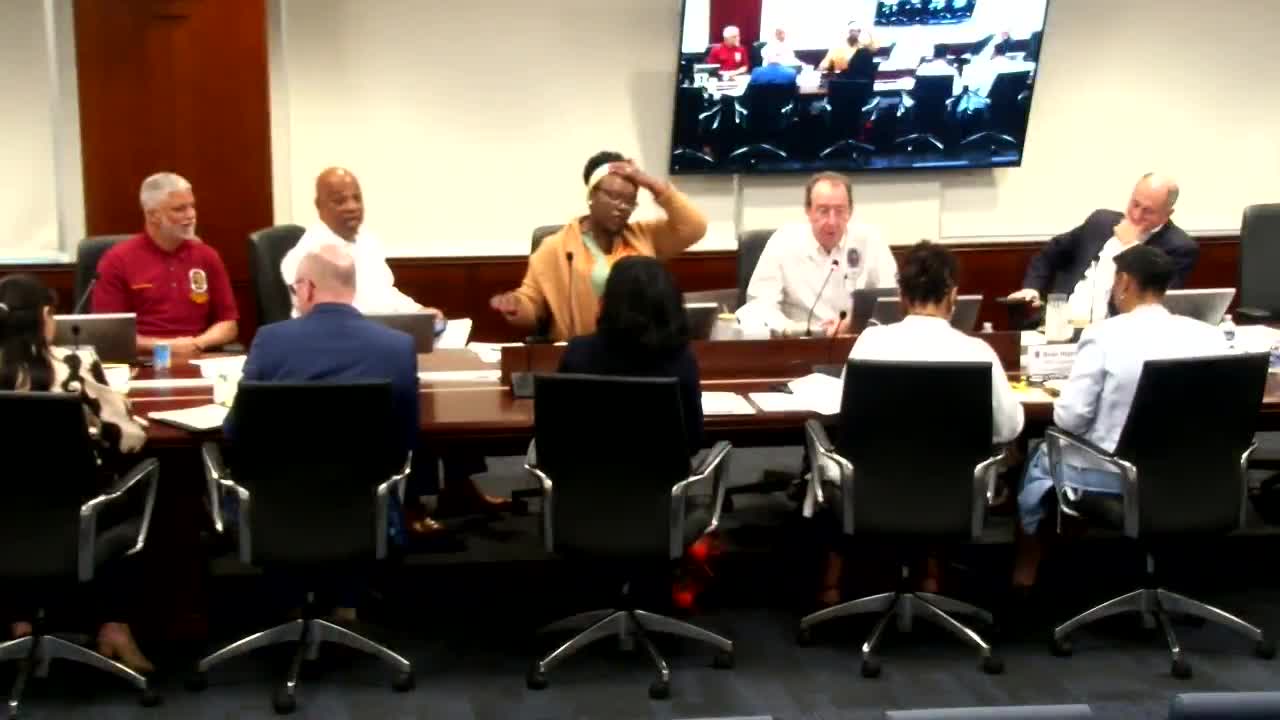
The Planning, Housing and Economic Development Committee on June 5 held CB-27-2025, a proposed ordinance to define opioid treatment centers as a new principal use type, set conditions for their approval and establish off-street parking standards.
Why it matters: Committee sponsors said the bill aims to preserve access to opioid treatment services while setting locational and operational standards; staff and health-care commenters flagged definitional questions and existing providers that may operate as physician offices rather than regulated clinics.
Committee discussion and staff testimony described substantial changes to the original draft. Council Member DeNova and co-sponsor Council Member Ivy explained the revised approach seeks to align more closely with definitions used in Anne Arundel and Baltimore counties by treating licensed medical clinics under state law similarly and retaining the committee’s 500-foot distance rule in the county’s principal use table. The sponsor said the committee recently learned of at least one Laurel site listed on the county website as a methadone/Suboxone clinic for which the zoning record was not clear; staff said some providers may be functioning as physician offices that prescribe buprenorphine or naltrexone rather than operating as methadone clinics that require a different licensing threshold.
Dr. Levy (county health representative) told the committee the distinction matters because physicians with DEA registration can prescribe buprenorphine in office settings, which may not fall under the same zoning classification as a methadone clinic. Planning Director Lakeisha Hall said staff needs time to review the updated draft and mapping and to coordinate with the health department before returning a quality product to the planning board.
Public testimony included Stacy Jones, who described personal experience with substance-use disorder and urged the committee to adopt measures that increase local access to treatment. "I have learned the hard way just how important it is to have access to treatment and how much harder it is when that help isn't nearby," Jones said.
Legal staff and planning counsel advised that the scale of substantive changes makes review by the planning board appropriate before advancing the bill. David Warner, principal counsel to the planning board, said returning the draft to the planning board for comment would allow the board to review the substantive provisions that were not part of the initial LDR package.
Action: The committee voted to hold CB-27-2025 for further study and to transmit the substitute draft 2a to the planning board for comment, with an expectation to return to committee. The clerk recorded the motion carried 4-0.
Ending: The committee directed staff to coordinate with the health department, planning board and the incoming county executive’s office; staff indicated an intent to return the item before the July 9 committee meeting if possible.