Get Full Government Meeting Transcripts, Videos, & Alerts Forever!
Get email alerts on the Drone Delivery topic
No spam. Unsubscribe anytime.
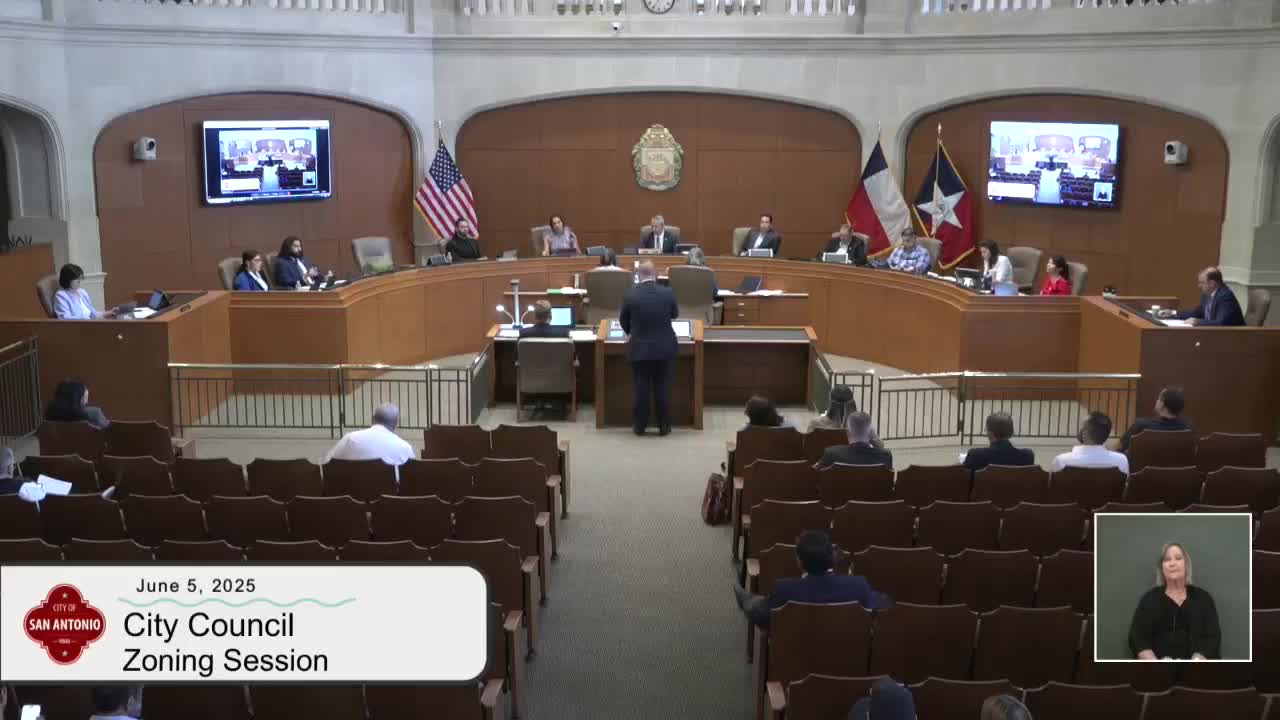
Council delays then approves Amazon drone delivery station; FAA review still required
Summary
The San Antonio City Council approved a special-use zoning authorization for Amazon’s Prime Air drone delivery station at SAT 3 after a failed attempt to continue the item; local land-use approval is only the first of several regulatory steps, with FAA airspace and environmental reviews still pending.
The San Antonio City Council on Thursday approved a special-use zoning authorization for an Amazon Prime Air drone delivery station at the SAT 3 fulfillment center in District 2, a project company representatives said would initially operate 10–15 drones and deliver packages of up to 5 pounds within a nominal 7.5-mile radius.
The vote came after a contentious discussion and a failed motion to continue the item so the council could receive a fuller citywide policy presentation. Sam Bailey, senior manager for economic development policy at Amazon, told the council the site would support faster deliveries for items such as prescription medications and other small essentials and that Amazon has engaged neighborhoods near the site with in-person meetings.
The zoning approval is only the first required permission. Bailey said Amazon must complete FAA airspace approval and an environmental review, including a public comment process leading to a finding of no significant impact (FONSI), before drone flights could begin. The company also said it has a letter of no objection from the Texas Military Department for proposed flight paths in some nearby airspace.
Council discussion focused on safety, jobs, environmental and wildlife impacts, hours of operation, and how the city’s Unified Development Code (UDC) will treat drone operations going forward. Councilmember McKee Rodriguez, who moved approval, said her office and the applicant conducted extensive outreach and that she expects the project to create “new jobs at higher wages” and to serve residents in a medically underserved area. Several members requested a broader policy discussion about drone rules and the UDC, and one councilmember opposed approval today for that reason.
Amazon told the council the craft planned for SAT 3 are roughly 4 feet 11 inches by 5 feet 6 inches, weigh about 83 pounds, and carry up to a 5-pound payload. The company said redundancy and on-site monitors reduce risk, described obstacle-avoidance sensors, and said the drones would abort a delivery if a safe landing could not be made. Amazon said it would notify the FAA and local first responders in the event of any incident requiring reporting to federal authorities.
City staff explained there is precedent in the UDC for writing “brids” (staff interpretations) for new uses in gray areas, similar to how helicopter-related uses have been handled; the director of development services said any formal code language would be reviewed in the next UDC cycle (2027) unless the council requests an accelerated process. Staff also said that while some federal operational limits (for example, daylight restrictions) exist, the city has not written drone hours-of-operation into local conditions for this case.
Mayor Ron Nirenberg and several council members emphasized that FAA approvals and the environmental review remain necessary steps and that the council can impose zoning conditions on future similar cases. After the council declined to continue the item to August, the main motion to approve passed. Council members asked staff to return with citywide policy options for future drone uses.
What happens next: Amazon must complete FAA airspace approvals and the required environmental review (with public comment) before operations would start, and the city’s UDC process will determine whether and how the use is codified or amended in future code cycles.