Get Full Government Meeting Transcripts, Videos, & Alerts Forever!
Get email alerts on the Ebt Bridge Card Photo Id topic
No spam. Unsubscribe anytime.
Committee hears bill to add photo and signature to Michigan Bridge Cards
Summary
The Michigan House Committee on Government Operations heard testimony on House Bill 4288, which would require a photograph and signature on Bridge Cards (EBT). Supporters said it would curb fraud; opponents raised access and cost concerns and the House Fiscal Agency (HFA) flagged unclear net savings.
The House Committee on Government Operations heard testimony on House Bill 4288, which would require a photograph and signature to be captured and printed on Michigan Bridge Cards issued for food and cash assistance.
Proponent Representative Wolford, the bill sponsor, told the committee the measure would limit unauthorized use and “reduce the unauthorized use such as, card trafficking or use by a non authorized individual.” He said the change could cut large-scale fraud, estimating a potential savings of about $3 billion and arguing that taxpayers are harmed by current misuse. “At the end of the day, we know there's waste, fraud, and abuse,” Wolford said.
The sponsor described the card as issued to one individual with one authorized user and said the proposal would require photos of both the primary recipient and any authorized user. Wolford said the requirement would likely mirror other photo-ID processes and suggested costs would be justified by fraud reduction.
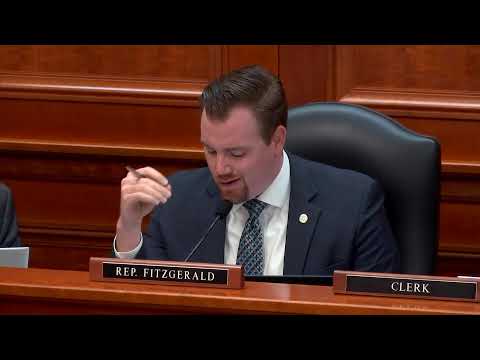
Members questioned how the requirement would work in practice. Representative Fitzgerald cited a House Fiscal Agency fiscal note and summarized the agency's finding that the cost to the Department of Health and Human Services (DHHS) would be “indeterminate but likely moderate,” including one-time startup costs for card design, equipment and training, while projected savings from reduced fraud were “indeterminate but likely negligible.” Fitzgerald said that balance raised questions about whether the expense would be justified by the benefit.
Other members raised access concerns for recipients with disabilities or transportation barriers and asked whether photos could be provided by applicants rather than requiring an in-person visit. Fitzgerald noted that requiring an in-person photo could create an access issue for households that rely on transit or have mobility limitations. Wolford responded that authorized users or community transportation options already help some residents update other state IDs and that the state could explore using existing Secretary of State photo records to reduce costs.
Several lawmakers suggested alternatives. A representative pointed to Public Act 78 of 2020, which allows fingerprint-based verification for certain purchases, and recommended exploring biometric options as a different approach to prevent fraud. A law enforcement perspective offered to the committee noted prior cases where Bridge Cards were used in criminal schemes, including purchases related to drugs and human trafficking, and said added identifying information could help investigations.
The committee read three written “cards” into the record from organizations that did not wish to speak: Maureen Bolger of the Michigan League for Public Policy (opposed), Anna Almanza of the Food Bank Council of Michigan (opposed), and Christine Suave of the Michigan Immigrant Rights Center (neutral). The committee did not take a vote on HB 4288 during the hearing.
The committee approved minutes from its May 30 meeting without objection before the HB 4288 hearing and then adjourned.