Get Full Government Meeting Transcripts, Videos, & Alerts Forever!
Get email alerts on the Short Term Rentals topic
No spam. Unsubscribe anytime.
Hocking County commission reviews draft short‑term rental rules, other land‑use tools
Summary
The Hocking County Zoning Commission reviewed draft land‑use tools on May 29 that would require short‑term rental permits, 24‑hour local contacts, standardized address numbering and driveway standards for first responders; staff were directed to research impact fees, enforcement and tax collection options.
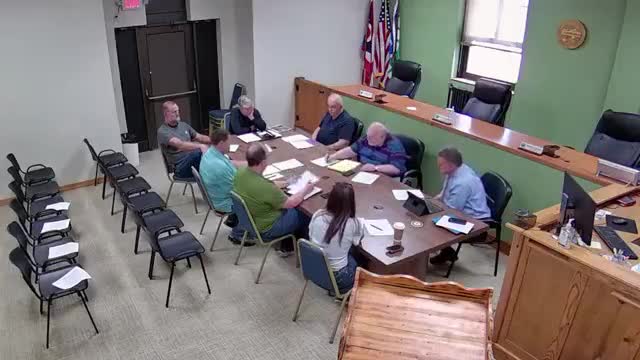
Hocking County zoning officials on May 29 discussed draft land‑use tools focused on short‑term rentals and related safety, identification and enforcement measures as the county seeks to respond to rising rental activity and repeated emergency calls.
The commission, which has met monthly since spring 2023 with consultant American StructurePoint, reviewed proposals that would require a short‑term rental permit or registration, a 24‑hour local contact for each rental, conspicuous address numbering tied to the county grid, driveway and parking standards that meet first‑responder needs, occupancy limits tied to unit capacity and minimum insurance and nuisance rules. The commission also discussed pursuing impact fees to help fund emergency response and other county costs.
The proposals were framed as “land‑use tools” rather than full zoning, meaning they would set conditions for uses rather than reclassify parcels. The meeting chair summarized early outreach and surveys, saying more than 400 people responded to the commission’s questionnaire and that other outreach by the Hocking Hills Tourism Association returned about 700 responses from a mailing to roughly 17,000 households. “Over 90% of the people that responded and attended feel like there’s a need for something,” the meeting chair said.
Why it matters: commissioners and first responders described a growing workload tied to short‑term rentals and remote cabins. County and local fire and EMS officials reported substantially increased runs in recent years; commission discussion referenced EMS counts in the thousands and Logan area fire runs rising from about 900 last year to a higher number this year. Commissioners said some emergency calls are complicated by missing or inconsistent addressing, narrow or substandard private drives, lack of on‑site phone service, and out‑of‑area owners who cannot be reached quickly.
Key proposals and concerns
- Short‑term rental permit/registry: The commission discussed a permit or registration system intended to be more robust than current bed‑tax reporting. Proposed elements include proof of insurance, an attested occupancy limit tied to advertised sleeping capacity, and a requirement to register the property with the county’s bed‑tax administrator. Commissioners said they will consult the county’s tax administrator about whether platform collection (Airbnb/VRBO) can be automated or required as part of registration.
- 24‑hour local contact: Members repeatedly emphasized the need for a local contact who can respond quickly when emergency responders or neighbors call. The draft suggests that a contact must be reachable and able to respond in a short timeframe; the commission discussed a one‑hour response window as a target in areas lacking cell service.
- Address numbering and site identification: The commission reviewed the county’s grid‑based house‑numbering system and discussed rules requiring clear, visible numbers on buildings or at property entrances so dispatchers and responders can find remote cabins and clusters of units off private drives.
- Driveway access, turnarounds and parking: Commissioners and guests said private driveways that serve multiple cabins often lack width, turning radius or turnaround area usable by fire apparatus. The group proposed a review or permitting step that would include local fire chief sign‑off for driveway standards, an initial site review before costly road or site work, and parking requirements that match permitted occupancy.
- Building codes and inspections: Commissioners noted that state building codes apply to transient housing but said enforcement appears uneven. The commission agreed to check how the State of Ohio enforces building‑code inspections for short‑term rentals and to coordinate with the health department where septic/well approvals are involved.
- Noise, nuisance and public‑safety controls: Commissioners described repeated complaints about loud parties, shooting ranges and late‑night disturbances at short‑term rentals. They discussed countywide nuisance standards (for example, limits on noise or discharges within a set distance of residences) and the possibility of denying permits where subdivision covenants or other private restrictions prohibit the use.
- Impact fees and emergency costs: The draft includes research into impact fees to offset costs for EMS, fire and other services. Commissioners asked staff to study how other jurisdictions calculate and collect such fees and to consult emergency management and first responders about priorities and templates used elsewhere.
Commission discussion stressed transparency. Several residents and stakeholder groups had asked whether the commission would finish drafting regulations in closed sessions and then present final rules; the meeting chair rejected that characterization, saying the process would remain open and that drafts are being prepared publicly with opportunity for comment.
What was decided and next steps
No ordinance or binding regulation was adopted at the meeting. Formal action taken at the session consisted of ministerial votes to approve the meeting agenda and to adjourn. Commissioners directed staff and the consultant to continue drafting the specific permit and standard language, to coordinate with first responders and emergency management (EMA), to check with the county bed‑tax administrator about tax/platform collection options, and to research impact‑fee models from other counties. The commission also asked county staff to confirm how the State of Ohio enforces building and health inspections for transient housing.
The commission noted it will return to the topic at a late‑June meeting; a firm date was discussed during the session and will be confirmed by staff.
Quotes in context
“We will not be treating this section ... behind closed doors,” the meeting chair said, responding to public questions about process. “The door to my office is open. Call me. Message me.”
Provenance: primary discussion of short‑term rental permits and related land‑use proposals began at the meeting segment where the chair introduced short‑term rental regulation options and continued through repeated agenda items addressing addressing, driveway and emergency access, occupancy limits, and impact fees.
Ending: The commission emphasized that the draft package is intended to be a set of practical, enforceable tools — not an immediate countywide zoning map — and that the next round of drafts will reflect input from first responders, tax staff and the county prosecutor’s office.