Get Full Government Meeting Transcripts, Videos, & Alerts Forever!
Get email alerts on the Votes Roundup topic
No spam. Unsubscribe anytime.
California Senate advances wildfire package and a slate of housing, AI and consumer bills; many measures pass unanimously
Summary
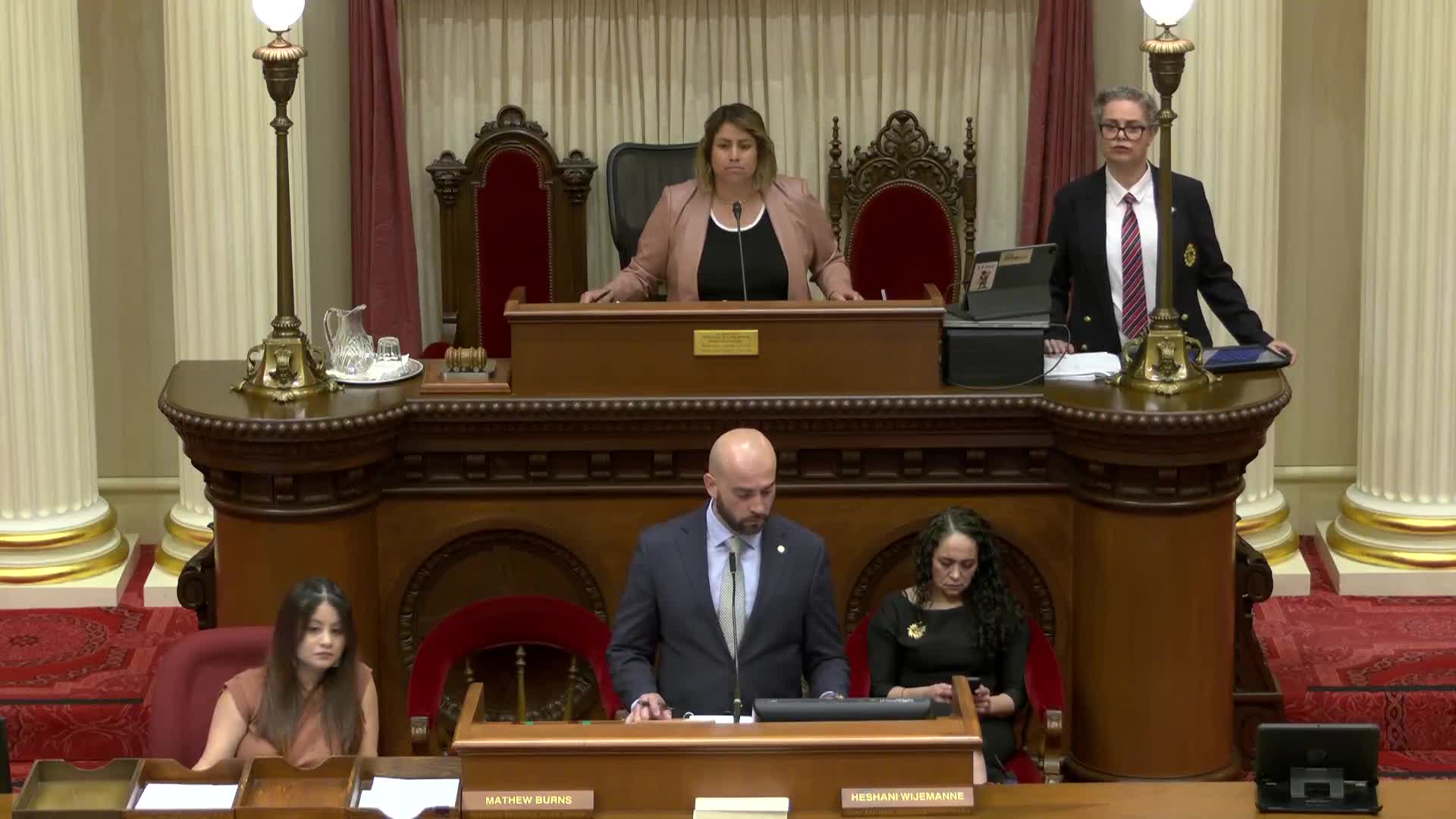
The California State Senate passed a 15‑bill wildfire response package and voted on scores of other measures on June 3, 2025 — including bills on housing near transit, AI safeguards, and consumer protections — with many items moving on largely unanimous or near‑unanimous margins.
SACRAMENTO — The California State Senate on June 3 approved a multi‑part wildfire response package and moved dozens of other bills, debating a wide range of state priorities including housing near transit, artificial‑intelligence safeguards, water planning, utility reliability and insurance protections for disaster victims.
Lawmakers led by Senate President pro Tempore Mike McGuire (D) described the 15‑bill wildfire bundle — dubbed the “Golden State Commitment” — as an immediate response to large January 2025 wildfires that destroyed homes and strained local services. The package includes provisions to speed rebuilds, expand insurance protections for small businesses and homeowners, strengthen penalties for looting and impersonating first responders, accelerate utility undergrounding and hardening, and convert seasonal CAL FIRE firefighters to full‑time status.
Why it matters: The Senate moved dozens of items in a single floor session that ran well into the evening, front‑loading wildfire response as the chamber’s most urgent priority. Many measures passed with broad bipartisan support, and sponsors emphasized a mix of emergency relief (short‑term moratoria, tax relief timelines) and longer‑term changes (planning and funding to harden infrastructure and improve utility and evacuation coordination).
Votes at a glance — selected wildfire & adjacent bills (floor outcomes) - Golden State Commitment overview: Pro Tem McGuire introduced a 15‑bill set to speed relief, rebuilds and long‑term resilience; sponsors said the package will help property tax relief, speed permitting and fund undergrounding and other mitigation. (Sen. Mike McGuire, remarks at s=12367.051.) - SB 663 (Allen) — Property tax and disaster deadlines: Passed (floor recorded broad bipartisan support); urgency clause attached. (Senator Allen presented; vote recorded on the floor.) - SB 547 (Perez) — Extend commercial insurance moratorium after declared emergencies to protect businesses and nonprofits: Passed unanimously on the floor (recorded roll calls show broad support among both parties). - SB 571 (Archuleta) — Tougher penalties for impersonating first responders and looting in disaster areas: Passed unanimously on the floor. - SB 582 (Stern, carried by Cervantes) — Special licensing and fee waivers for health and child care facilities damaged by disaster: Passed unanimously on the floor. - SB 641 (Ashby) — Licensing waivers and consumer protections for disaster cleanup and contractors: Passed with an urgency clause. Sponsors said it will help victims access repair work without predatory contractors exploiting them. - SB 676 (Limon) — CEQA and post‑fire project timelines: Passed (floor roll calls recorded); sponsor said it will streamline environmental review for projects damaged by fires. - SB 625 (Wahab) — Streamlined local rebuild process for homeowners in disaster areas: Passed (floor recorded unanimous/near‑unanimous support). - SB 616 (Rubio) — Community hardening commission & public catastrophic modeling to guide mitigation & reduce insurance risk: Passed; sponsors framed it as a long‑term tool to lower insurance costs through data and standards. - SB 629 (Gerrazo/Durazo) — Wildfire planning, defensible space and urban conflagration mapping: Passed (floor recorded support). - SB 581 (McGuire) — “Fight for Firefighters Act,” convert CAL FIRE seasonal firefighters to full‑time positions and ensure 365‑day staffing for engines, vegetation crews and helicopters: Passed by strong bipartisan margin on the floor; leaders called it a tactical step to increase year‑round capacity.
Other notable bills moved on June 3 - SB 79 (Wiener) — Land use near high‑quality transit: Substantial floor debate; bill would make it easier to develop housing near frequent transit with tiered options and a local alternative pathway; vote moved the bill forward after debate about displacement, local control, affordability and labor standards. - SB 243 (Padilla) and SB 833/524 (Padilla/Areguin) — Several AI‑related measures were presented in this session addressing AI in consumer chatbots, critical infrastructure governance and law‑enforcement transparency. SB 243 (AI companion safeguards) passed after floor discussion emphasizing harms to minors and at‑risk users; other AI bills also advanced. - SB 616 / SB 3 26 / SB 567 — Energy and grid bills: Measures to support undergrounding, community hardening, and novel storage pilots moved through the floor, with sponsors arguing they’d reduce wildfire risk and grid costs. - Consumer, privacy and business bills: A mix of consumer protections and regulatory changes also advanced, including bills on online illicit hemp/cannabis marketplaces, privacy and workforce surveillance reporting, and measures targeting abusive litigation tactics (privacy‑adversary lawsuits) and data‑driven price‑fixing.
What senators said - Pro Tem Mike McGuire said the Golden State Commitment brings “politics aside” and will speed rebuilds, protect wildfire survivors and increase firefighter capacity (remarks at s=12367.051). - Senator Rubio (SD–SD) emphasized the need to seat long‑term funding for cross‑border sewage and coastal pollution in San Diego (SB 10 discussion). - Senator Wiener urged stronger action on online illicit intoxicating hemp and introduced bills to allow consumer civil penalties against marketplaces that enable sale of unregulated products.
Immediate outlook and next steps Senators said they would continue negotiations in the Assembly on technical refinements. Most wildfire bills passed the Senate on broad bipartisan margins; many were described as urgent and will be acted on by the Assembly and the governor’s office. Several debated measures (notably SB 79 on transit‑oriented housing and a set of AI bills) drew extended floor debate and were flagged for further amendment and work in the Assembly.
Ending note: This floor session covered a wide mix of urgent disaster relief and longer‑term policy changes. The Senate’s motion to advance the 15‑bill wildfire package represents an attempt to pair immediate recovery tools with structural investments in mitigation, emergency response and community resilience. Several companion bills on housing, AI governance, utilities and consumer protection also moved forward amid vigorous debate about local control, affordability and public safety.