Get Full Government Meeting Transcripts, Videos, & Alerts Forever!
Get email alerts on the Land Use And Planning topic
No spam. Unsubscribe anytime.
Ad hoc committee issues growth recommendations; council directs staff to prioritize and staff to work with Park Avenue group
Summary
The Growth and Community Development ad hoc committee delivered a report on housing and development options on June 3; council unanimously directed staff to prioritize the committee’s recommendations with the committee chairs and to work with a Park Avenue working group on corridor planning.
After roughly ten months of meetings, the City of Chico’s Growth and Community Development ad hoc committee presented its findings and a list of recommendations on June 3 aimed at increasing housing supply and encouraging infill development while protecting community goals such as climate-smart planning and neighborhood character.
Co-chairs Councilmembers Dale Van Overbeck and Ron Winslow summarized the committee’s conclusions: (1) the city’s goals in the 2030 General Plan generally remain adequate but implementation could be accelerated; (2) increasing housing supply across a range of types is essential to affordability; (3) infill alone may not meet housing demand and the cost of land is a major factor driving prices; and (4) modifications to zoning, parking requirements, impact-fee tiering and selective upzoning or form-based approaches could help increase feasible infill development.
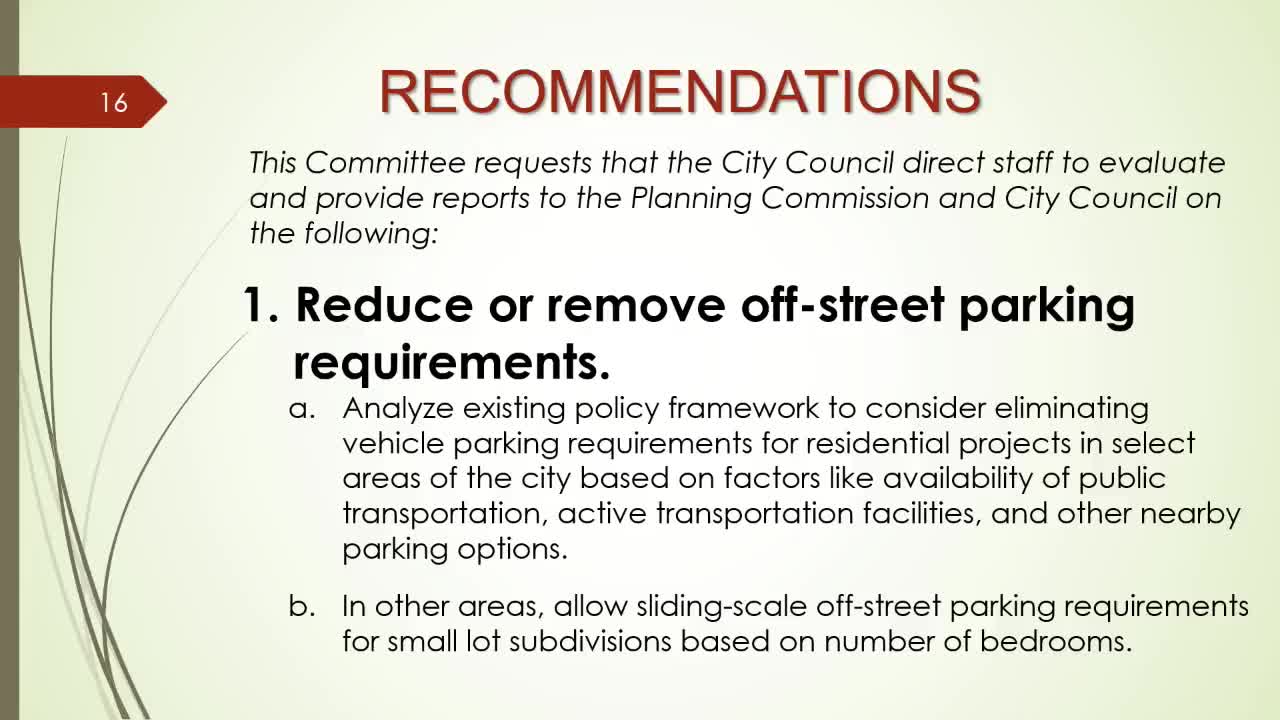
The committee’s recommendations included: relaxing off-street parking requirements in targeted areas, reviewing residential fee tiering to reduce disproportionate impacts on small units, introducing more flexible building types (for example, cottage courts or form-based code elements) in selected neighborhoods, and re-examining infrastructure and fee barriers to developing the city’s Special Planning Areas (SPAs). The report also identified a need to evaluate opportunity sites such as Park Avenue and the Kalona Avenue site and to reinvigorate stalled SPA projects.
The presentation reflected some internal disagreement: a minority position cautioned that litigation and some environmental review processes can raise development costs; other committee members emphasized the conservation and quality-of-life benefits of environmental review and local grassroots protections. Several public commenters also urged attention to wildfire and the safety element; one speaker said the committee did not sufficiently address wildfire risk in its recommendations.
Council took two implementation steps by unanimous votes. First, the council directed staff to work with the committee chairs to evaluate and prioritize the recommendations, classify short-term (“low-hanging fruit”) and longer-term actions, and prepare materials for future planning-commission and council review. Second, the council approved staff engagement with a Park Avenue working group to identify impediments and opportunities for redevelopment and to return with recommendations; Councilmember Goldstein had requested the Park Avenue action during the meeting. Both actions passed 7-0.
What’s next: Staff will meet with the ad hoc co-chairs and compile analyses that classify and prioritize recommendations; staff will also meet with the Park Avenue working group to identify practical barriers and potential corridor planning steps. Planned next steps include further review by planning staff and later consideration by the Planning Commission and City Council for any code changes.