Get Full Government Meeting Transcripts, Videos, & Alerts Forever!
Get email alerts on the Short Term Rentals topic
No spam. Unsubscribe anytime.
Hocking County zoning commission advances discussion on short-term rental permits, emergency access and impact fees
Summary
The Hocking County Zoning Commission discussed a package of land-use tools on May 29, 2025, focused on short-term rental permits, emergency access and possible impact fees after surveys showed broad public interest in regulation.
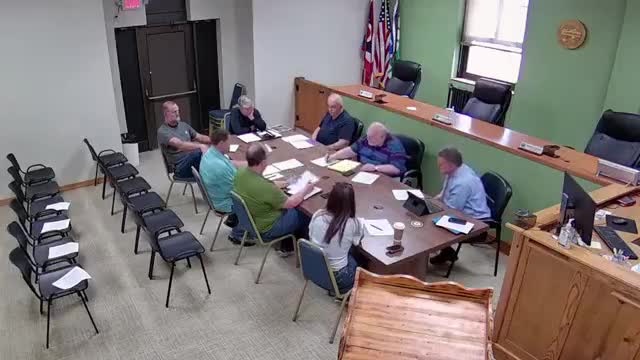
The Hocking County Zoning Commission on May 29 discussed a package of proposed land-use tools focused mainly on short-term rental regulation, emergency access for first responders and possible impact fees as the county addresses growth in tourist lodging.
Commission members and staff said the conversation grew out of a county survey and stakeholder meetings. The commission’s chair said the process has been public and rejected a claim that rules would be “thrown on people at the last minute,” adding, “that is not the case whatsoever.”
Commissioners and speakers outlined a set of measures the commission is considering: a short-term rental permit and registry; a mandatory 24-hour local contact for each rental; clearer address-numbering requirements and signage for 911 responders; engineering standards or fire-department approval for driveway access and turnaround; occupancy limits tied to advertised sleeping capacity; parking standards; proof of insurance for rental operations; noise and nuisance controls; and research into impact fees to support first responders and infrastructure.
The commission described the short-term rental permit as a more robust registration system than the current bed-tax reporting, with possible penalties for noncompliance. Members discussed requiring a local contact who can respond quickly to complaints and emergencies, provision of an on-site or dedicated phone where cell service is absent, and emergency-notification capability (telephone, text or radio) for rentals in areas with limited reception.
Addressing emergency response, the commission said house numbers must be placed in obvious locations and tied to the county’s grid-based addressing system, rather than private lane numbering that complicates dispatch. The commission asked to consult Sandy Wintermute at 911 to refine dispatch-related standards.
On driveway access and inspections, members proposed that fire chiefs or local first responders review or approve access for proposed short-term rental clusters so emergency vehicles can reach properties and turn around. Commissioners cited past incidents where narrow or steep driveways hindered response and noted the potential for permit applications to include a preliminary review before owners invest in roadwork.
Members discussed occupancy limits and enforcement tools, saying owners and platforms could be required to list maximum occupancy in contracts and the county permit. They also raised platform collection of lodging taxes and said the county would explore systems to ensure taxes and impact fees are remitted. The commission noted a past situation where a local operator collected bed taxes but did not remit them to the county or townships.
On building codes and inspections, the commission said Ohio’s state building codes apply to transient lodging but questioned consistent enforcement and whether state inspections and sign-offs are occurring for cabins and similar structures. The commission suggested verifying with the state and with health-department staff how approvals are being performed.
Members also raised noise and nuisance controls — including late-night parties, target shooting and fireworks — and discussed whether countywide nuisance rules or time-based limits could apply. Several commissioners referenced past legal disputes over noise and nuisance that were resolved in civil courts.
The group also broached impact fees as a possible funding source for increased emergency runs and infrastructure. Commissioners noted recent service-volume figures mentioned in the meeting: county EMS runs and local fire runs have increased (the commission cited an EMS figure of 4,700 runs and Logan-area fire runs of roughly 900 last year), and said they want to research how other jurisdictions structure impact fees, which agencies collect them and how fees are calculated.
Next steps include follow-up meetings with the Hocking Hills Lodging Association and emergency-management and first-responder stakeholders, collection of templates from other counties, and staff research into registry and tax-collection options. The commission scheduled its next meeting for June 26, 2025.
Votes at the meeting were limited to procedural items: a motion to approve the agenda as presented and a motion to adjourn; both were moved and seconded and recorded as carried by voice without a roll-call tally.
Sources: meeting transcript, Hocking County Zoning Commission, May 29, 2025.