
Beech Grove outlines expansion of in‑district services, plans behavior education program to reduce RISE placements
Get AI-powered insights, summaries, and transcripts
Sign Up Free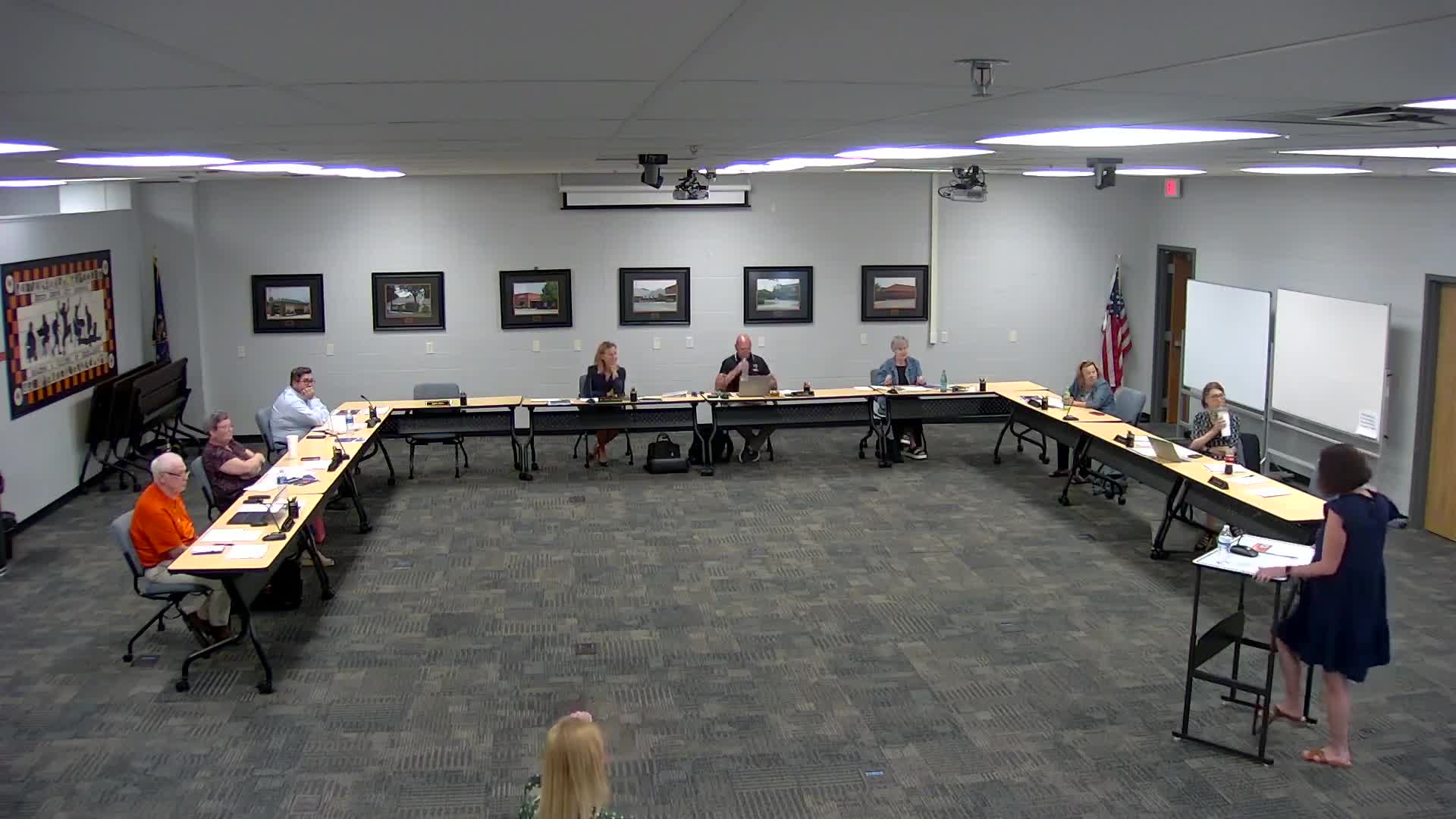
Summary
Director Amy Reeves described the district's move from a cooperative model toward in‑district special education services, the rollout of essential skills classrooms in each building, and plans to create a K–6 behavior education program to reduce placements at RISE Learning Center and save tuition dollars.
Amy Reeves, director of exceptional learners for Beech Grove City Schools, presented the district's current special education structure and plans for an in‑district behavior education program during the June 3 meeting.
Reeves said the district decentralized services beginning in 2018 and has since expanded essential skills classrooms so “we have all of our Hornets, in their home schools,” which she said improves access to peer models and community inclusion.
The district plans to start a behavior education program for kindergarten through sixth grade at Central Intermediate and expand supports across buildings. Reeves said the in‑district program will provide intermediate steps on the continuum of services so students with behavioral needs can access less restrictive placements before a possible referral to RISE Learning Center.
On costs and funding, Reeves and the administration outlined several funding streams that support exceptional‑learner services: federal Part B grant funds, state reimbursement by area of eligibility, and Medicaid billing for related services such as speech, occupational and physical therapy. Reeves estimated RISE Learning Center tuition is roughly $37,000 per student and said bringing students back in‑district can create “cost savings” because district funding and reimbursement partially cover the in‑district cost and avoid the larger RISE tuition bill.
Assistant Superintendent and other central staff added that Part B federal funds and state reimbursements do not fully cover all special education costs; one administrator suggested the district faces a substantial funding gap between program costs and federal/state revenue and said the district must meet a maintenance‑of‑effort requirement each year to keep federal funding.
Reeves described staffing and caseloads at each building, noting Hornet Park currently has fewer identified early‑grades students and is staffed with paraprofessionals to meet minutes and needs; Central will add staff for the planned behavior education rollout. Board members asked about staffing ratios and whether additional paraprofessionals or teachers would be added; Reeves said staffing decisions are data driven and shift as caseloads change.
Ending: Reeves said she will share updated staffing and program numbers with the board electronically and thanked board members for their support as the district expands in‑district services.