Get Full Government Meeting Transcripts, Videos, & Alerts Forever!
Get email alerts on the Pedestrian Safety Daylighting topic
No spam. Unsubscribe anytime.
Committee reviews AB 413 daylighting rule, outreach plans for crosswalk visibility and curb changes
Summary
Staff presented AB 413 and a daylighting plan to increase visibility at crosswalks by extending no-parking zones near intersections, discussed outreach steps and pilot implementations, and answered committee questions about bus stops, curb extensions and enforcement timelines.
Staff presented information on AB 413 and a local daylighting program intended to increase crosswalk visibility by extending no-parking zones (red curbs) near marked and unmarked crosswalks. The presentation explained the policy intent, referenced the California Vehicle Code language and outlined planned outreach and implementation steps.
Staff said the rule increases the clear zone approaching crosswalks to reduce visibility obstructions caused by parked vehicles and described technical elements—examples of curb extensions, intersection geometry, and applying a 20-foot clearance for each approach in some cases. The presenter noted that municipal parking code and existing stop-sign sight-distance rules (25-foot municipal references were discussed in the presentation) would be considered when implementing changes.
Committee members asked several operational questions, including whether bus stops would be moved back from crosswalk approaches and how enforcement would be phased. Staff responded that bus stops are typically designated and not parkable and that changes may be considered in some corridors; they said a warning period (staff discussed about 60 days of warnings prior to citation/enforcement) would likely be used before full enforcement. Staff also described proposed community outreach: door hangers to affected homes when curb changes occur, a project website, flyers at impacted locations, an open house, and interactive materials (sticky notes or colored-dot feedback) to capture community reaction at events.
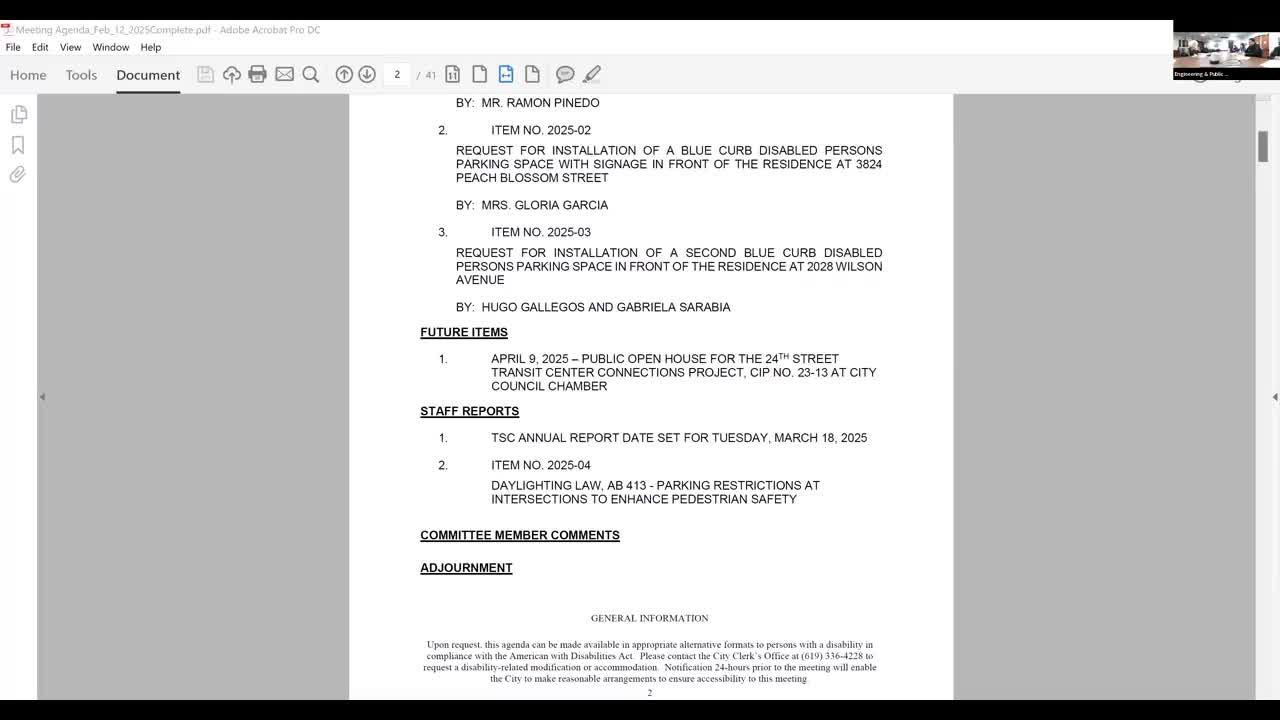
Staff announced a public open house for the Transit Center Connections project on April 9 (location: City Council Chambers) and described the multi-block corridor scope for the transit project and the daylighting work. Committee members suggested leveraging councilmembers’ newsletters and periodic town halls for outreach and asked staff to provide visuals and a prioritized implementation schedule for affected intersections.
The item was informational; no formal committee vote or change to code was recorded at the meeting.