Pima County approves mobile MMR vaccination plan for under‑immunized schools
Summary
The Health Department will begin outreach July 1 with mobile teams targeting schools below 95% MMR coverage; the plan emphasizes education, consent protocols, and on‑site vaccination when schools opt in.
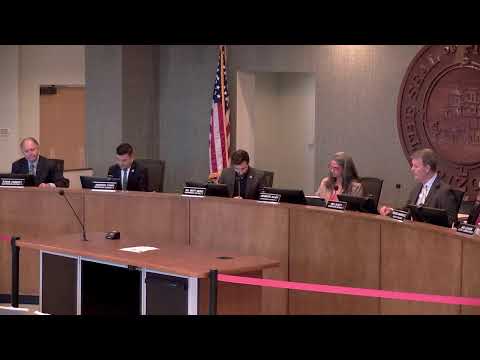
Pima County’s health department won board approval June 3 for a mobile unit deployment plan to offer measles, mumps and rubella (MMR) vaccinations at schools and childcare sites with lower immunization coverage.
Supervisor Andres Cano moved the plan and Supervisor Steve Hines seconded; the board approved it 4–1, with Supervisor Steve Christie dissenting.
Nut graf: The plan targets schools with MMR coverage under 95 percent, prioritizing those with the lowest rates and the largest student populations. County health officials said the program is voluntary for school sites and will not vaccinate any child without parental or guardian consent.
Dr. Cullen, director of the county health department, told supervisors that the department will begin outreach on July 1 and that the initial effort will use existing clinic staff redeployed to two‑school mobile visits per day. “Our goal is to ensure we have mobile access for vaccinations at schools,” Dr. Cullen said, adding that the plan includes culturally appropriate education materials and multiple consent options, including documented verbal or written consent when families cannot be present.
Health staff outlined key details: teams will check state immunization registries before giving doses to avoid duplication; clinics will provide records to families and assist schools with data‑entry; staffing models assume one to two nurses and administrative staff on mobile visits; and the department said it will not request additional funds for the rollout, drawing on existing clinic resources and an ARPA‑funded mobile van.
The plan also noted that nationwide measles cases have risen and that the Centers for Disease Control is actively monitoring clusters tied to recent air travel; Dr. Cullen said there were no measles cases in Arizona at the time of the meeting but that the department is prepared to respond.
Ending: The board authorized the health department’s plan and asked staff to report quarterly on school outreach and vaccination numbers. Supervisors stressed that schools must opt in and that parental consent remains a requirement.
AI generated
The text on this page is AI generated. Summaries, highlights, analysis, and video transcripts are all produced from the original source material.
AI can make mistakes, so if you spot one, and we will fix it for everyone.
Note: the source content is unaltered by us. Any content source we link to, be it a video, an audio recording, or a document, is presented exactly as its publisher released it. That publisher is usually a government body, sometimes an individual official or another organisation.