Get Full Government Meeting Transcripts, Videos, & Alerts Forever!
Get email alerts on the Housing topic
No spam. Unsubscribe anytime.
Pima County approves $8.5 million for affordable housing, adopts 10-year housing strategy
Summary
The Board of Supervisors approved a $3.5 million increase to the county's fiscal year 2026 affordable housing allocation and adopted a 10-year strategic policy intended to generate roughly $200 million for housing over the coming decade.
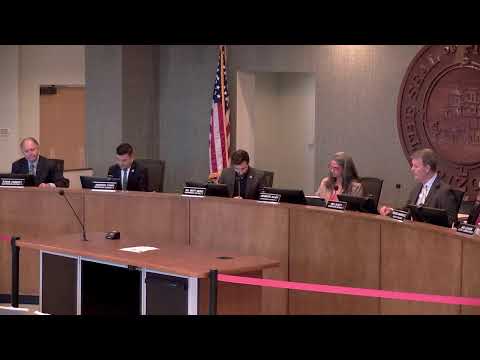
The Pima County Board of Supervisors voted June 3 to increase the county’s affordable housing allocation for fiscal year 2026 to $8.5 million and to adopt a 10‑year housing strategy aimed at expanding long‑term funding for affordable units.
Supervisor Steve Hines proposed increasing the FY26 allocation by $3.5 million, bringing the county’s annual set‑aside to $8.5 million. “This is simply, without any change to the property tax rate, I propose that we increase the allocation by 3,500,000.0 that we dedicate to affordable housing, bringing that a total to 8,500,000.0 for fiscal year 26,” Hines said during the meeting.
The board approved Hines’ FY26 funding change 4–1. Board members and county administration said the additional funds would come from non‑tax sources, chiefly unprogrammed interest on ARPA (American Rescue Plan Act) funds and other year‑end balances or expenditure savings; the county administrator said a memo detailing the exact source(s) would be provided before final budget adoption.
Nut graf: Supervisors paired an immediate FY26 funding increase with a separate policy—Board Policy D‑22.17—that sets a framework for a regional, decade‑long financing effort. Supporters said the measures provide near‑term relief while starting a longer, regional campaign to build and preserve housing; opponents said the process needs broader public engagement before committing to a multi‑year plan.
The longer plan, adopted as policy D‑22.17, sets a 10‑year target of generating roughly $200 million beyond current investments. Supervisor Hines said the commission’s analysis estimates that the program could help deliver about one‑third of the county’s projected need—roughly 12,500 of an estimated 36,000 units needed over the next decade. The policy passed 3–2 (Supervisor Christie and Chair Rex Scott opposed). Hines described the strategy as a “bold step” that will not by itself meet the total need but will provide significant regional momentum.
Supporters pressed that the FY26 increase would not change the primary property tax rate and that the more substantial decade plan will be shaped by the Regional Affordable Housing Commission and county staff. Under the FY26 motion the commission is to deliver specific recommendations on allocations and gap‑funding projects by Jan. 31, 2026, including the split between development gap funding and programs to keep people housed.
Critics sought additional public hearings and more explicit input from homeowners about long‑term financing options. “I’m still just amazed that we’re gonna have a 10‑year plan here…with no public hearing, no public input, no public discussion,” Supervisor Steve Christie said, urging more community forums before committing to a complex funding mechanism.
County administrator Jan Lesher told the board the draft plan from the Regional Affordable Housing Commission would be complete by November, and that funding details for FY26 will be presented in a memo ahead of final budget adoption. Supervisors said the FY26 appropriation addresses immediate needs while giving time to vet financing for the multi‑year plan.
Ending: The actions leave the county with a near‑term boost for housing programs and a formal policy directing development of a longer regional funding plan. The board’s next steps include the commission’s November draft and the administrator’s memo laying out the precise FY26 funding sources before the budget is finalized.