Get Full Government Meeting Transcripts, Videos, & Alerts Forever!
Get email alerts on the Parenting Education Mandate topic
No spam. Unsubscribe anytime.
House committee hears testimony on bill to require parenting workshops for preschool enrollment
Summary
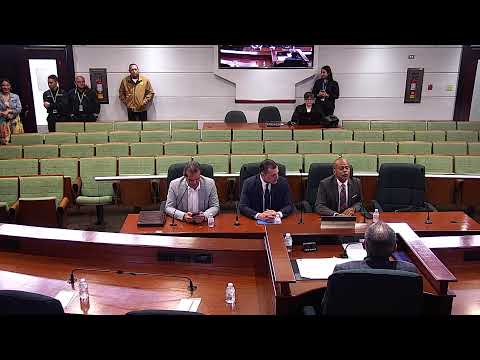
SAN JUAN — A House of Representatives committee held a public hearing May 30 on House Bill 654, which would create a mandatory “responsible parenting” education requirement for parents or guardians as a condition of enrolling a child in some public preschool programs and as part of hospital discharge procedures.
SAN JUAN — A House of Representatives committee held a public hearing May 30 on House Bill 654, which would create a mandatory “responsible parenting” education requirement for parents or guardians as a condition of enrolling a child in some public preschool programs and as part of hospital discharge procedures.
The bill’s author and the committee opened the hearing with expert and agency testimony about rising child maltreatment rates and international programs that the bill’s proponents said reduce risk. Dr. Juan Carlos Malavé Resach, a forensic sexologist and specialist in child maltreatment, told the committee that the measure aligns with development theories and international preventive programs and recommended adding modules on sexual-abuse indicators, staged follow-ups and a five- to 10-year impact evaluation. "La educación en la crianza no solo salva vidas, sino que construye ciudadanía, previene la violencia y refuerza el tejido social," Malavé said.
Carlos A. Rivera Otero, administrador auxiliar of the Administration for Families and Children (AFAN) at the Puerto Rico Department of the Family, described the department’s existing prevention programs — including Escuela para la Convivencia y la Crianza, Fundamentos de la Crianza and nurse-visitation programs — and said the agency already offers curricula and regional prevention staff but does not currently deliver the bill’s hospital-based intervention as drafted. Rivera Otero warned that making the certification mandatory for enrollment in federally funded programs such as Head Start and Early Head Start could conflict with the federal programs’ intent to maximize participation. "Si no hay una petición formal, no lo hacemos," he said of hospital-based orientations.
Department legal staff and other witnesses raised implementation issues the committee would need to study. The department’s legal adviser said the committee should examine whether a mandatory certification before enrollment would create a barrier that contravenes the spirit or rules of Head Start and Early Head Start, and also urged the panel to identify funding for certification for low-income families. The department suggested that certification could be achieved by certifying private organizations to deliver the workshops, reducing the agency’s direct delivery burden.
Proponents cited international comparisons and evidence-based programs. Malavé summarized studies from Germany, France, Sweden and the Netherlands and referenced the U.S. program Healthy Families of America as evidence that early, structured parenting interventions can reduce risks and improve child development outcomes.
Committee members and witnesses discussed program design and scope. Key clarifications and suggestions recorded in the hearing included: require one certificate per child; align curricula to child-development stages (for example grouping ages 0–5, 6–10, 11–16, 16–18); include a module specifically on sexual-abuse indicators and prevention; ensure accessibility for people with cognitive, linguistic or literacy limitations; develop a digital resource bank; and build both in-person and virtual delivery options with certification controls to prevent “click-through” abuse of online offerings.
Panelists supplied data cited in the bill’s exposition. The hearing repeated figures that, for fiscal year 2022, 4,320 child-victim cases were reported in Puerto Rico (described in testimony as a rate of 8.3 per 1,000 children) and that the largest share of cases were classified as neglect. Witnesses recommended the bill include a 5-to-10-year evaluation to measure effect on maltreatment rates.
No formal motion or vote on the bill was recorded during this hearing. Committee members said they will continue to accept amendments and that the department and witnesses would provide follow-up information on budgetary impact, staffing needs and curriculum specifics so the panel could consider fiscal and legal implications before advancing any mandatory requirement.
The hearing closed after extended questioning from committee members, who said prevention is an investment but asked the department to provide the commission with projected staffing and cost estimates for implementing any mandate. Representative Wanda del Valle Correa joined remotely and several committee members urged interagency coordination with the Department of Education so school-based curricula and graduation requirements could support broader outreach.
The committee adjourned at 10:35 a.m. on May 30, 2025, with members saying work on the measure will continue and that suggested amendments will be considered.