Get Full Government Meeting Transcripts, Videos, & Alerts Forever!
Get email alerts on the Consumer Debt Uniformity topic
No spam. Unsubscribe anytime.
Assembly passes Consumer Debt Uniformity Act to consolidate rules for consumer claims
Summary
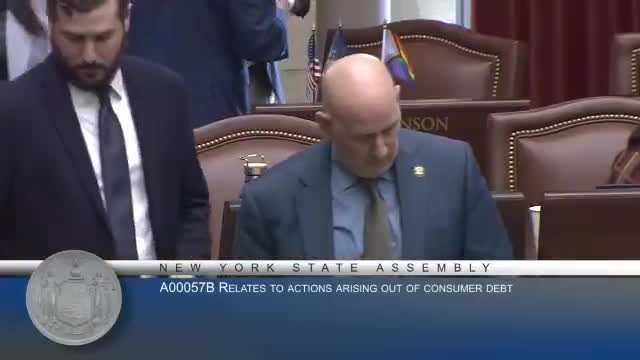
The Assembly approved A.57-B to replace the term "consumer credit transaction" with "consumer debt," unifying statutes of limitation, pleading requirements and notice rules across several court systems; creditor groups warned small businesses could be disadvantaged.
The Assembly passed A.57-B on May 28, a bill that consolidates and standardizes treatment of consumer claims by replacing references to “consumer credit transaction” with the broader term “consumer debt.” Sponsor Epstein said the change creates a unified statutory standard across multiple court statutes and clarifies notice, pleading and statute-of-limitations rules for debts such as credit-card, medical and other consumer debts.
Supporters argued uniformity will simplify court practice and help defendants better understand their rights; the sponsor said many medical and other consumer debts currently face different procedural rules. Opponents — particularly creditor-bar and small-business representatives — said the bill could raise filing costs (including a surcharge) and impose pleading requirements that small, invoice-based businesses do not currently prepare, potentially reducing small creditors’ ability to recover unpaid accounts.
The sponsor and others said prevailing-party cost-shifting and current practice meant the surcharge impact would be limited, and that many small unpaid invoices are already not pursued through court. Critics asked for carve-outs for small businesses; the sponsor said additional carve-outs would complicate the uniform scheme and harm judicial efficiency. After floor debate the Assembly recorded Ayes 97, Noes 47 and passed the bill.
Votes at a glance: A.57-B — Ayes 97, Noes 47 — Passed.