Get Full Government Meeting Transcripts, Videos, & Alerts Forever!
Get email alerts on the Urban Forestry topic
No spam. Unsubscribe anytime.
Residents and developers debate tree valuation and urban‑canopy treatment as Shoreline approves consent calendar item
Summary
Public commenters urged the city to include the urban canopy in its asset valuation and questioned inconsistencies in tree standards near light‑rail areas. The consent calendar — which included the asset‑management contract item — passed unanimously after a council member said they had considered pulling the item for separate study.
Public commenters at the June 2 Shoreline City Council meeting urged the council to recognize the city’s publicly owned trees as a financial asset and asked staff to include an urban‑canopy valuation in the city’s asset‑management report. Speakers also urged consistent application of tree rules in development near light‑rail areas and raised concerns that tree requirements were reducing allowable building density.
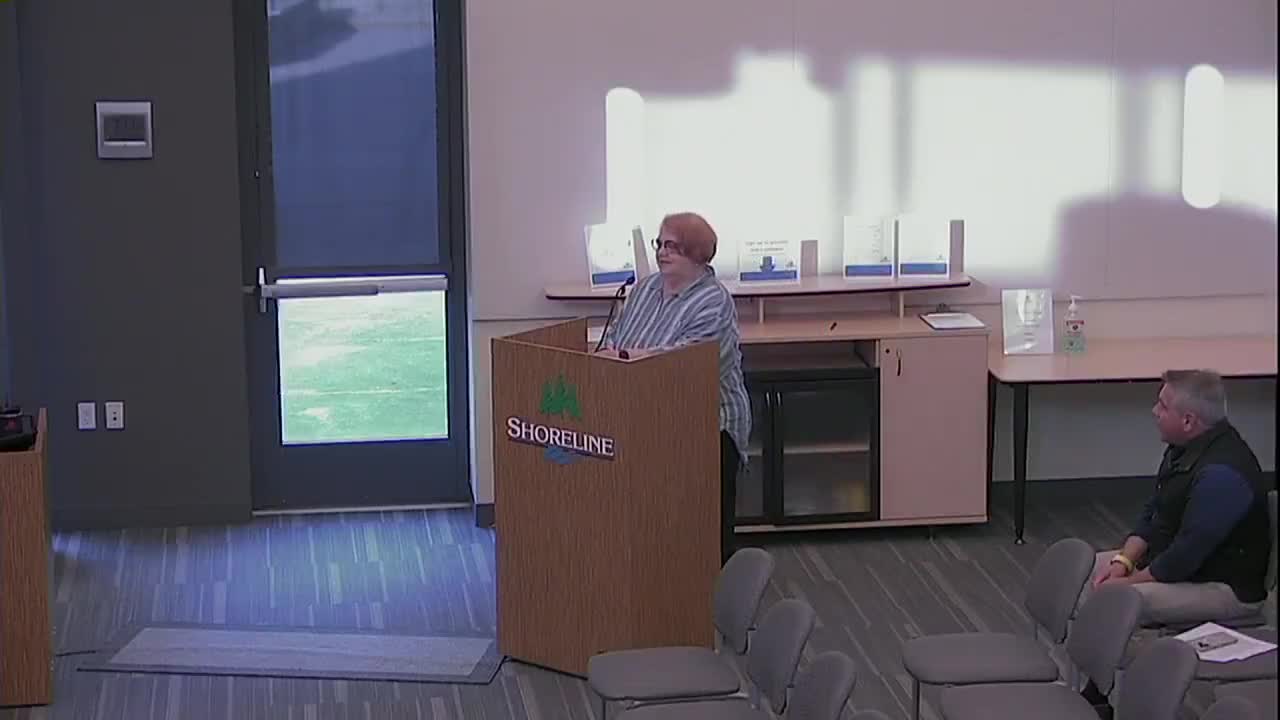
Bonnie Berry, a Shoreline resident, told the council she had emailed comments about consent calendar item 7f and urged staff to update the Stantec Consulting Services contract specifications “to address assets … parks, and urban canopy and facilities, and include in the requested State of Assets Report.” Berry recommended using automated valuation tools or, if a valuation were not yet available, creating a placeholder using historic valuations adjusted for inflation; she said her conservative estimate of the value of publicly owned trees was $225,511,350.
Jack Malek, a Shoreline resident and the business chamber committee chair for government affairs and economic development, spoke about trees in the context of light‑rail station area development. Malek said he supports trees but said density should be favored in light‑rail areas and criticized what he described as inconsistent application of the city’s tree rounding and tree standards. He said a current client is being asked to reduce density in an MUR‑45 (mixed‑use residential) area near light rail because of tree requirements.
Deputy Mayor Mork said before the consent vote that he had “strongly considered pulling item 7f” because while he supports considering trees as an asset he felt that forcing that topic into the current consent calendar item was inappropriate; he said he would seek a colleague to have it studied separately. The consent calendar, including item 7f, was then moved and seconded and passed unanimously.
Speakers also used the public‑comment period to thank the council for ceremonial proclamations (Pride Month and National Gun Violence Awareness Day) and to publicize Wear Orange events; those remarks were distinct from the tree/asset comments.
The council took no separate substantive action on tree valuation at the meeting; staff will proceed under the approved consent calendar item and any request to study urban‑canopy valuation more fully would be considered through the staff‑directed process the deputy mayor described.