Get Full Government Meeting Transcripts, Videos, & Alerts Forever!
Get email alerts on the State Legislation topic
No spam. Unsubscribe anytime.
Board briefed on 2025 Indiana legislation and executive orders affecting water and energy projects
Summary
Citizens Energy's government affairs director briefed the board on several bills from the 2025 Indiana legislative session and two executive orders from Governor Braun that could affect large regional water transfers, groundwater emergency authority, cybersecurity and incentives for generation serving large industrial projects.
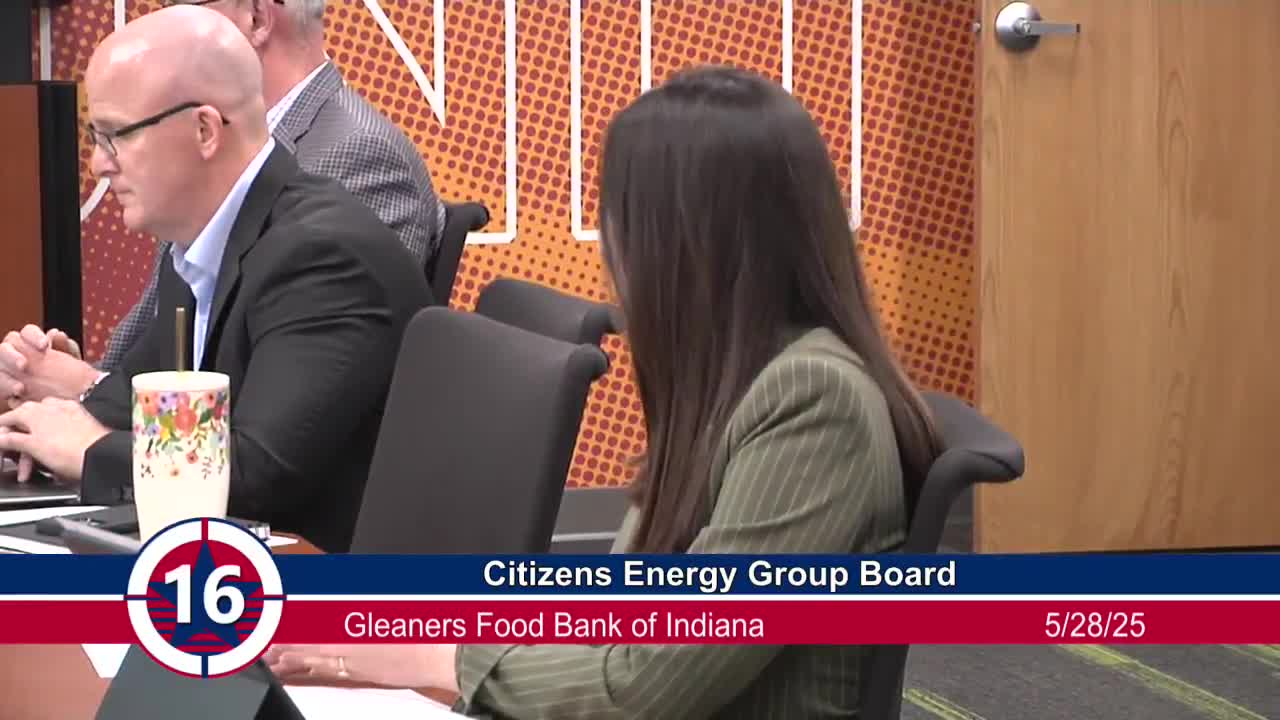
Bridget O'Connor, Director of Government Affairs and Regulatory Policy for Citizens Energy Group, briefed the board May 28 on legislation passed in the 2025 Indiana General Assembly and on two executive orders from Governor Eric J. Holcomb (referred to in the meeting as Governor Braun in the transcript) that address statewide water and energy planning.
Why it matters: Several of the session's actions create new review processes, reporting requirements or protections that affect how utilities plan large water transfers, manage groundwater concerns, and participate in electricity and natural-gas planning tied to major industrial projects.
Key items summarized by O'Connor
- Senate Bill 4 (as discussed in the briefing): Creates a process modeled on public-utility certificate proceedings requiring a utility to seek a certificate of public convenience and necessity (CPCN) from the Indiana Utility Regulatory Commission (IURC) before piping water more than 30 miles from its source at a capacity of 10,000,000 gallons per day or greater. The briefing stated the bill also requires a DNR permit for moving water between watersheds; Citizens discussed and secured exemptions for routine existing operations.
- Senate Bill 28 (as discussed): Expands DNR authority to investigate groundwater emergencies by allowing scrutiny when a significant withdrawal well (defined in the briefing as a well withdrawing 100,000 gallons per day or more) is impacting another significant withdrawal well, not only when a residential well is affected.
- Senate Bill 426 (referenced in the briefing as "Senate Bill 4 26"): Includes provisions that bar certain damages claims against water utilities for alleged drinking-water exposure if the water meets applicable state and federal standards; it also amends tools for utility consolidation and provides additional regulatory mechanisms for cost recovery and asset protections (including limitations on dam closure orders that would impair water supply), according to the presentation.
- Senate Bill 459 (referenced in the briefing as "Senate Bill 4 59"): An agency bill addressing reclamation and reuse of water for large projects and adding cybersecurity requirements for water systems. The presentation said the bill requires annual cybersecurity vulnerability assessments and reporting of cyber incidents within 24 to 48 hours depending on severity.
- Executive orders: O'Connor said Governor Braun has issued executive orders charging the state to develop a statewide water planning framework and an inventory of water resources (a target completion date cited in the briefing was Oct. 31, 2026). A separate order directs monitoring of electricity demand and dispatchable generation supply to assess natural-gas pipeline and generation adequacy for large industrial ("mega") projects.
What Citizens is doing
O'Connor said Citizens has been engaged with state offices and will remain involved as the executive orders and implementing processes move forward. She described the CPCN-like approach as designed to add public interaction and regulatory review for very large, long-distance water moves while noting Citizens worked to secure limited exemptions for routine operations in multiple watersheds within its current service territory.
Direct questions from the board included whether the IURC would be the ultimate decision authority in a CPCN process for a long-haul water pipeline; O'Connor answered that the IURC would run the process and is effectively the primary decision-making authority on such a request, including public hearings and interaction.
Limitations and attribution
The briefing summarized statutes and implementing processes as they were presented to the board during the May 28 meeting. Specific statutory language, rulemaking timelines and agency procedures were not read into the record; the board presentation recommended monitoring the IURC and DNR implementation work as the new policy processes are developed.