Get Full Government Meeting Transcripts, Videos, & Alerts Forever!
Get email alerts on the Transit Software Contracts topic
No spam. Unsubscribe anytime.
Finance committee forwards $1.3 million TripSpark transit software contract to full council
Summary
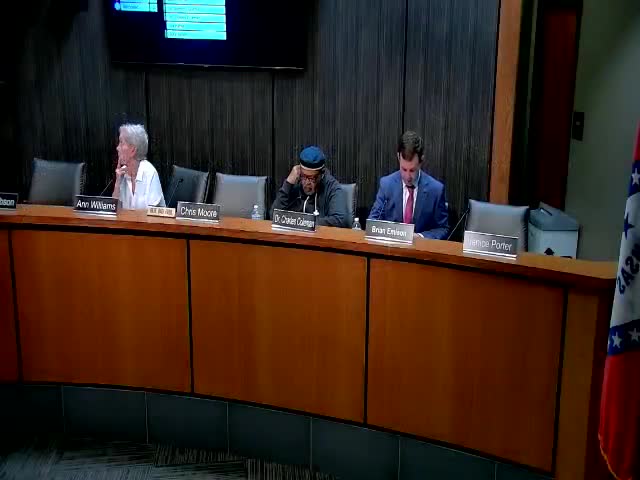
The Jonesboro Finance and Administration Committee voted to forward a $1.3 million contract with TripSpark Technologies for routing software, real‑time rider tools and shelter technology to the full City Council; committee members asked about funding, ridership data and outreach to riders without smartphones.
The City of Jonesboro’s Finance and Administration Committee voted to forward to full council a resolution to contract with TripSpark Technologies for the Jonesboro Economic Transportation System’s routing software and related services, a package the city says will cost about $1,300,000 and will be funded in part by Federal Transit Administration (FTA) grant funds.
Committee members and TripSpark representatives used the presentation to explain what the software will do and to press the administration on community outreach, fare integration and shelter improvements. Tom Coogan, vice president of professional services for TripSpark Technologies, described the system as an integrated “fixed‑route ITS” that provides real‑time vehicle tracking, a rider mobile app for Android and iPhone, trip planning, detour publishing and back‑end dispatch visibility.
“[The app] provides real time information to your traveling public, bus location, trip planning,” Coogan said, adding that dispatch can publish temporary route changes and that the system can feed GTFS real‑time data to services such as Google Maps and Apple Maps.
Lee (staff member) said the contract amount shown in committee materials is about $1,300,000 and that the city will use FTA funds approved through recent grant applications to pay for much of the package. Lee said the TripSpark contract will provide the technology piece for a separate shelter grant, allowing the shelter grant to focus on physical stops, lighting and improved shelter design.
Councilmember Anthony Coleman said he wanted to see ridership surveys or other customer data to ensure the investment is warranted. “This is a pretty large investment and… I’d like to see, have we done surveys? Have we done any ridership questionnaires?” Coleman asked. Lee and TripSpark representatives responded that demand for real‑time information had been repeatedly raised on social media and directly by riders, and that the prior limited system had become obsolete.
Committee members also asked how the system helps riders without smartphones. Coogan and Lee said the contract includes hardware on vehicles and the ability to display arrival information at shelters and inside buses; riders will also be able to subscribe to alerts via email or text. Lee said the city’s marketing and communications staff will publish instructions and provide assistance through existing channels.
TripSpark representatives said the vendor will run a discovery phase, coordinate with city staff on vehicle and route design, and provide 24/7 support during rollout. Coogan estimated a deployment timeline of roughly six months from kickoff, excluding any delays tied to shelter construction. He also said the city retains ownership of the operational data under the contract; TripSpark will assist with reports but will not claim the data.
Committee members were told the overall grant requires a 20% local match. After Q&A the committee voted to forward resolution 25‑056 to the full City Council; the committee chair announced the motion carried.
The vote moves the contract to the full City Council for final approval and to confirm funding and matching requirements.