Get Full Government Meeting Transcripts, Videos, & Alerts Forever!
Get email alerts on the Facility Options topic
No spam. Unsubscribe anytime.
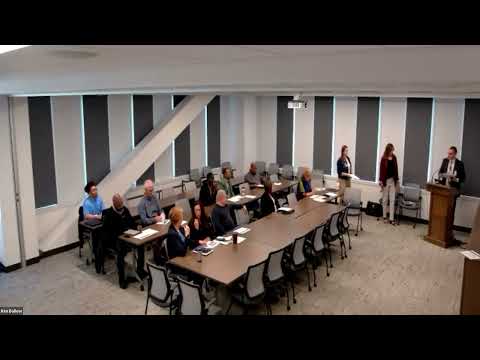
Douglas County committee weighs options for youth detention facilities, including state YRTC and private operator proposals
Summary
The Douglas County Child Services Committee discussed options for youth detention facilities on May 22, 2025, including operating two county facilities, a private‑operator lease proposal and express interest from the state to lease downtown space as a YRTC.
The Douglas County Child Services Committee debated facility options for youth detention during a May 22, 2025 meeting, weighing the original downtown detention plan, a two‑facility compromise passed in 2023, a private‑operator proposal and a state interest in leasing the downtown building for a Youth Rehabilitation and Treatment Center (YRTC).
Chair Commissioner Garcia opened the facility portion of the meeting by summarizing options that have been discussed over several years, saying the session was intended to capture "pretty much everything on the table in regards to tangible options" and that "today is not the day to make a decision." He described two primary buildings under consideration: the BCYC (40th and Woolworth) and the vacant downtown facility adjacent to the Justice Hall complex.
Commissioners and staff outlined four broad options under consideration:
- Move operations downtown (original plan): The initial design called for transitioning youth to the downtown detention facility near courts and probation. Proponents previously argued benefits would include proximity to courts and a more therapeutic environment. The county previously expected philanthropic contributions contingent on moving youth downtown; that contribution has not been triggered because the Woolworth facility has not been closed, staff said.
- Two‑facility model (board resolution, mid‑2023): Staff said the board passed a resolution in October 2023 to run both the Woolworth/BCYC and downtown facilities concurrently for a limited period as a compromise to keep capacity aligned with current population levels. Staff told the committee that estimates prepared about a year to two years earlier indicated an additional operational cost to run the downtown building of roughly $4.5 million to partially open and about $7 million to fully open (all four floors) on top of the county's existing costs to run BCYC; commissioners said staffing and budget constraints complicated any immediate full opening.
- Private operator lease (Rite of Passage proposal): County staff described a proposal from Rite of Passage, a private juvenile services operator active nationwide and previously in Douglas County. Their preliminary proposal would repurpose parts of the Woolworth facility for an assessment/stabilization unit, a waiting‑placement unit and a secure residential unit for males (two variants discussed, one raised the waiting‑placement capacity to 30 male beds). Staff emphasized the proposal was unsolicited and preliminary.
- State YRTC interest: Nebraska Department of Health and Human Services has expressed interest in leasing the downtown facility for a YRTC so that state post‑adjudicated youth could remain closer to Douglas County; staff said the state believes 60–70% of its youth come from Douglas County and prefers keeping them locally. Under that option, the county would continue operating BCYC while the state leased downtown space.
Commissioners and community partners debated the fiscal, legal and programmatic tradeoffs. Commissioner Kavanaugh (board member) argued that the county is "statutorily responsible for appropriate capacity based on state law interpretation," noting the county cannot dictate judicial decisions on detention and stressing legal and budget constraints for facility planning. He recommended pursuing the state option to avoid bearing the cost of an underused downtown building.
Commissioner Rogers reiterated that the 2018 statute that limits detention for lack of placement has not been consistently enforced and said a coordinated push was needed to implement it. "The law said that he cannot sit in, potential for lack of placement," Rogers said, arguing enforcement and disposition practices across systems influence capacity needs.
Community providers urged greater focus on programmatic solutions and local capacity building rather than relying solely on additional detention space. Multiple speakers — including representatives of neighborhood and youth programs, and providers who deliver pre‑ and post‑adjudication services — said providers face barriers to receiving referrals or meeting licensing/staffing requirements (for example, a lack of staffing to support youth with IEPs) and asked the county to convene providers and identify capacity and referral gaps.
Staff and commissioners described constraints imposed by the bond that funded Justice Hall and the downtown detention design. County counsel and bond counsel, staff said, have advised that bond covenants limit potential alternate uses; leases or transfers must remain within a similar youth‑serving purpose, meaning some non‑youth commercial uses (for example, retail) are not permitted without legal work to revise bond terms.
No formal vote or final decision was taken at the May 22 session. Commissioners and staff agreed to continue dialogue: staff will return with financial detail, historical trend data requested earlier in the meeting, and, where possible, more specificity on any philanthropic contributions and bond constraints. Chair Garcia said the board expects to act on facility direction during the summer and will hold additional public and stakeholder meetings; community partners asked to be included in planning and to submit programmatic proposals.
Why it matters: The county faces a choice between maintaining multiple operating facilities to match recent detention populations, repurposing or leasing unused space, and growing community capacity to reduce detention. Cost, bond restrictions and who bears legal responsibility for capacity (the county versus the courts/state) were central to the debate.
Next steps: Staff will provide more detailed cost estimates, historical admissions and demographic trends, and a breakdown of bond constraints. The committee scheduled continued discussion for June and said the board will make a summer decision about facility strategy.