Get Full Government Meeting Transcripts, Videos, & Alerts Forever!
Get email alerts on the Public Safety Security topic
No spam. Unsubscribe anytime.
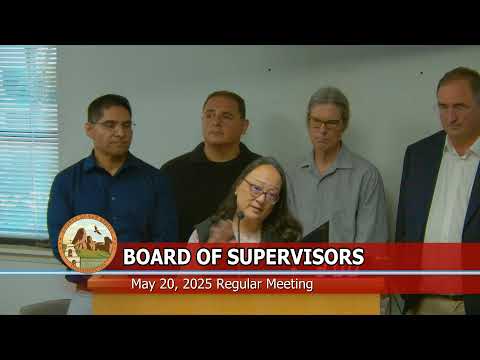
Supervisors debate security contract for county behavioral health facility; board asks staff for short‑term cover and more analysis
Summary
San Benito County supervisors debated hiring outside security for a county behavioral health clinic and the merits of armed versus unarmed personnel, and asked staff to return with a short‑term option and a full apples‑to‑apples comparison of bids.
San Benito County supervisors discussed whether the behavioral health clinic should use an outside security contractor and whether armed or unarmed guards are appropriate. Representatives of county behavioral health described safety incidents at the clinic and recommended a staffed security presence; staff said three bids were received and that a higher‑priced bidder offered additional training and a preexisting relationship with the clinic.
Speakers included county behavioral health staff, who said an on‑site security person can assist with incident response, de‑escalation and staff safety; and community members and supervisors who pressed for more analysis comparing costs, training and certifications across bidders. One county speaker said the lower bid was about $26 per hour while another bidder’s proposal was roughly $40 per hour; staff said the higher cost reflected more intensive training and a longer history with the clinic, and that administrative funds for behavioral health could be used for this type of overhead expense rather than clinical care funds.
Public commenters and several supervisors raised concerns that armed guards could deter clients and asked whether cameras, unarmed guards or other alternatives could provide sufficient protection. Supervisors asked staff to provide comparative information on certifications, training and the incidence history that justified armed security, and to consult with law enforcement about roles and response protocols. One supervisor suggested a short‑term arrangement — an extension or interim contract for three months — while staff complete a full RFP and bring back comparative analysis and options (including armed, unarmed and taser‑equipped options).
The board did not approve a permanent contract at the meeting. Instead supervisors encouraged staff to return with (a) a short‑term interim contract that covers the immediate gap, (b) an RFP and apples‑to‑apples comparison of bids including training and certification documentation, and (c) incident data and response protocols clarifying how security officers would coordinate with clinic staff and law enforcement.
Ending: Staff committed to return with the comparative analysis, certification details, incident history, and one or more short‑term options to address the contract gap while the county issues a full RFP.