Get Full Government Meeting Transcripts, Videos, & Alerts Forever!
Get email alerts on the Housing Element topic
No spam. Unsubscribe anytime.
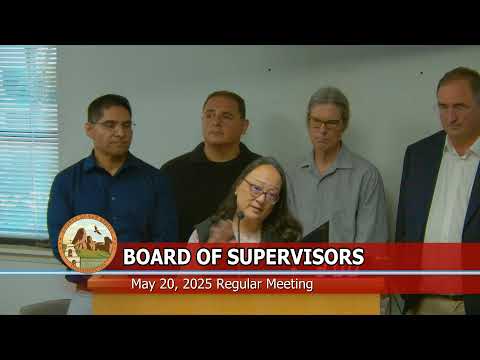
San Benito County adopts updated housing element after extended public hearing
Summary
San Benito County’s Board of Supervisors voted to adopt an updated housing element after a public hearing in which state representatives, planning consultants and community members urged actions to expand affordable, workforce and farmworker housing.
San Benito County’s Board of Supervisors voted to adopt an updated housing element after a lengthy public hearing that included presentations from state staff, the county’s planning consultants and a dozen public speakers calling for more workforce- and farmworker‑oriented housing and local labor protections.
The board adopted the element as presented, which identifies 12 candidate sites countywide and a mix of policies intended to meet state law and make the county eligible for certain state disaster‑recovery and housing grants. County staff and the state’s community development representatives said the update is intended to both comply with statutory certification requirements and position the county to apply for funds for multifamily and infrastructure projects.
The update matters because state certification is a gateway to multiple funding sources and limits legal exposure under state planning laws, county staff said. Aziar Usagi, identified in the staff presentation as an assistant director for federal financial assistance, described the funding allocations tied to the disaster recovery program and outlined eligible categories including new construction, rehabilitation, first‑time buyer assistance and infrastructure. Usagi said a regional set‑aside and competitive rounds will direct funds to eligible projects in San Benito County.
In technical remarks, Kim Lim Associates project manager Brian Torre reviewed the document’s structure, how sites were evaluated for utilities and access, and the Affirmatively Furthering Fair Housing analysis included in the draft. Torre said the county’s approach combines pipeline projects, entitled sites and rezoning candidates to reach the county’s quantified objectives across income categories.
Several community speakers urged the board to strengthen labor and community benefits. Renee Perez of the British Union and other commenters urged inclusion of labor‑plan language and protections for local workers and apprentices; one youth services provider highlighted barriers young adults face when seeking housing. Jeff Morgan, identified as a nonprofit housing developer, described long wait lists for existing affordable units and urged the county to move quickly to leverage funding.
Supervisors asked detailed questions about the housing yield assumptions, the difference between pipeline (entitled) projects and rezoned candidate sites, potential impacts on infrastructure and fire safety, and how the element would interact with annexation and city projects. Staff said sites were chosen to prioritize areas with utility access and proximity to services, and that adding these sites would make the county eligible to pursue multiple state funding streams. Several supervisors said the package represents the minimum set of candidate sites needed to secure certification and grants and that staff should return with more details about infrastructure and farmworker housing opportunities.
After discussion the board moved, seconded and approved the resolution adopting the housing element and initiating necessary plan and zoning amendments. A roll‑call vote followed and the motion carried; supervisors recorded their votes during the roll call on the record.
The board directed staff to continue outreach with the state and to return with more detail on high‑priority infrastructure needs and farmworker housing opportunities, and suggested expedited follow‑up for any specific parcels or proposals that can accelerate development with public funding.
Ending: With adoption complete, the county may now pursue state funding programs tied to certified housing elements; staff and several nonprofit developers said they would meet with county staff to identify immediate funding opportunities and potential projects to bring forward for competitive rounds.