Get Full Government Meeting Transcripts, Videos, & Alerts Forever!
Get email alerts on the Commercial Properties Budget Operations topic
No spam. Unsubscribe anytime.
OHA commercial-properties briefing emphasizes leasing push for Lot L, Nālāmakukui operations and a solar/parking study
Summary
Trustees heard a commercial‑properties budget that prioritizes leasing activity (including Lot L), ongoing repairs at Nālāmakukui, and a proposed assessment for solar and parking upgrades; staff also explained how tenant payments feed debt service under bank loan covenants.
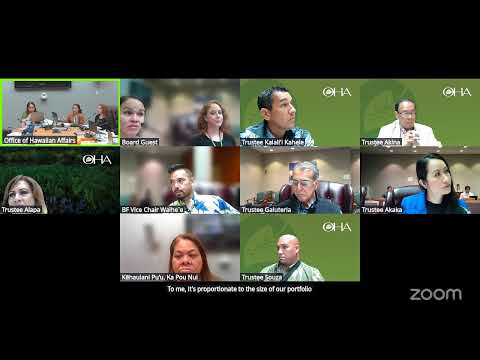
At a May 21 trustee briefing, OHA commercial‑properties staff outlined a biennium budget that centers on leasing activity in Kakaʻako Makai (Lot L and Lot A), ongoing repairs at Nālāmakukui and activation of newly acquired parcels such as the Honolulu Harbor Shops.
Interim land assets staff said property‑management spending is “largely unpredictable” because maintenance, security and capital repairs vary by tenant and external events. The division identified Lot L (a warehouse in Kakaʻako Makai) as a near‑term leasing priority and presented a commission estimate of up to $600,000 for FY26 tied to a market‑rate leasing scenario and potential use of outside brokers; staff said the higher FY26 commission estimate reflected a conservative, maximum‑cost projection to avoid midyear shortfalls.
Repairs at Lot L were described as code and life‑safety work (fire‑alarm repairs, bay doors, roof and related components). Staff told trustees most repairs are wrapping up and that leasing activity for Lot L could occur in the first quarter after repairs are complete.
Trustees also discussed the Nālāmakukui headquarters building, including the internal budgeting treatment for OHA as both tenant and owner. Administration staff explained the arrangement is driven by loan covenants tied to the property financing: the Nālāmakukui acquisition was financed with a loan that requires recorded tenant payments to support principal and interest obligations. Administration said the Nālāmakukui loan is a 10‑year financing with an original amount around $25 million; staff also said another commercial loan (Iwilei/related property) is a 10‑year financing for about $35 million.
Trustees pushed staff to study energy‑related investments. Multiple trustees requested an engineering assessment and cost‑benefit analysis to evaluate rooftop and covered‑parking solar, metering and EV charging stations. Staff said they will scope an electrical/solar assessment in FY26 and that the division could subcontract assessment work through the property management contract to allow flexible procurement and local vendor participation.
Security, parking and telework were additional themes. Staff described an interim shuttle arrangement and an off‑site parking contract that expires June 30; trustees asked for a short‑term extension while the agency adapts telework plans and develops a shared‑parking strategy. Administration said it will return with options for security, parking coordination and projected costs for proposed assessments.
Trustees asked staff to provide a clearer breakdown of commission estimates, remaining repair encumbrances tied to previously approved funds, and an engineering assessment scope and cost estimate for solar and charging infrastructure.