Lifetime Citizen Portal Access — AI Briefings, Alerts & Unlimited Follows
Wauwatosa police report: staffing gaps, new response teams, drone and armored rescue vehicle among 2024-25 initiatives
Loading...
Summary
The police chief reported staffing and workload figures, new programs including a scribe-and-assessment response team deployed in January 2025, a patrol drone, and the May 2024 delivery of an armored rescue vehicle (BearCat). The council previously ratified a one-year extension to the Wauwatosa Peace Officers Association contract.
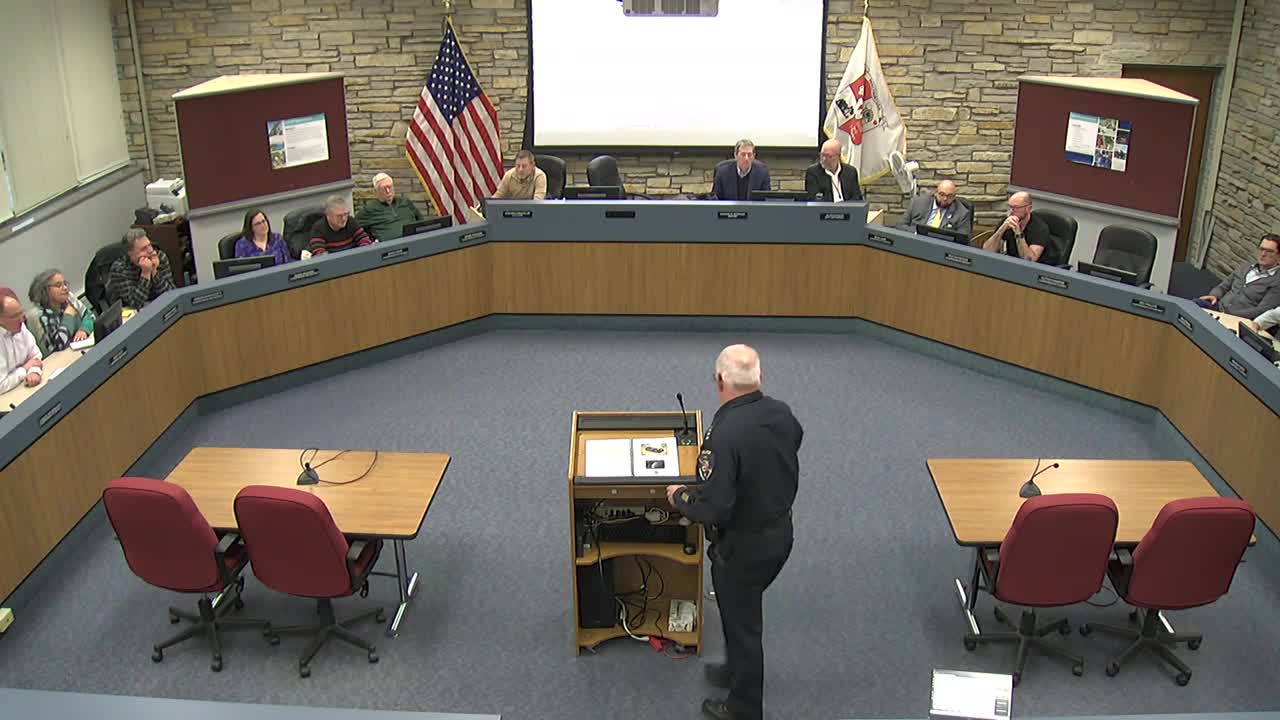
The Wauwatosa Police Department presented its annual report to the common council and outlined initiatives to address staffing, public-safety workload and emerging response needs.
Chief (name not specified) said the department's authorized sworn strength at year-end 2024 was 104 personnel, with an actual sworn strength of 97 and a deployable strength of about 90 after accounting for academy, field training and military leave. The department hired 10 officers in 2024 and recorded nine separations (five resignations and four retirements).
New and ongoing initiatives highlighted in the presentation include: - A scribe-and-assessment response team (SART): a two-person team pairing a police officer with a licensed professional counselor. The team was approved in fall 2024 and began deployments in January 2025 to respond to incidents involving mental-health needs. - An armored rescue vehicle (BearCat) delivered in May 2024 and used for high-risk search-warrant service, regional mutual-aid requests and other tasks that provide officer and public protection. The chief said the vehicle has been used for search warrants and regional support and described tactical and rescue capabilities such as a front winch and high-axle clearance for water rescues. - A standalone patrol drone intended as an air asset for searches and for event monitoring in the village; the chief said the drone is meant for surveillance/patrol applications and is not integrated with other city mapping systems. - Hot-spot policing and a harm-reduction initiative, developed with a patrol lieutenant, a crime analyst, a detective and input from Dr. Eric Pisa of Northeastern University, to assign a harm index to incidents and focus resources where harm is greatest.
Chief's remarks also addressed data trends: Group A crimes (more serious offenses reported in federal Group A) were down year-over-year, while Group B offenses such as disorderly conduct and OWI were up; fatal crashes and hit-and-run incidents were down; personal-injury crashes were slightly up; and retail thefts increased while motor-vehicle thefts declined.
The chief said the department had paused its direct ER contract with Froedtert (Froedtert & the Medical College of Wisconsin) because of staffing constraints; that pause was mutually agreed and the department will seek further discussion with Froedtert about future arrangements.
Council action earlier in the meeting ratified a one-year extension to the Wauwatosa Peace Officers Association collective-bargaining agreement for 2025 (that collective-bargaining extension was part of the Government Affairs Committee items the council acted on). The chief said negotiated steps to retain personnel contributed to some officers indicating they intend to delay retirement.
On privacy and oversight: the chief said facial-recognition tools are used only as investigative leads and require human verification. When asked whether the city shares facial-recognition data with federal agencies, department officials said the city does not have a direct relationship for that purpose; the technology is contracted through a third party and internal audits are required for any use.
Why it matters: The department's initiatives reflect efforts to shift toward more data-driven and specialized responses for mental-health incidents and to retain personnel amid regional recruiting challenges.