Get Full Government Meeting Transcripts, Videos, & Alerts Forever!
Get email alerts on the Homelessness Shelter Funding topic
No spam. Unsubscribe anytime.
County contingency transfer to keep Sojourner House open fails by one vote
Summary
A proposal to transfer $30,000 from the county contingency fund to Catholic Charities to help keep Sojourner House open failed 19–5 after extended debate over urgency, religious affiliation and budget priorities.
The Eau Claire County Board of Supervisors rejected a proposal to transfer $30,000 from the 2025 contingency fund to Catholic Charities to help keep Sojourner House, the county’s emergency shelter, open through the summer and beyond.
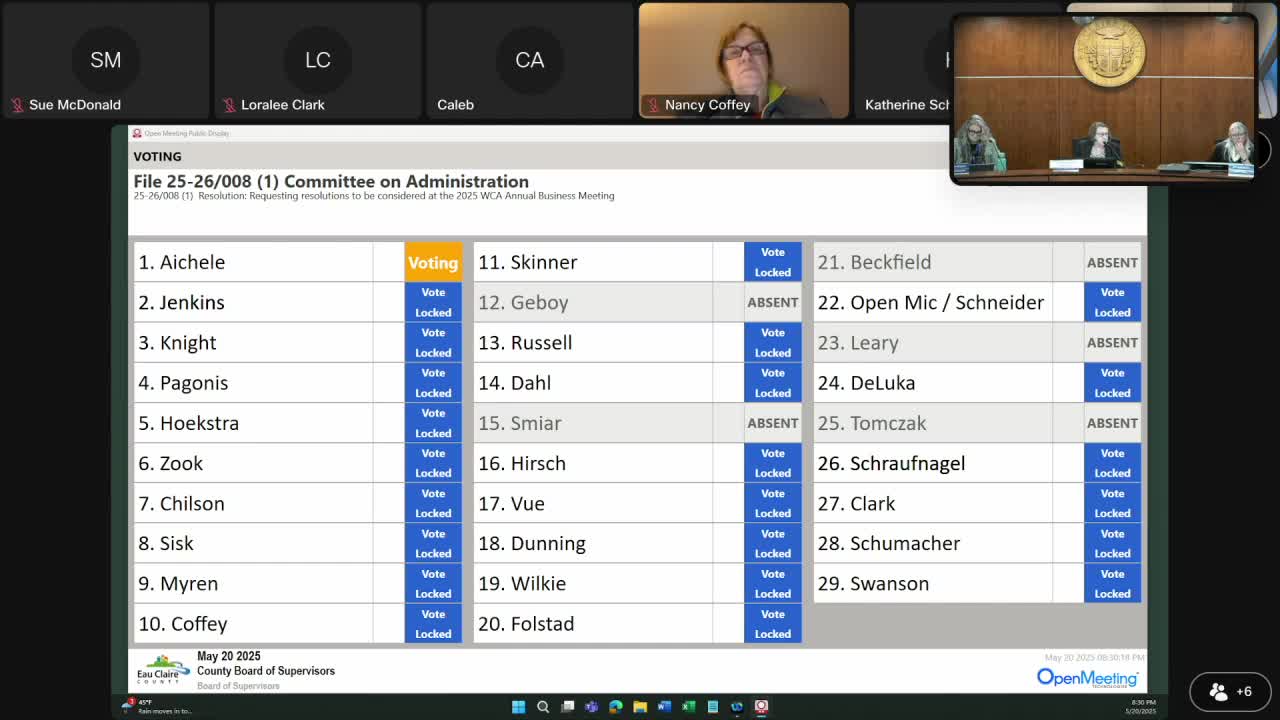
The motion, made by Supervisor Jenkins and seconded by Supervisor Schrocknagle, required a two‑thirds majority and failed after a voice/roll call vote produced 19 in favor and 5 opposed. The administration committee and the budget and finance committee had previously reviewed the request; committee members said the $30,000 was part of a broader fundraising package that included proposed contributions from Catholic Charities, the Eau Claire Community Foundation, the City of Eau Claire and the City of Altoona.
What was proposed: the draft memorandum of understanding discussed by committees required other partners to secure nearly $300,000 before the county would release funds; committee members also increased an administrative‑cost cap in the draft MOU from 5 percent to 15 percent during committee review.
Arguments for funding: proponents said the shelter plays a safety‑net role and closing it would shift costs to other county services, including human services and law enforcement. Supervisor Schneider said he was “reluctantly” supporting the request because closing the shelter would worsen outcomes and likely raise county costs elsewhere. Supporters noted Catholic Charities and the Community Foundation intended to contribute the bulk of the funding and that the county’s requested contribution was comparatively small.
Arguments against funding: opponents objected to using county funds for a faith‑based provider, to perceived insufficient documentation of how previously‑committed county funds had been spent, and to the county’s broader budget pressures — several supervisors cited multi‑million‑dollar overages in past human services budgets. Supervisor Myron explicitly blamed the City of Eau Claire for contributing to the local homelessness problem and said the city should do more; Supervisor Skinner questioned whether shelter users accepted help.
Board action: the motion to transfer $30,000 failed on a vote of 19 yes and 5 no (the two‑thirds threshold was 20). The motion to postpone the request to the next board meeting was also brought and failed (the postponement vote fell 18 no to 6 yes). Committee materials recorded existing county budget support already included in the adopted 2025 budget ($34,500) and indicated the county had previously allocated funds to Sojourner House earlier this year.
Next steps: supporters and administration said they will continue coordinating with partner funders and that the shelter and Catholic Charities will update the county on fundraising progress. Because the county contribution failed, any additional county support would need a new motion or a future board vote.