
Students press board for HVAC fixes and Green New Deal-style investments after frequent classroom temperature problems
Get AI-powered insights, summaries, and transcripts
Sign Up Free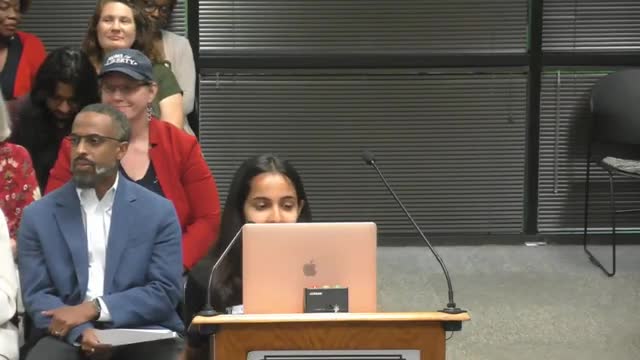
Summary
Multiple students testified about extreme classroom temperature swings at Panther Creek and other schools; speakers and community groups urged the board to convert the state's HVAC study funding into concrete upgrades and adopt a broader Green New Deal for Schools framework
Students and community advocates urged the Wake County Board of Education to move beyond a state-funded HVAC study and toward concrete upgrades after multiple students described classrooms so hot or cold that instruction was disrupted.
Panther Creek High students described repeated experiences of classrooms that were unbearably hot in some wings and freezing in others, with students regularly relocated to alternative spaces so learning could continue. Students said teachers have missed class due to heat-related illness and reported learning time lost during AP exam preparation because of HVAC failures in modular classrooms.
Student speakers also highlighted a larger sustainability agenda. Katie Witkin of the Sunrise Movement's local chapter and other student advocates pressed for a Green New Deal for Schools approach that would pair HVAC upgrades with clean energy and climate resilience measures. Several students noted that the North Carolina House budget proposal includes funding for Wake County Public School System to study high-efficiency next-generation HVAC systems; speakers said that was an important step but urged that the study be the start of funded action, not the final word.
Why it matters: Board members and staff acknowledged the problem and said the state study shows official recognition of building-system needs. Students and advocates framed the issue as equity and health: temperature instability affects concentration, attendance and teachers' ability to deliver instruction, and modular buildings were repeatedly cited as particularly vulnerable.
What was said: Students described days of moving between classrooms, use of fans that did not help, and health consequences for students with preexisting conditions. Speakers urged the board to use state study funding to pursue full upgrades, not just analysis. Sunrise Movement and student representatives said upgrades should be paired with a larger clean-energy plan for schools.
Next steps: The board and staff acknowledged the state funding for a study; students asked for a clear commitment that study findings would lead to prioritized, funded upgrades. No formal district action was taken at the meeting; staff noted the study language in the state budget but did not cite a dollar amount at the meeting.