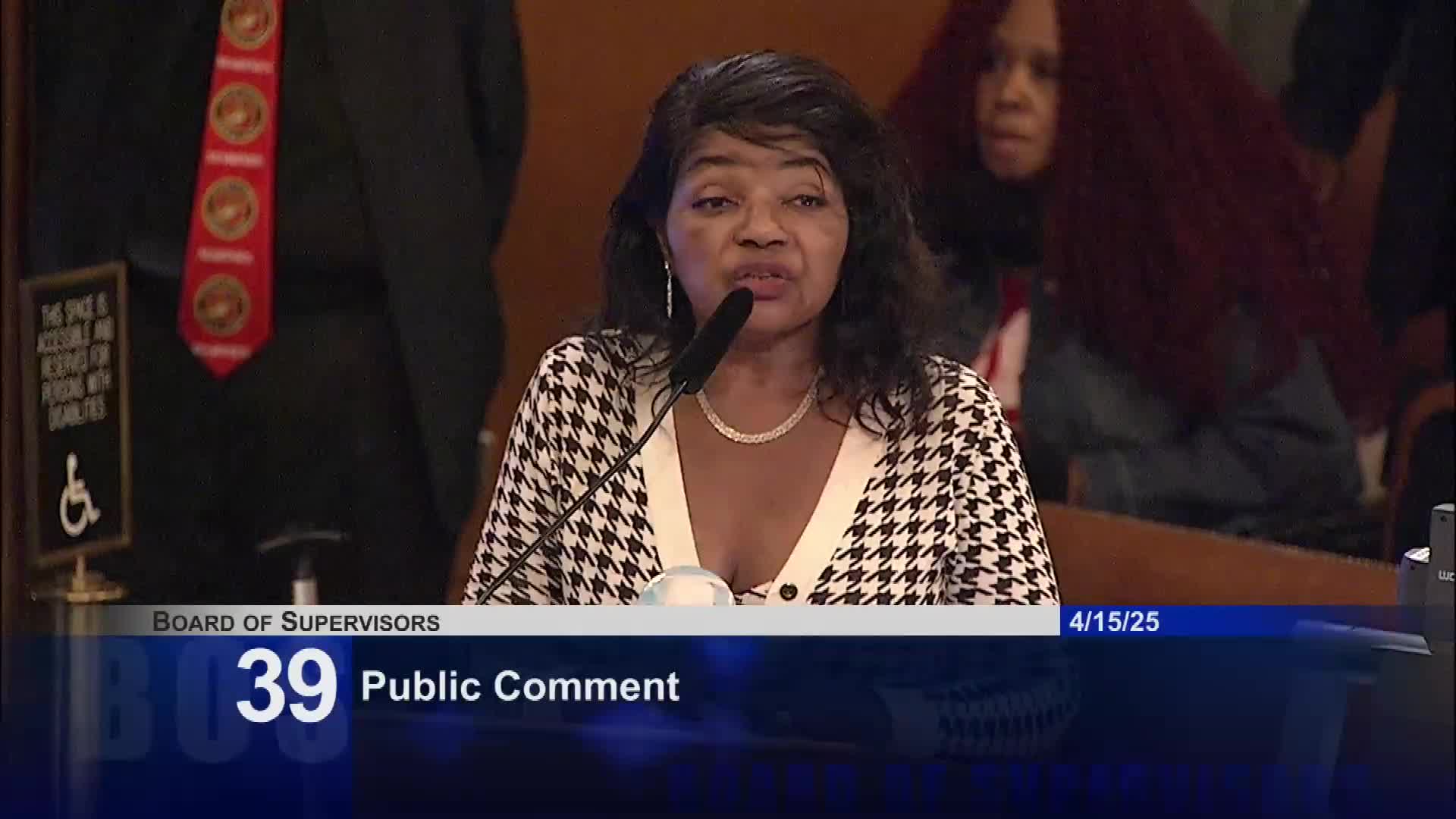
Community groups press board to restore Dream Keeper Initiative funding during public comment

3409900 · May 20, 2025

Loading...

AI-Generated Content: All content on this page was generated by AI to highlight key points from the meeting. For complete details and context, we recommend watching the full video. so we can fix them.

Summary

Multiple community speakers urged the Board of Supervisors on April 15 to restore or fully fund the Dream Keeper Initiative (DKI), saying recent city actions reduced the program's annual funding and that community partners and vendors remain unpaid.

Several community members and representatives of Mega Black and other Dream Keeper Initiative (DKI) grantees used the Board of Supervisors' public‑comment period on April 15 to urge the mayor and supervisors to restore or fully fund DKI and to pay organizations and individuals who say they have not been compensated.

Why it matters: The Dream Keeper Initiative has provided targeted funding and programming for Black residents and organizations. Speakers said a sharp reduction in available funding and delays in payments are harming community organizations and residents who rely on the program's grants, scholarships and services.

What speakers said: Virginia Marshall, representing Mega Black and a longtime nonprofit media producer, asked directly, “Where is the rest of the DKI funding?” She said the initiative has been transformative for community organizations and pressed the board for transparency and accountability on remaining funds.

Jeffrey Greer, also representing Mega Black, said the initiative’s dollars had been reduced from prior allocations and that current totals in the request for proposals “are listed as less than $20,000,000 per year” distributed across multiple areas. He said community stakeholders were not adequately informed about cuts and urged the board to reconsider allocations.

Other speakers echoed concerns that community projects supported by DKI had produced measurable results, that scholarship and workforce programs helped residents gain education and jobs, and that grantee organizations and community workers remain unpaid for completed work. Liva Shepherd said Dream Keeper funding supported scholarships that allowed her to pursue graduate education, and she urged the board to return funds to community organizations. Cheryl Shanks described a Tenderloin restaurant and community space that, she said, would not have been possible without DKI support and asked why vendors and participants had not been paid.

Board reaction and context: The board did not take action on DKI funding at the meeting; Dream Keeper items were discussed in public comment rather than as an agenda item. Several supervisors present had earlier introduced or cosponsored other resolutions and legislation on the agenda, but the funding questions raised by speakers were directed at the mayor's budget and administrative decisions.

What speakers requested: Public commenters asked the mayor and the board to (1) fully restore prior DKI funding levels, (2) provide a transparent accounting of funds released and remaining, and (3) ensure that community partners, vendors and individuals who delivered contracted work or services are paid promptly.

Speakers' claims about amounts and program history were stated during public comment and reflect community concerns; the board's formal budget and administrative records should be consulted for an authoritative accounting.