Get Full Government Meeting Transcripts, Videos, & Alerts Forever!
Get email alerts on the Medicaid Coverage Undocumented topic
No spam. Unsubscribe anytime.
May revision would limit full‑scope Medi‑Cal for some adults, impose premiums and narrow benefits
Summary
The governor's May revision proposes freezing new enrollment and imposing $100 monthly premiums for adults without "satisfactory immigration status," eliminates certain optional benefits and targets pharmacy spending; lawmakers, LAO and dozens of advocates pressed the administration for more modeling and warned of access consequences.
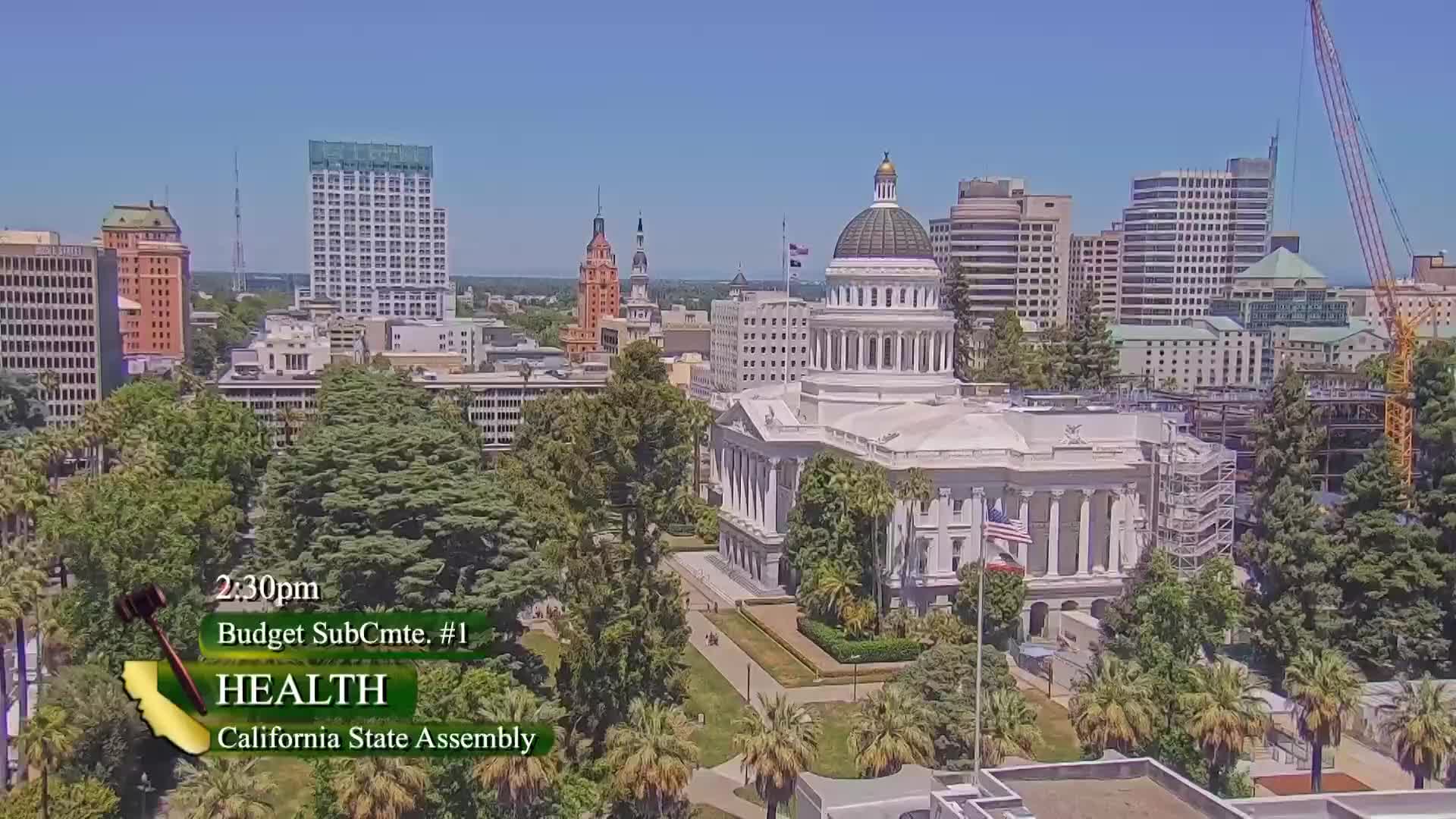
The California Assembly Budget Subcommittee No. 1 on Health heard testimony and public comment May 20 on the governor's May revision proposals that would restrict full‑scope Medi‑Cal coverage for adults the administration describes as having “unsatisfactory immigration status.” The administration told the committee the proposals are intended to help close an estimated $12 billion general‑fund shortfall.
In an opening statement, Chair Dawn Addis said the subcommittee would focus on fiscal stewardship and “do this with empathy and a commitment to every single Californian,” while warning that the May revision “appears to be balanced on the backs of the poor, the elderly, immigrants, women, and frontline health care workers.”
Why it matters: The administration’s package would directly change who can enroll in and keep full‑scope Medi‑Cal, add a premium for a class of adults, and reduce or eliminate optional benefits. The Legislative Analyst’s Office (LAO) and Department of Finance told members they understand the state faces unusual federal and revenue uncertainty; multiple advocates and health providers said the changes would reduce access, trigger loss of federal matching dollars and threaten clinic viability.
Administration overview and key proposals
Michelle Baass, director of the California Department of Health Care Services (DHCS), summarized the department’s role and the size of the program: Medi‑Cal covers nearly 15 million Californians and DHCS’s May revision request includes about $200.6 billion total funds and $45.2 billion general fund in 2025–26. Baass said the administration is proposing several options aimed at reducing general‑fund expenditures and controlling long‑term growth.
Proposals the administration described include: - A freeze on new enrollment in the Medi‑Cal expansion (full‑scope state‑only coverage) for new applicants age 19 and older without satisfactory immigration status, effective no sooner than Jan. 1, 2026; DHCS estimated the freeze would keep 32,000 people from enrolling in the budget year and accumulate to 672,000 fewer enrollees by the end of budget year plus 3 if implemented as proposed. - A $100 monthly premium for adults age 19 and older without satisfactory immigration status (no sooner than Jan. 1, 2027). The administration included $30 million in the budget year to procure a vendor and estimated net general‑fund savings of roughly $1.1 billion when the policy ramps up as proposed. - Elimination of optional benefits for that population including dental (effective July 1) and long‑term care (effective Jan. 1) for adults age 19 and older without satisfactory immigration status. - Elimination of certain PPS “wrap” payments to federally qualified health centers (FQHCs) and rural health clinics for that population, and reduced prospective payments argued to align payment with other provider payment mechanisms. - A rebate aggregator and other pharmacy measures intended to secure supplemental rebates and restrain pharmacy spending, including removal of some optional drug classes (over‑the‑counter antigen tests, vitamins, first/second generation antihistamines), a proposal to remove GLP‑1 medications for weight loss from the Medi‑Cal fee‑for‑service pharmacy benefit, step therapy protocols, prior authorization for certain continuations, and other utilization‑management changes.
Questions from the committee and LAO analysis
Jason Constanturos of the LAO advised the committee that the subcommittee should evaluate three things: (1) the revised Medi‑Cal spending estimate (general‑fund spending was about $2.5 billion higher in the budget year relative to the governor’s January budget, net of proposed solutions); (2) the design of the budget solutions (many are ongoing and focus on undocumented populations and pharmacy); and (3) the uncertain federal policy landscape. The LAO recommended that if the legislature rejects or changes one solution, it should identify an equivalent amount of savings elsewhere.
Members pressed DHCS for modeling or alternatives to the freeze and flat $100 premium. DHCS said it had not modeled income‑targeted alternatives or other premium levels beyond what was proposed and acknowledged it had not simulated alternative asset‑test thresholds or different approaches to dental benefit changes. DHS staff told members the premium proposal assumed both some revenue collection and disenrollments and that administration scoring expected a net $1.1 billion of general‑fund savings when the premium takes effect and collection mechanisms are operational.
Public comment and stakeholder reaction
More than 70 organizations and many individual residents testified, almost uniformly urging rejection of cuts that target undocumented Californians or that would reinstate the Medi‑Cal asset test (covered below). Speakers included representatives of FQHCs, Planned Parenthood affiliates, hospitals, the California Primary Care Association, labor unions, aging organizations, and numerous advocacy groups. Typical comments called the proposals “cruel and discriminatory,” warned clinics would close, and emphasized that rolling back benefits will reduce access and increase more costly emergency care.
Selected on‑record points that committee members and witnesses raised: - The LAO noted that many of the May revision solutions are ongoing and “ramp up” over time, which changes fiscal effects in later years. - DHCS said pharmacy is a major cost‑driver and that securing state supplemental rebates (the “rebate aggregator”) and tighter utilization controls could meaningfully reduce growth. - DHCS acknowledged the premium approach requires new vendor infrastructure and collections systems, which the budget included money to procure.
What the proposals would not do (as presented)
The administration repeatedly described these items as proposals to be negotiated with the legislature and stakeholders. Several committee members asked DHCS to model alternatives (e.g., income thresholds instead of a hard freeze or premium), but DHCS said it had not produced those alternative costings for the committee at the hearing.
Ending
Committee members and many witnesses urged the administration to return with more granular modeling of both fiscal impacts and programmatic consequences before the legislature finalizes decisions. The LAO recommended the legislature pursue alternatives and weigh federal match implications; advocates said removing benefits would leave gaps that will increase emergency care, close clinics and worsen health outcomes. DHCS and the Department of Finance said the May revision reflects difficult trade‑offs in light of a large general‑fund shortfall and continuing federal uncertainty.