Get Full Government Meeting Transcripts, Videos, & Alerts Forever!
Get email alerts on the Education Reading topic
No spam. Unsubscribe anytime.
River Falls schools outline early-literacy plan under Act 20, set promotion policy timeline
Summary
District elementary leaders reported initial results from a three-year early-literacy goal, described transition to AIMSwebPlus screening, and presented a third-to-fourth-grade promotion/retention policy tied to state Act 20 requirements; the board approved first readings and set an implementation timeline.
River Falls School District elementary leaders reported preliminary progress on a three-year early-literacy goal and presented board members with policy changes required by Wisconsin’s Act 20, including a new third-to-fourth-grade promotion and retention policy.
The elementary principals — Kate Scapple (Greenwood), Ashley Bagenheimer (Rocky Bridge), Kai Rogers (Montessori) and Rachel Mader (Westside) — told the board the district set a goal that 100% of elementary students will either be proficient or meet their year’s growth target on foundational reading skills by spring 2027. For 2024–25 the group reported an average spring proficiency of 72% and a combined proficiency-or-growth rate of 82.7% for the grades measured.
The presentation explained the district moved to AIMSwebPlus for kindergarten through grade 3 this year to comply with Act 20 and will use AIMSwebPlus for grades K–5 in 2025–26. District staff said using two different screeners this year (FastBridge for some grades and AIMSwebPlus for others) made cross-district reporting and growth calculations more labor intensive, and they plan to standardize the tool across K–5 to streamline reporting and growth analysis.
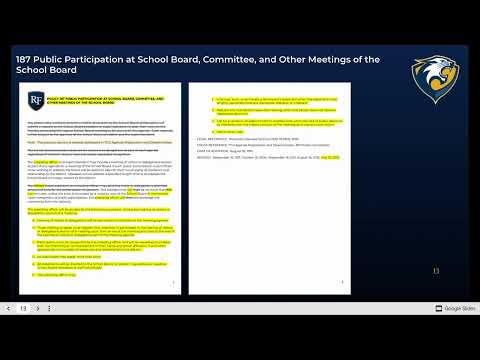
District administrators described multiple operational steps tied to the state law: annual board review of the district early-literacy reading plan (ELRP), development of individual personal reading plans for eligible students, and a promotion and retention policy aligned with statute. Mary Beth (district administrator) told the board the new promotion policy is written to emphasize supports and is not intended as a ‘‘one-size-fits-all’’ approach; teams that include parents will consider individual student data in promotion decisions. The policy was brought to the board for a first reading with a requested board approval by July 2025 and an effective date of September 2027 to allow current kindergarten students to benefit from the full implementation cycle.
Board members and administrators discussed technical limitations with AIMSwebPlus, particularly reporting and the difficulty of measuring winter-to-spring growth without a fall baseline. Principals and instructional staff said they will focus on creating usable reports and clearer data protocols next year, refine personal reading-plan workflows, and address measurement challenges for students with intellectual disabilities.
The board approved the first readings of the revised literacy policy and the new third-to-fourth-grade promotion and retention policy by voice vote at the meeting. The district said the ELRP will be reviewed annually and that additional promotion-related policies for other grades will be reviewed later this year.
District leaders described next steps as refining assessment windows, improving reporting practices, coordinating supports for students with disabilities, and deepening teacher professional development to sustain the work in subsequent years.