Get Full Government Meeting Transcripts, Videos, & Alerts Forever!
Get email alerts on the Homelessness topic
No spam. Unsubscribe anytime.
Washington council enacts ordinance adding petition requirement for shelters and other overnight residential uses
Summary
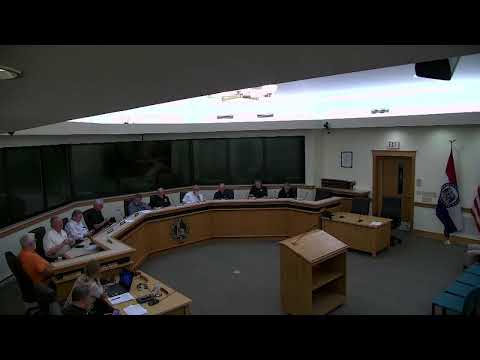
The Washington City Council on Monday adopted Chapter 6.55 of the municipal code, adding new rules for special residential uses and requiring a petition signed by 51% of property owners within 500 feet before shelters, halfway houses and similar overnight facilities can be approved.
The Washington City Council on Monday adopted an ordinance enacting Chapter 6.55 of the city code that regulates special residential uses including shelters, halfway houses, social rehabilitation facilities and alcohol- or drug-treatment facilities and requires an applicant to submit a petition signed by 51% of property owners within a 500-foot radius before the use can be approved.
Supporters and volunteers for a volunteer-run weather-relief effort at Peace Lutheran Church urged the council to allow churches and community groups to provide emergency relief for people without housing; several neighbors said the church’s activity has created safety, nuisance, and property-value concerns in a residential area. Pastor Amy Appel said the church’s volunteers coordinated with Mercy Hospital and other local groups and that “if adequate services that do not include overnight accommodation in extreme weather are not made available in this community, people will die.”
The ordinance was introduced and read, then put to a second reading and passed on roll call. Council members Patke, Briggs, Pevsell, Heydrich, Baer, Solentrapp and Coulter voted yes. City staff and council discussed the ordinance’s scope during and after the vote; staff clarified that meal programs without overnight accommodation do not trigger the ordinance’s petition requirement.
Why it matters: the new rule gives neighbors a formal role before an application for an overnight residential use proceeds, and it directly affects volunteer and faith-based efforts that include overnight stays. Speakers for both sides urged the council to find a permanent, city-led solution for people without stable housing while protecting established neighborhoods.
What the council heard: neighbors described repeated foot traffic, late-night activity and what they called intimidating behavior near yards and playgrounds adjacent to Peace Lutheran. Supporters described the church’s winter-time efforts to provide meals, clean clothes and motel rooms for people during extreme temperatures and said they lack another centrally located facility to host volunteers and guests.
Council response and next steps: council members expressed a desire to find alternatives and to organize a coordinated community response; one councilmember suggested forming a Washington homeless task force. Council did not adopt a separate emergency shelter program or identify an alternate location at the meeting.
Quotes (from speakers on record): “These are our neighbors,” Pastor Amy Appel said of people without permanent housing. “We are trying to provide a place where they can sleep out of the cold.” Opposing neighbors said they support services but asked that a site not be located in the middle of an established residential block. James Silver Schmidt, a neighboring resident, said: “We’re not saying there isn’t a need ... we just disagree with the location.”
The vote: the ordinance passed on the second reading with an affirmative roll call vote; council did not attach an implementation timetable at the meeting.
Context: the ordinance adds a neighborhood-petition step (51% of property owners within 500 feet) for applications that would provide overnight lodging. Staff said the petition requirement is an additional prerequisite to zoning and other code requirements that an applicant must still meet.
What remains unresolved: community members, volunteers and council members all urged the city to pursue a separate, city-led solution for overnight accommodations. The council signaled interest in more coordinated planning but made no formal commitment to a site or funding at the meeting.