Get Full Government Meeting Transcripts, Videos, & Alerts Forever!
Get email alerts on the Construction Procurement topic
No spam. Unsubscribe anytime.
Board presses for prototype controls, tilt‑up construction and owner-direct purchases to lower building costs
Summary
Board members discussed design amendments to Spring Park and other prototype schools, a shift to on-site tilt‑up construction, owner-direct purchasing to reduce contractor markups, and a reduced scope for the Jacobs construction-management contract as the district brings more work in-house.
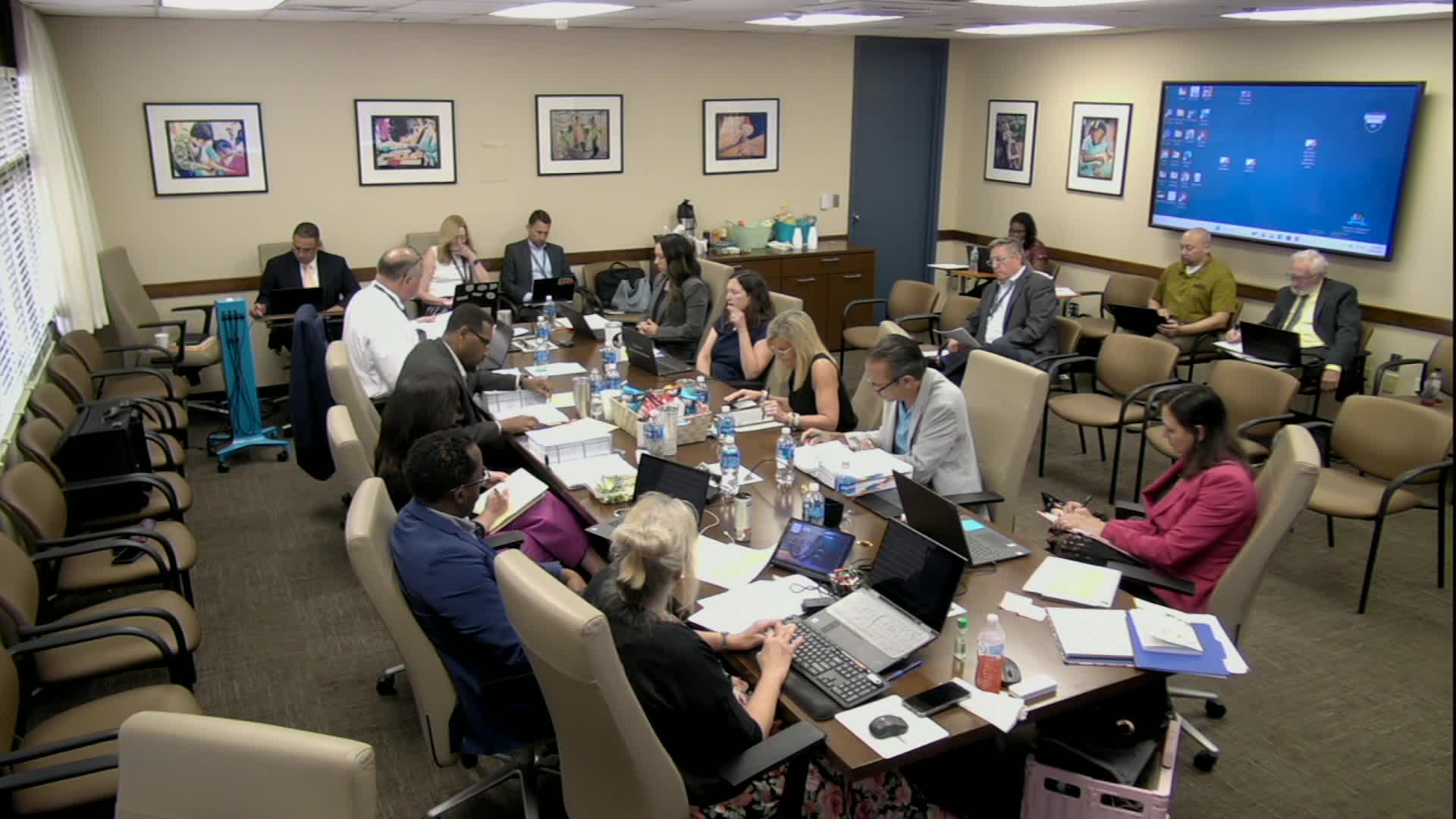
The Duval County School Board spent substantial time on construction and procurement strategy, discussing design amendments for Spring Park Elementary and other prototype schools, a move from precast to on-site tilt‑up wall construction, expanded owner‑direct purchasing to reduce markups, and plans to reduce Jacobs’ scope while bringing more construction and maintenance work in-house.
Staff said a fourth amendment to a design contract for Spring Park would add design services not anticipated in the original contract and listed a not‑to‑exceed amount of $560,621 for those additions (staff described portions of that figure as tied to the change from precast to tilt‑up wall construction). Staff explained that prototype designs still require site‑specific architectural fees for siting, entrances and circulation even when reuse of a prototype design lowers some costs.
Board members raised two recurring concerns: (1) amendments stacked on top of original budgets can materially increase final project costs and (2) prototype plans often need iteration after real‑world review. Staff said the goal is to finalize a replicable prototype so future projects will need fewer amendments and to use tilt‑up walls and owner‑direct purchasing (having the district procure equipment and use known local trade contractors) to capture tax and procurement savings. Staff reported Mandarin wing is approximately $3 million under budget at present and said savings from projects completed on time and under budget could be redirected to accelerate other projects.
The board also discussed the Jacobs construction‑management contract. Staff described a shift to have Jacobs focus on large renovations while moving deferred maintenance, demolitions and smaller projects back in-house under district trade contracts; this change reduces professional‑fee spend in the Jacobs contract and is part of a broader effort to internalize work the district can perform more cheaply than through subcontracted rates.
Why it matters: decisions about prototypes, construction methods and owner‑direct purchasing affect per‑project cost, schedule and long‑term operating expenses. Board members pushed staff for clearer pre‑design reviews with principals and teachers, tighter limits on amendments and more competition for prototype vendors to avoid repeat cost escalation.
Staff follow-ups included: a return with a breakdown of where reductions were made in the Jacobs contract, a cost comparison of precast vs. tilt‑up for the affected prototypes, and documentation of owner‑direct purchasing processes and vendor lists for future board review.