Get Full Government Meeting Transcripts, Videos, & Alerts Forever!
Get email alerts on the Restoration Projects topic
No spam. Unsubscribe anytime.
District and Corps brief coalition on reservoirs, STAs, ASR demonstration and Tamiami Trail progress
Summary
South Florida Water Management District and U.S. Army Corps officials outlined completed and under-construction restoration projects — C-44, C-43, IRL reservoirs, EAA STA — and described an aquifer storage and recovery (ASR) demonstration and Tamiami Trail bridging scheduled through 2026.
Representatives from the South Florida Water Management District and the U.S. Army Corps of Engineers summarized construction and operational progress on multiple Everglades restoration projects and related resilience work at the June 6 meeting.
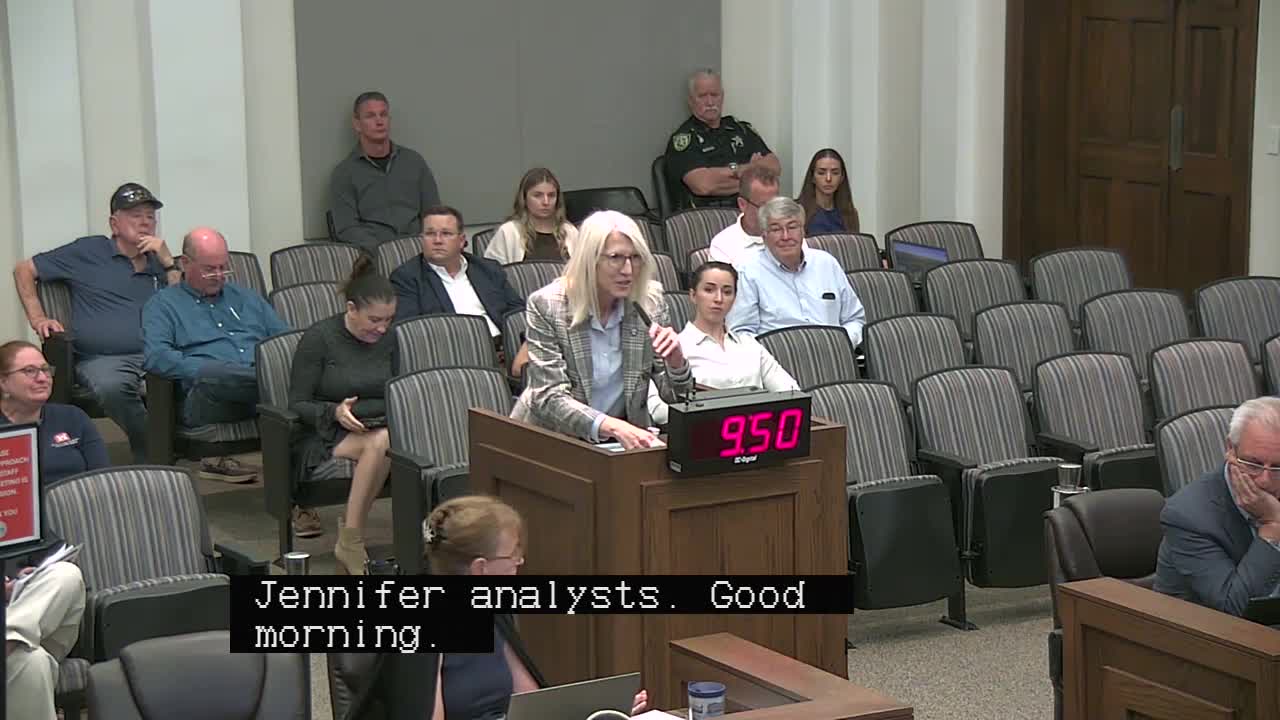
South Florida Water Management District representative Jennifer Reynolds gave a progress report that said the C-44 Reservoir is complete and operational; the C-43 on the Caloosahatchee is nearly complete and entering initial operations and testing. Reynolds said a suite of 13 restoration strategies is complete, and the EAA stormwater treatment area (STA) is operational, providing what she described as 84 billion gallons of interim storage and treatment. She also said that once the Corps’ EAA reservoir is finished the total storage figure would rise — figures spoken in the presentation were given as large multiples (transcribed as 385,000,000,000 gallons in the presentation slide), and the District said it is working with the Corps to finalize operational agreements that would allow interim use of STAs while larger reservoirs are completed.
Reynolds also described a District design for a demonstration ASR (aquifer storage and recovery) treatment facility, which the District said is being designed to meet potable (drinking-water) permitting standards requested by EPA and DEP. “Our demonstration facility is designed to treat to drinking water standards,” Reynolds said, adding that treating recovered ASR water to potable standards is expensive and remains a primary technical and cost challenge.
The Corps’ Tim Geisen discussed operations and testing. He said part of the reason operational testing takes time is that projects move from construction completion into staged fills, testing, monitoring, and then any remedial fixes identified during testing. On the C-43/C-44 seepage and operational fixes, Geisen said additional engineering work and construction to remedy seepage are underway and estimated the program of fixes and testing would take roughly two more years to fully complete operational testing and monitoring.
Reynolds and Geisen also noted other ongoing projects: continued Western Everglades work, Tamiami Trail bridging (with a construction completion target cited as March 2026), Picayune Strand nearing completion, Biscayne Bay Coastal Wetlands moving toward calendar-year completion, and new dispersed water-management solicitations for projects in the Caloosahatchee Basin. The District also announced two new governing board members.
Why this matters: The status and timing of reservoirs, STAs and operational testing affect how much water can be stored, treated and delivered to the Everglades and estuaries. Officials said operational testing and staged fills are deliberate steps to prevent problems from appearing once projects are fully commissioned.
Ending: District and Corps officials said project commissioning and operational testing will continue through the coming months and years, and both agencies promised follow-up briefings and data as test results become available.