Get Full Government Meeting Transcripts, Videos, & Alerts Forever!
Get email alerts on the Lake Levels And Ecology topic
No spam. Unsubscribe anytime.
Lake Okeechobee recovery operations lower lake to about 11.1 feet; officials and stakeholders press for legacy-sediment plan
Summary
U.S. Army Corps and South Florida Water Management District officials said recovery operations lowered Lake Okeechobee to roughly 11.1 feet and have produced early ecological signs of recovery. Public speakers and commissioners called for a coordinated plan to address legacy sediment ("muck") on the lake bottom to support long-term recovery.
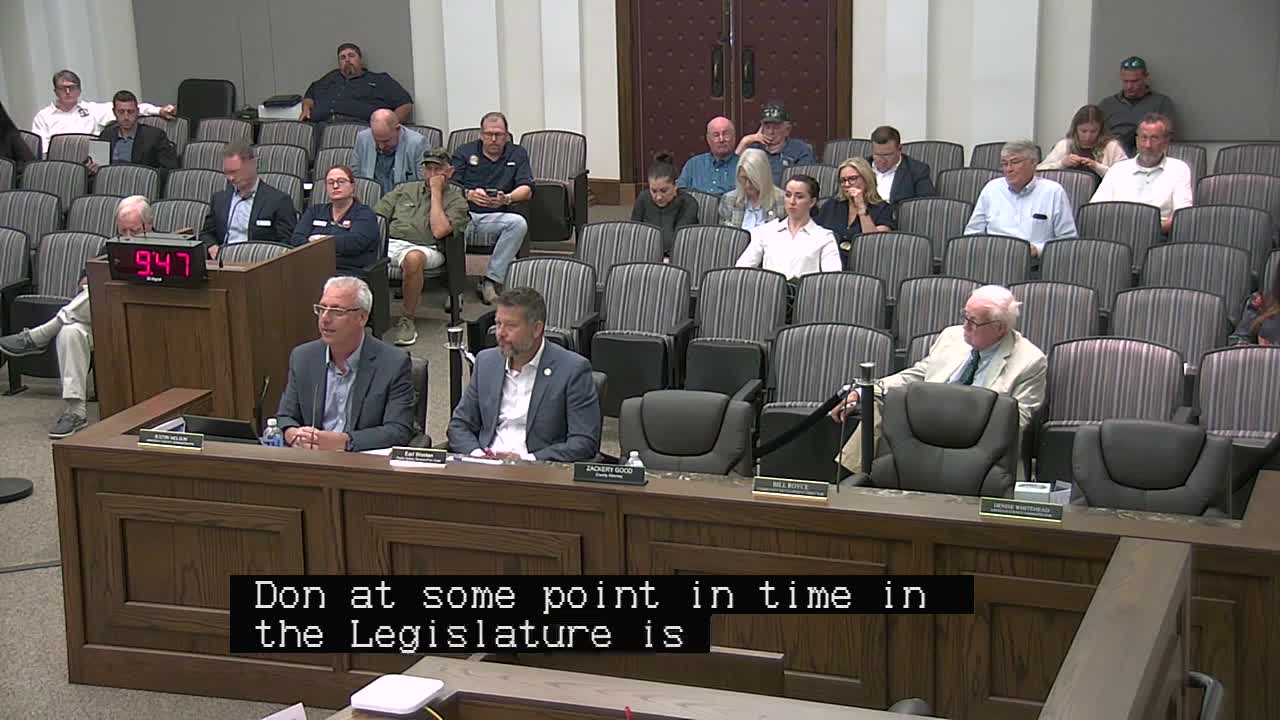
U.S. Army Corps of Engineers and South Florida Water Management District officials reported at the June 6 County Coalition meeting that Lake Okeechobee experienced a planned recovery operation this dry season and has reached about 11.1 feet, producing early signs of submerged aquatic vegetation (SAV) regrowth and improved estuary conditions.
The Corps’ acting ecosystem lead, Tim Geisen, said recovery operations under the Lake Okeechobee System Operating Manual (LOSOM) were launched in early December to encourage SAV growth and reduce the lake’s high water levels. “We were lucky and got some really good assistance and have gotten down to, right about where our target was,” Geisen said, describing improved SAV coverage in the northwest marshes and other early ecological responses.
The Corps and the District said monitoring will continue through the wet season and that an after-action report is planned to assess benefits and any negative effects from the recovery operations. Geisen said projections made in January and updated in June indicated the lake would likely end the wet season between about 14 and 15.5 feet under average rainfall scenarios, which officials said would be more favorable for both water supply and ecology.
Why this matters: Lower summer and autumn lake levels are intended to allow submerged plants and bird foraging habitat to recover; sustained recovery typically requires multiple dry seasons. Several public commenters and county commissioners said that recovery will be incomplete without a concrete, coordinated plan to remove or manage accumulated organic sediment on the lake bottom — commonly referred to as muck or legacy sediment.
Public speakers and local officials discussed conditions and concerns. Resident and lake observer Billy Locker said, “the lake height was hovering around 10.5 about probably a month ago. Now it's at 11.15 today,” and described shallow shorelines and concentrated herbicide spraying in some canals and river shorelines. Mark Perry of Florida Oceanographic reported both the lakelevel and earlier lows: “the lake's sitting at about 11.15 right now, but it went down to on about May 24 to about 8.97,” and said oyster spat settlement and grass recovery have been observed in some estuary areas.
Several speakers urged an organized program to address legacy sediment. United Waterfowlers of Florida representative Newton Cook and other speakers said decades of organic accumulation and periodic re-suspension during storms continue to limit vegetation recovery and water clarity. Collier County and other commissioners described pilot efforts and financing approaches used for other infrastructure and said they want to see a multi-agency plan that evaluates removal approaches, reuse options and regulatory constraints.
Officials’ current operational stance: Geisen said the Corps coordinates with the South Florida Water Management District and relies on district water-supply expertise when lake levels reach the lower parts of Zone D in LOSOM. The Corps noted that recovery was aided by below-average rainfall this dry season, and warned that an active hurricane season or heavy wet-season rains could rapidly raise the lake again.
Next steps and outstanding questions: The Corps and District will continue weekly and biweekly stakeholder updates, complete operational testing of several reservoirs and prepare an after-action report on recovery operations. Commissioners requested a focused work plan on legacy sediment removal options, and participants said they expect the District and Corps to present pilot and permitting pathways at a future meeting.
Ending: Officials said the benefits observed this season are an important step but that multi-year dry conditions and explicit plans for sediment management and vegetation recovery will be needed to sustain long-term gains.