Get Full Government Meeting Transcripts, Videos, & Alerts Forever!
Get email alerts on the Public Comment topic
No spam. Unsubscribe anytime.
Scores of public commenters urge supervisors to drop $5 tennis court reservation fee and restore soda-tax funded community programs
Summary
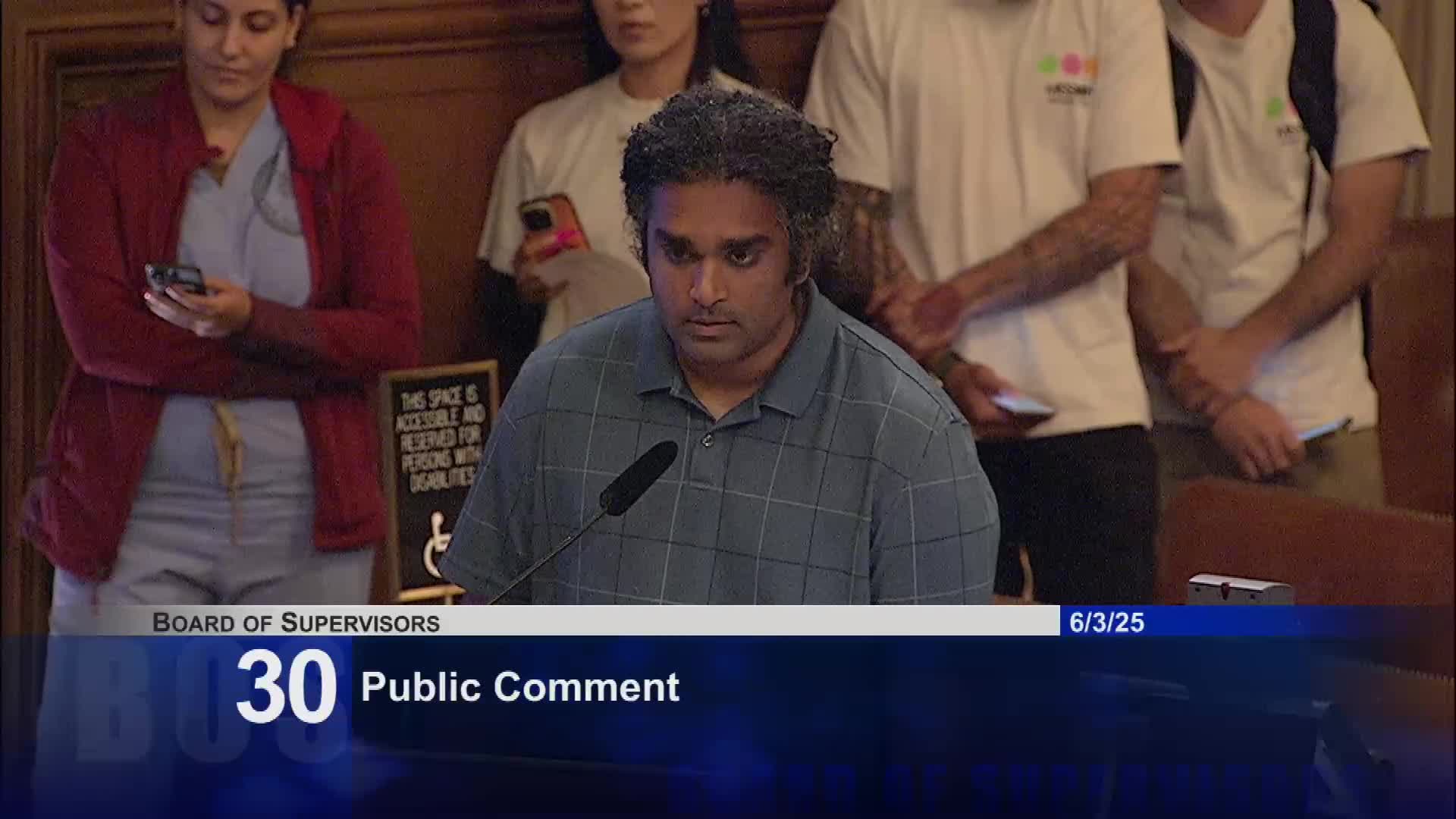
Dozens of speakers during public comment urged the Board of Supervisors to reject a proposed $5-per-hour reservation fee for public tennis courts and to preserve soda tax-funded community programs including GLIDE—s Social Justice Academy.
During the public comment period at the June 3 board meeting dozens of speakers spoke on the same two themes: opposition to a proposed $5-per-hour tennis court reservation fee and pleas to retain soda tax-funded community programs such as GLIDE Center for Social Justice—s Social Justice Academy.
Tennis court fee Multiple speakers representing the volunteer-led Mission Athletic Club, court users and longtime players urged supervisors to vote no on a proposed $5 hourly reservation fee being considered by Recreation and Parks. Speakers said free public courts enabled community, improved public health and provided low-cost recreation to young people, seniors and low-income residents. Prince Boucher, identified as the Mission Athletic Club founder, said the group organizes roughly 25 events per month and has grown to nearly 2,000 members through free access. Several speakers quantified the annual cost for a regular player at about $700—1,200, a figure they said would be unaffordable for many.
Speakers criticized Parks Alliance and other backers for having governance or financial questions on the record and urged the board to direct an audit or seek more data on no-show rates and utilization before imposing fees. Physicians, parents and program leaders said the courts provide physical and mental health benefits and community ties they said are difficult to replace with paid reservations.
Soda-tax funded programs Multiple public speakers, including GLIDE staff and participants, asked supervisors not to cut funding for programs supported by the city—s sugar-sweetened beverage tax (soda tax). Speakers said the Social Justice Academy and other soda-tax-funded initiatives support community-driven health education, food security projects, and leadership development in neighborhoods such as the Tenderloin. Several speakers gave first-person accounts of how the Social Justice Academy helped them access services, recover from substance use, or find community leadership roles. GLIDE and partner organizations told the board the programs target health disparities and support culturally specific outreach and healing.
What the board recorded Public comment was heard and the board closed the public comment period; no formal board action on the tennis fee or the soda tax cuts occurred at the June 3 meeting. Several supervisors, during introductions of new business, acknowledged the issues raised: Supervisor Fielder said he would seek an audit of Recreation and Parks; others urged preserving community funding.