Get Full Government Meeting Transcripts, Videos, & Alerts Forever!
Get email alerts on the Technology Procurement topic
No spam. Unsubscribe anytime.
Staff recommends pause on cloud migration; seeks transition strategy for county ERP
Summary
County staff told the audit committee that moving the 20-year-old on‑premises enterprise resource planning (ERP) system to the cloud is likely in the long run but currently cost‑prohibitive; the committee backed staff’s plan to negotiate a favorable near‑term contract and to develop a multi‑year transition strategy.
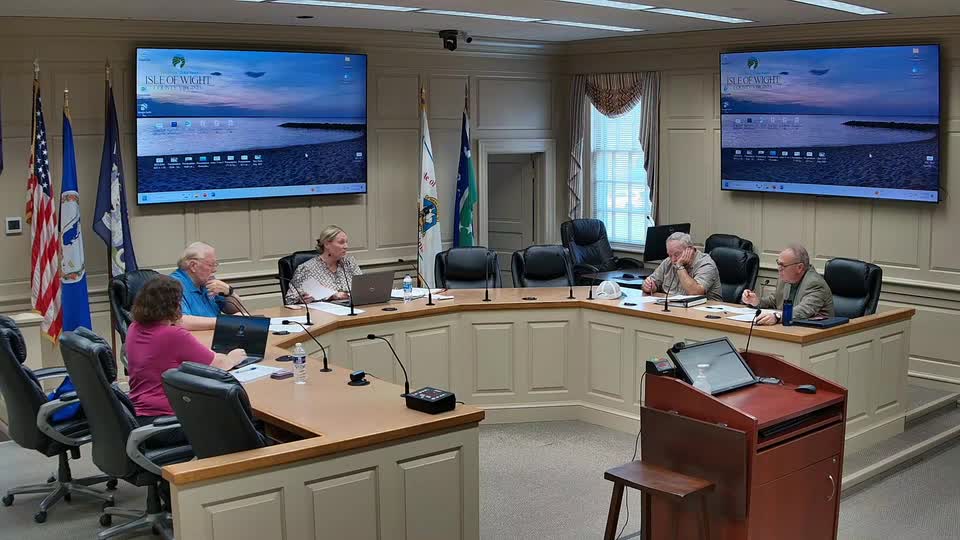
Staff briefed the Isle of Wight County Audit Committee on June 2 about the county’s enterprise resource planning (ERP) systems, vendor pricing and next steps for a planned transition off a 20‑year‑old, locally hosted ERP.
“Mister Stanton” (staff) told the committee that the county currently operates a two‑decade‑old, locally hosted ERP with several third‑party or add‑on applications and that moving to a cloud‑hosted ERP is a broad industry trend. Staff said the county negotiated a favorable short‑term pricing arrangement with the current vendor that maintains on‑premises support for the county for the next three years, providing the county time to craft a formal transition plan. “ERP is enterprise resource planning system,” a presenter explained, adding that a transition strategy must define requirements, interfaces and procurement approach for hybrid add‑on applications.
Presenters described three practical challenges: (1) several specialized, third‑party modules were developed to meet county‑specific needs and those modules must be evaluated for migration or replacement; (2) vendors are increasingly encouraging cloud hosting and charging more to maintain on‑premises customers, which can make a near‑term full migration cost prohibitive; and (3) any vendor selection or procurement should be guided by rigorously validated requirements and a risk/opportunity matrix.
Staff recommended the committee support continued operation under the negotiated pricing for now, and the creation of a formal ERP transition strategy that would include requirements definition, market research, procurement planning, staff training and a project schedule. The committee asked staff to treat procurement‑sensitive documents appropriately; the county attorney confirmed negotiation details can be withheld from FOIA until after a contract is executed.