Get Full Government Meeting Transcripts, Videos, & Alerts Forever!
Get email alerts on the Minimum Wage topic
No spam. Unsubscribe anytime.
Committee votes to send revised minimum-wage ordinance to full council; city employees phased in later date
Summary
The committee voted to forward a revised minimum-wage ordinance to the full council, shifting the ordinance’s effective start to Jan. 1, 2026 and phasing the city‑employee increase to July 1, 2026 to accommodate budgeting.
The Housing & Community Development Committee voted to forward a revised minimum-wage ordinance to the full City Council, endorsing new effective dates that shift the ordinance’s implementation schedule and phase increases for city employees.
Lede facts: Councilor Kate Sykes moved to send the ordinance to the full council; the committee voted to advance the measure after staff updated the effective dates to start Jan. 1, 2026 and to phase the city-employee increase to July 1, 2026.
What the revision does
Staff and Councilor Sykes said the ordinance reflects a technical timing change: the earlier proposed start date of Jan. 1, 2025 had already passed, so the revised schedule begins Jan. 1, 2026. The committee also accepted a carve-out to increase the minimum for city employees on the municipal budget cycle: city employee wages would increase to $17 on July 1, 2026, with subsequent annual steps to $18 (2027), $19 (2028) and $20 (2029). After that schedule, the ordinance would revert to consumer-price-index adjustments as written in the original proposal.
Why it matters: The change balances the timing of municipal budget cycles and the city workforce’s fiscal planning while advancing a proposal for a citywide minimum-wage path for voters to consider.
Committee discussion and process notes
Committee members and staff discussed the necessary timeline to place the ordinance on a municipal ballot and whether the city’s finance committee should review budget impacts to city operations and contracts. Corporation counsel and staff said finance-committee review is not strictly required but is typical for proposals with significant budgetary effects; the committee asked staff to coordinate with finance staff and the mayor’s office to ensure the administration and council have adequate time to review fiscal implications before final council action.
Committee vote
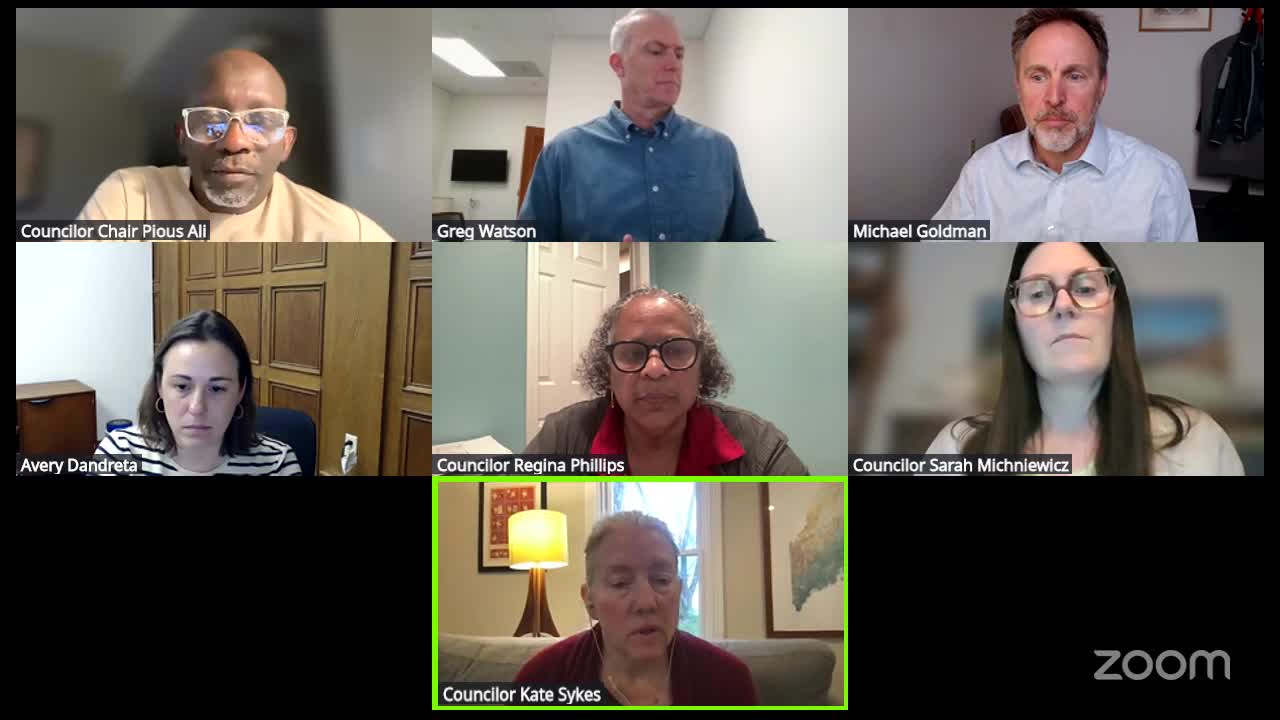
Roll call: Councilor Sykes — yes; Councilor Regina Phillips — yes; Councilor Micklewitz — no; Chair Payos Ali — yes. The committee forwarded the revised ordinance to the full council for consideration and possible placement on a municipal ballot.
Ending
City staff will coordinate with finance staff and corporation counsel on fiscal notes and with the clerk’s office about meeting placement so the council can consider the ordinance in time for the ballot schedule.