Get Full Government Meeting Transcripts, Videos, & Alerts Forever!
Get email alerts on the Property Tax Reform topic
No spam. Unsubscribe anytime.
Delaware City finance panel approves resolution opposing House Bill 335 and continues tax‑policy workshop
Summary
The Delaware City Finance Committee unanimously voted to recommend a resolution opposing House Bill 335 to full council and spent the remainder of the meeting reviewing draft financial policy items, including reserve targets, debt strategy, and contingency planning should state property‑tax changes occur.
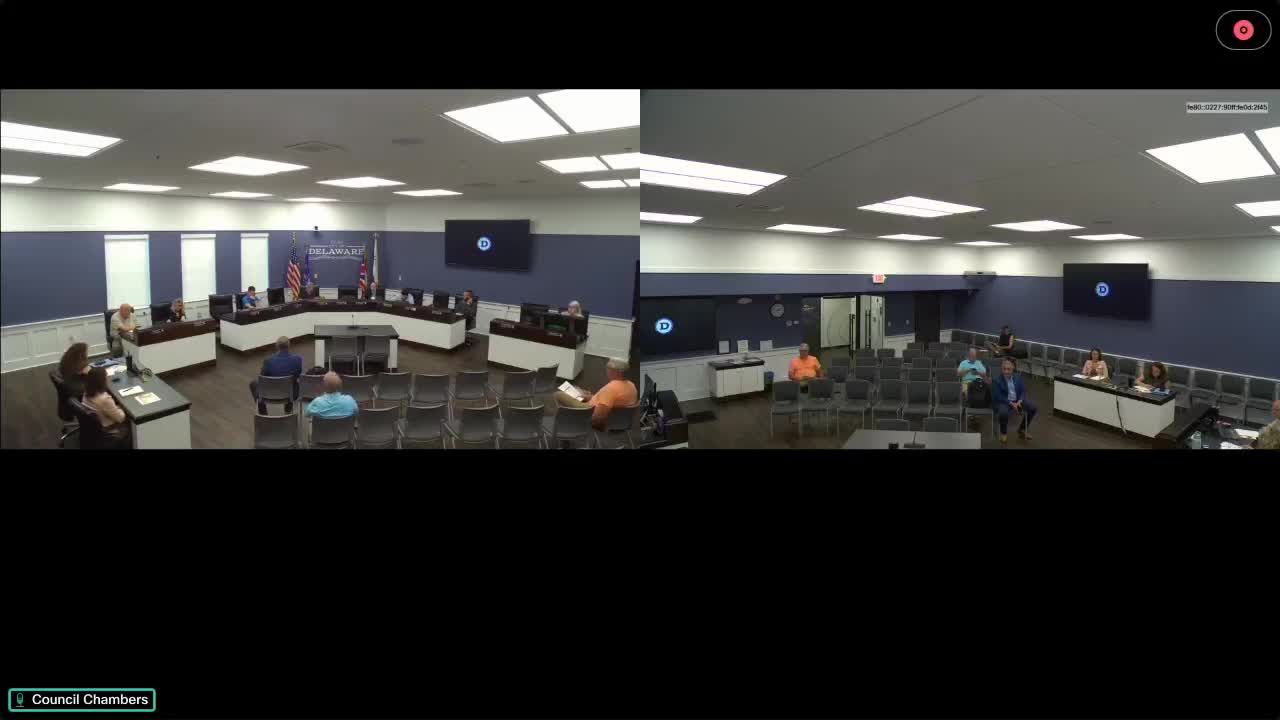
The Delaware City Finance Committee on June 16 voted unanimously to recommend a resolution opposing House Bill 335 — a pending state property‑tax reform measure — to the full City Council and spent the rest of its meeting continuing a multi‑session tax‑policy workshop focused on reserves, debt strategies and contingency planning.
The recommendation to forward the Municipal League–draft resolution to council was approved by roll call with three “yes” votes: Mr. Hoffman, Mr. Haynes and Chair Schaffer. Chair Schaffer noted a core objection in the resolution: a three‑member panel appointed by the county could override a voter‑approved levy, which he said would “usurp our authority.”
City Manager Paul Breake told the committee the bill (referred to in committee discussion as House Bill 335) would immediately eliminate the city’s inside millage and carry several downstream effects, including risks to tax‑increment financing (TIF) revenues, creation of “minimum service payments” (MSPs) that could fall to new homeowners, and legal impacts to the collateral backing some outstanding limited‑tax general obligation bonds. Breake said the city’s inside millage currently produces roughly $4 million to $4.5 million annually and that a statewide change could remove that revenue stream, imperiling capital projects and grant matches in the capital improvement program (CIP).
“[The bill] is ill‑conceived,” Breake said during the presentation, noting it would leave municipalities without replacement revenue and could require rapid action — including multiple readings and an August deadline to appear on the November ballot if the city chose to ask voters to replace lost revenue.
During public comment, resident Scott MacVicar said he supported the city’s work on tax policy but warned against returning to voters “again” this November without more written proposals. “I was disappointed at the end that comments were made by the committee that before any tax policies have been written...we're gonna have to put this on the ballot in November again,” MacVicar said, adding that some cuts to services would be preferable to a tax increase.
The workshop portion of the meeting, led by a presenter identified as David, covered several draft policy topics the committee had previously flagged: defining a GFOA‑style balanced budget, clarifying reserve targets for general operations and for specific funds (including Fire and EMS now supported by a 0.7% income tax), and formalizing a “budget gauge” or playbook for actions during economic downturns or revenue shocks. Finance staff and participants discussed the city’s self‑funded health insurance as a particularly volatile fund and the need to consider a designated reserve to cover end‑of‑year stop‑loss payments.
Alicia (finance staff) and Dean Stelzer (resident) described the city’s history of self‑funding health coverage and the use of a dedicated reserve to smooth claims volatility; staff said stop‑loss reimbursements have reduced net cost but can create difficult year‑end cash needs. Committee members and staff discussed tradeoffs of paying capital with cash versus issuing debt and agreed draft policy language should describe when the city will prefer one approach over the other and identify lower and upper cash targets to guide decisions.
Committee members asked staff to develop contingency options the city could deploy if inside millage elimination or other state reforms take effect, from using reserves in the short term to considering an income‑tax ballot measure. Paul Breake told the committee he will return with written drafts reflecting these policies and clarified that a Municipal League resolution language will be refined by the city attorney before transmission to council.
Votes at a glance
- Resolution 205‑547 (Municipal League template opposing House Bill 335): motion to recommend approval to full City Council; mover/second not specified in the record; roll‑call vote — Mr. Hoffman: yes; Mr. Haynes: yes; Chair Schaffer: yes; tally: 3 yes, 0 no; outcome: approved. The resolution will be placed on the full council agenda per staff direction.
Committee direction and next steps
Committee members asked staff to: (1) finish and circulate the service‑inventory table comparing Delaware to peer cities; (2) develop reserve‑level recommendations (general fund, Fire/EMS, health insurance stop‑loss reserve); (3) prepare contingency options and draft ballot timing consequences should state legislation eliminate the inside millage; and (4) draft formal policy language (a “playbook”) describing a budget gauge and how and when the city manager may implement spending restrictions. Staff said those items will be brought back at the next finance committee meeting.
Ending
The committee closed the meeting after setting a follow‑up session in July to review written policy drafts and finalize the services inventory for public reference.