Get Full Government Meeting Transcripts, Videos, & Alerts Forever!
Get email alerts on the Land Use Governance topic
No spam. Unsubscribe anytime.
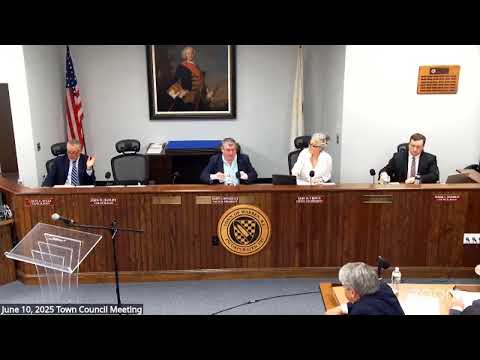
Warren council votes to study combining planning and zoning boards under new state law
Summary
Council voted to pursue a plan to explore merging the planning and zoning boards under R.I. Gen. Laws §45-24-56.1, directing staff to prepare a proposal and to consult boards and stakeholders.
The Warren Town Council voted to pursue a formal study and planning process to evaluate combining the town’s planning and zoning boards under Rhode Island General Law 45‑24‑56.1. The council asked staff and the solicitor to prepare an outline that would include structure, membership, staffing, and any required charter or ordinance changes for later public discussion.
Solicitor Nicholas DeSisto (transcript reference: “The statute that you're referring to is section 45‑24‑56.1”) explained that the statute permits towns to create a single board to exercise both planning and zoning functions and that the move can streamline review for complex land‑use applications by providing “one‑stop shopping” for applicants. DeSisto cautioned that the charter currently references both a planning board and a zoning board and that adopting a combined board would likely require a charter amendment or ordinance changes to align town governance with state law.
Council members and longtime residents raised concerns during public comment about concentrating land‑use authority and the loss of separate expertise. Resident David Bolster read a prepared statement saying Warren already faces heavy development pressure and that combining boards “is unnecessary for Warren and fraught with more nightmare scenarios,” citing past contested developments he said lacked sufficient review. Another resident, Joan Coltrane, asked whether concentrating authority in a small board would reduce opportunities for public input.
Council members responded that the item was a referral to produce a plan, not final approval of a merger. The next steps include staff drafting a proposed structure, outreach to the existing planning and zoning boards and the public, and a workshop to review options and impacts. The council directed the manager, solicitor and relevant department heads to present a proposed timeline and draft ordinance or charter change for future council consideration.
The council’s motion to explore and develop a plan passed by voice vote; the council did not adopt any ordinance language at the meeting.