Get Full Government Meeting Transcripts, Videos, & Alerts Forever!
Get email alerts on the Zoning topic
No spam. Unsubscribe anytime.
Clinton public hearing draws heated debate over zoning rewrite, 6 Senses project and moratorium request
Summary
The Town of Clinton held a public hearing on proposed zoning-code revisions that drew crowds voicing opposition and concern about a proposed project referred to as 6 Senses and about changes to definitions and protections in the draft code.
The Town of Clinton held a public hearing on proposed zoning-code revisions that drew crowds voicing opposition and concern about a proposed project referred to as 6 Senses and about changes to definitions and protections in the draft code.
The hearing centered on whether the revision — a process the town says began after the 2012 comprehensive plan — would allow larger hospitality uses, how ridgeline clearing limits would work in practice, and whether the town should impose a temporary moratorium on hotel and conference-center applications while new rules are drafted.
Supervisor Michael Dallas told the meeting that a March town-board resolution "did not nullify the decision of the town of [Zoning Board of Appeals]" and that the board had judged that ZBA conditions had been met; the supervisor asked that the evening’s comments focus on the zoning revision now before the board rather than pending separate planning-board applications. Dallas also said definitions would be discussed at the July meeting.
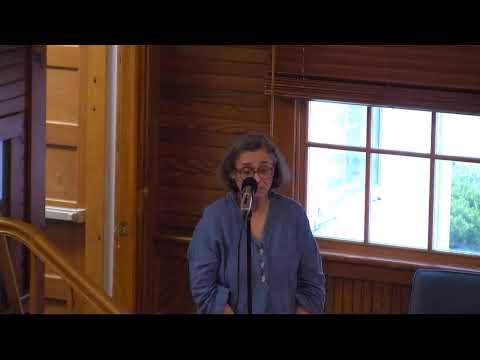
Residents who spoke ranged from longtime neighbors urging protection of rural character to members of town committees and former board members. Several speakers asked the board to strip conference-center provisions from the current draft, or to adopt a moratorium while the town prepares a new hospitality law. "We need a moratorium now because somebody could be trying to buy 1 of those properties ... and planning to file plans to build ... conference centers as the board is acknowledging," a resident said during public comment.
Planning-board member Elliot (given name in transcript) told the room the town is drafting a separate law to regroup hotels, motels, inns and conference centers under one regulatory scheme; he added one likely outcome under consideration would be "to simply not have conference centers anymore." He said the town hopes to post a draft within a month or two and hold a public hearing.
Historic-preservation advocates urged clearer local landmark and district rules. Cynthia Cook, president of the Town of Clinton Historical Society, asked the board to name the society explicitly in the provision listing who may petition for a historic designation and to allow fast-tracking for properties already on state or national registers.
Several residents raised concerns about a proposed change to clearing limits in ridgeline areas. The draft zoning language cited at the hearing states, "in the Ridgeline Protection area, the maximum area permitted to be clear cut shall be no more than 75 feet in extent from the outer edge of the primary structure's footprint," and also said "only the minimum amount of existing vegetation may be cleared" during construction. Speakers said they feared the change amounted to substantially more clearing than the town’s earlier 30 percent benchmark.
Zoning administrator Jeff Newman and others reminded the audience the revision process has to reconcile laws passed since the revision began, such as a 2021 amendment to the conference-center law and more recent short-term-rental provisions, and that the town intends to incorporate stand-alone laws into the revised code to avoid conflicts.
After public comment, the board voted to keep the public hearing open and continued it until the July meeting at 6 p.m.; the motion carried on a voice vote.
Why it matters: the zoning rewrite affects where hotels, inns and event venues can locate and how historic and environmental protections are applied. Residents and town officials said they want clear, internally consistent code language and earlier, more visible opportunities for public input on draft text. The board said a separate, narrower law addressing hospitality uses will be circulated for review before final action.
The board did not adopt any new substantive zoning measures at the meeting; it scheduled further review of definitions at the July session and said the hospitality-dedicated draft would be released for public comment when ready.
Speakers quoted in this article are named as they appeared at the hearing; attributions are limited to comments captured on the record.