Get Full Government Meeting Transcripts, Videos, & Alerts Forever!
Get email alerts on the Developmental Disability Services topic
No spam. Unsubscribe anytime.
Big Lakes Developmental Center warns Geary County of rising costs, staffing shortages and pending Medicaid waiver changes
Summary
Leadership of Big Lakes Developmental Center asked Geary County commissioners for a 2% increase in county mill-levy support for 2026, citing workforce shortages, a transportation-heavy operating model and imminent state changes to Medicaid waiver services that could raise costs.
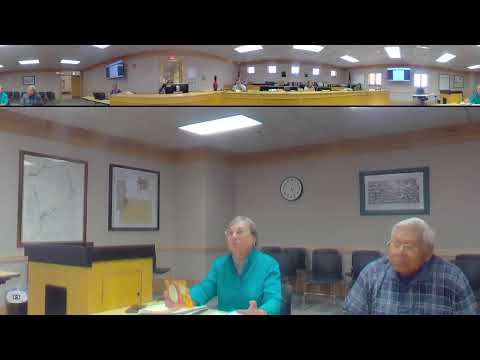
Laurie Philcamp, the newly retired CEO serving as transition lead for Big Lakes Developmental Center, told Geary County commissioners that Big Lakes is asking for a 2% increase in its 2026 appropriation — $2,003 more than 2025 — to offset rising operational costs including insurance and vehicle maintenance.
Philcamp said Big Lakes currently serves “approximately 200 clients” across the region and relies heavily on county mill-levy funds for transportation and vehicle replacement. “The individuals that we serve, the adults that we serve, 99% of them cannot drive,” she said, explaining why county mill-levy dollars cover transportation and bus maintenance. She said Big Lakes operates a fleet of more than 40 vehicles and uses county mill-levy to match federal grants for accessible buses.
Liz Holly, who became Big Lakes’ chief executive effective June 1, participated in the presentation and briefed commissioners on pending state and federal policy changes that could affect operations. Holly said Kansas developmental-disability authorities are planning to split current day services and supported employment into up to seven separate service categories and are also considering a new tool to determine eligibility and payment tier levels. “That’s going to require more staffing resources and more transportation,” she said, adding that the state has not finalized rate structures or tiers and that planned changes could be budget-neutral only on paper.
Philcamp told commissioners Big Lakes’ waiting list remains large statewide: she cited a March statewide waiting list figure of 4,706 and a four-county area total of 122, with 24 individuals from Geary County; she said wait times in the region remain about 10 years. She cautioned commissioners that recent increases in HCBS (Home and Community Based Services) rates were small — “about 1.5%” — and likely will not cover anticipated cost growth.
Philcamp said workforce shortages remain Big Lakes’ most significant operational hurdle: residential staffing is hard to fill and the organization would be capped on admissions without hiring more direct-support professionals. She said Big Lakes would continue to apply for other grants and emphasized the historical role of county mill-levy funding (which Big Lakes has received since its founding in 1973) in maintaining transportation and program operations.
Commissioners asked how Big Lakes communicates and agreed to receive the organization’s newsletter and additional materials. No formal action was recorded; Big Lakes requested the appropriation increase as part of the county budget process.